Brominated Flame Retardants
Substance Flow Analysis and Assessment of Alternatives
Contents
Summary
Dansk sammendrag
1 Introduction to Brominated Flame Retardants
1.1 Flame retardants
1.2 The Chemistry of Brominated Flame Retardants
1.2.1 Polybrominated Diphenyl Ethers
1.2.2 Polybrominated Bipenyls
1.2.3 Tetrabromobisphenol A and Derivatives
1.2.4 Hexabromocyclododecane
1.2.5 Other Brominated Flame Retardants
1.3 European and Global Consumption of flame Retardants
1.4 Emission from Products in Service
2 Uses in Denmark
2.1 Chemicals and Semi-manufactures
2.1.1 Import, Export and Production as Chemicals
2.1.2 Consumption with Plastic Compounds and Masterbatches
2.1.3 Consumption with Plastic Semi-manufactures
2.1.4 Consumption with Electronic Semi-manufactures
2.1.5 Emission from Production Processes in Denmark
2.1.6 Summary
2.2 Use in Manufactured Goods
2.2.1 Printed Circuit Boards
2.2.2 Housing of Electric and Electronic Equipment
2.2.3 Other Components of Electric and Electronic Appliances and
Machines
2.2.4 Lighting
2.2.5 Wiring and Power Distribution
2.2.6 Textiles
2.2.7 Building Materials
2.2.8 Paints and Fillers
2.2.9 Transportation
2.2.10 Other Uses
2.2.11 Summary
2.3 Unintended Uses as Contaminant
3 Turnover with Waste Products
3.1 Recycling of Brominated Flame Retardants
3.1.1 Waste of Electric and Electronic Equipment
3.1.2 Other Recycling Processes
3.1.3 Export of Scrap
3.1.4 Limitations on Recycling of Plastics
3.2 Disposal with Solid Waste
3.2.1 Sources of Brominated Flame Retardants to Solid Waste
3.2.2 Fate of Brominated Flame Retardants by Incineration
3.2.3 Landfilling Activities
3.3 Turnover with Chemical Waste
3.4 Turnover with Waste Water
3.5 Summary
4 Summary and Discussion of the Substance Flow Analysis
4.1 Consumption in Denmark
4.2 Emission and Disposal to the Environment and Landfills
4.3 Substance Flow Balance for Brominated Flame Retardants
5 Regulations and Risk Reduction Measures with Respect to Brominated Flame Retardants
5.1 OECD initiatives
5.2 EU Initiatives
5.2.1 Legislation
5.2.2 Hazard/Risk Assessment
5.3 National Regulations
5.4 Ecolabels
6 Fire Safety Standards in Denmark, Germany and UK
6.1 Introduction
6.2 Denmark
6.2.1 Electronic Products
6.2.2 Electrical Appliances
6.2.3 Lighting
6.2.4 Wiring
6.2.5 Textiles and Carpets
6.2.6 Building Insulation Materials
6.2.7 Other Building materials
6.2.8 Transportation
6.3 Germany
6.4 UK
6.5 Summary
7 Materials and Products with Alternative Flame Retardants
7.1 General Aspects
7.2 Electronic and Electrical Appliances
7.2.1 Printed Circuit Boards
7.2.2 Electronic Component Encapsulates
7.2.3 Housing of Electronic and Electric Appliances
7.2.4 Switches, Sockets, etc.
7.2.5 Other EE Equipment Parts
7.3 Lighting
7.4 Wiring
7.4.1 Wires and Cables
7.4.2 Wall Sockets and Mounting Boxes
7.4.3 Relays, Contactors, Starters, etc.
7.5 Textiles
7.5.1 Furniture
7.5.2 Carpets
7.5.3 Clothing
7.6 Building Materials
7.6.1 Expanded Polystyrene and Extruded Polystyrene Foam
7.6.2 Rigid Polyurethanes
7.6.3 Foils
7.7 Paint
7.8 Transportation
7.9 New Flame Retardant Concepts
8 Alternative Flame Retardants
8.1 Organophosphorus
8.1.1 Triphenyl Phosphate
8.1.2 Tricresyl Phosphate
8.1.3 Resorcinol bis(diphenylphosphate)
8.1.4 Phosphonic acid, (2-((hydroxymethyl)carbamyl)ethyl)-, dimethyl
ester
8.1.5 Phosphorus and Nitrogen Containing Thermosets
8.2 Inorganic
8.2.1 Aluminium Trihydroxide
8.2.2 Magnesium Hydroxide
8.2.3 Ammonium Polyphosphate
8.2.4 Red Phosphorus
8.2.5 Zinc Borate
8.3 Nitrogen Containing
8.3.1 Melamine
A. Appendix 1: List of Fire Safety Standards in Denmark,
Germany and UK
B. Appendix 2: Abbreviations Used in the Report
C. Appendix 3: Physical-chemical Properties of Brominated Flame
Retardants
D. Appendix 4: Brominated Flame Retardants Registered in the
Danish Product Register
E. Appendix 5: List of Companies Contacted
F. Appendix 6: Calculation of brominated flame retardants in
housing of electronics and printed circuit boards
G. Appendix 7: Import, Export and Production of Brominated Flame
Retardants and other Bromine Compounds 1993-1997
Preface
The purpose of this project has been to analyse the flow of brominated flame retardants (BFRs) through the Danish society and identify sources of releases of these compounds to the environment and waste. In the second part of the project an assessment of the possibility of substituting other flame retardants for brominated flame retardants for specific applications have been carried out.
Background
Brominated flame retardants are used for fire precautions with the purpose of protecting human life, health and property. The compounds have some technical advantages in many types of plastic and a relatively low human toxicity.
During the last decades, the consumption of brominated flame retardants has globally grown dramatically due to the growth in the use of synthetic polymers and the introduction of more rigorous fire safety requirements.
As a consequence of the chemical stability of the compounds, the brominated flame retardants, however, have a tendency to accumulate and spread in the environment. This accumulation in combination with some environmental adverse effects of the compounds has during the last decade placed the brominated flame retardants in the international focus.
During the last few years new results showing that brominated flame retardants are emitted from products in use and are present in the human body and breast milk in measurable quantities have further increased the focus on the compounds (e.g. /1,2/).
Esbjerg Declaration
In the ministerial declaration of the fourth North Sea Conference in 1993, the ministers agreed to take concerted action within the framework of the competent international forums to substitute the use of brominated flame retardants, among other hazardous substances, by less hazardous or preferably non-hazardous substances where these alternatives are available.
List of Undesirable Substances
As a consequence of the ministerial declaration of the fourth North Sea Conference, brominated flame retardants have been placed on the List of Undesirable Substances, prepared by the Danish Ministry of the Environment.
International work on flame retardants is carried out in several forums.
EU
The European Union has prohibited the use of polybrominated biphenyls in textiles.
Under the Regulation on Existing substances, EEC/793/93, France and The UK have jointly assigned decabromodiphenyl ether (DeBDE) and octabromodiphenyl ether (OcBDE), The UK have additionally assigned pentabromodiphenyl ether (PeBDE) and Sweden have assigned HBCD for risk assessment. The draft versions of the three risk assessments of the brominated diphenyl ethers have been available for the preparation of the present analysis /3,4,5/. The first draft version of the HBCD risk assessment was finished by March 1999 and has not been available for this study.
IPCS
Under IPCS, the International Programme on Chemical Safety, Environmental Health Criteria monographs have been prepared for polybrominated biphenyls (1994) /6/, brominated diphenyl ethers (1994) /7/, and tetrabromobisphenol A and derivatives (1995) /8/. Additionally a general introduction to flame retardants has been prepared in 1997 /9/. In the monographs it is recommended that polybrominated biphenyls and pentabromodiphenyl ether should not be used commercially.
One of the main concerns regarding brominated flame retardants is the transformation of the flame retardants into polybrominated di-benzop-dioxins and dibenzofurans. An Environmental Health Criteria monograph for these compounds has recently been prepared /10/. In the monograph it is recommended that brominated flame retardants should not be used where suitable replacements are available, and future efforts should encourage the development of further substitutes.
OECD
Under the OECD risk reduction programme a risk reduction monograph on selected brominated flame retardants has been prepared /11/. Following the publication of the monograph, OECD engaged in discussions with the manufacturers of the brominated flame retardants. US and European industry have developed a Voluntary Industry Commitment on actions they will undertake to further manage risks posed by the manufacture, import and export of these flame retardants. Joint meetings between OECD and the industry oversee industry's implementation of the commitments.
National initiatives
A number of national activities concerning BFRs have been initiated. The present report includes a survey of national activities with respect to regulation, soft regulation, risk and hazard assessment activities and national positions on the issue of brominated flame retardants.
Method
The substance flow analysis is performed in accordance with the Danish Environmental Agency's paradigm for substance flow analyses /12/. The analysis of the consumption of BFRs with manufactured products is carried out at a screening level. At present no Danish analyses of BFRs in waste water, sludge, flue gas or residues from solid waste incineration exist. As a consequence the turnover of BFRs with waste products has been estimated from scenarios based on the most probable assumptions.
All values are represented by intervals. The intervals represent the range within which the authors estimate that the right value will be with a probability of 80%.
Abbreviations
Abbreviations of plastics and chemical compounds used in the report are explained in appendix 2.
Steering committee
The project has been followed by a steering committee with the following members:
Elisabeth Paludan (chair), Danish Environmental Protection Agency
Henrik Søren Larsen, Danish Environmental Protection Agency
Tonny Christensen,Danish Environmental Protection Agency
Ivan Grønning, Danish Toxicology Centre
Pernille Thomsen, Danish Plastic Federation
Jan Hohberg, Elektro-Miljø A/S
Niels Bay Alexandersen, Bang & Olufsen A/S
Lina Ivar Andersen, Danish Institute of Fire Technology
Carsten Lassen, COWI Consulting Engineers and Planners
Nanna P. Brandorff, National Working Environment Authority
Authors
The report has been prepared by Carsten Lassen and Søren Løkke, COWI Consulting Engineers and Planners, and Lina Ivar Andersen, Danish Institute of Fire Technology. The quality assessment has been carried out by Erik Hansen, COWI Consulting Engineers and Planners.
Summary
The consumption of brominated flame retardants (BFRs) with end products in Denmark in 1997 is estimated at 320-660 tonnes. Tetrabromobisphenol A (TBBPA) and derivatives accounted for about half of the consumption, and the consumption of these flame retardants is increasing. The more controversial compounds, polybrominated biphenyls (PBBs) and polybrominated diphenyl ethers (PBDEs) accounted for approximately 1% and 9%, respectively, of the consumption with end products. A marked shift away from PBDEs has taken place in Danish production and for a part of the imported products. The knowledge on the emissions of the brominated flame retardants to the environment is still very limited. Model estimates indicate that the major source of brominated flame retardants lost to the environment is evaporation from products in use. No recycling activities are taking place for materials containing brominated flame retardants. Broadly all electronic equipment, as well as a major part of other electrical devices, contains brominated flame retardants. For two large application areas - TV sets and computer monitors - the trend of the recent years has been a shift away from the use of brominated flame retardants. This is partly due to the influence of ecolabels. Today, alternative flame retardants are available for applications that quantitatively account for the major part of the consumption of brominated flame retardants. The current knowledge of the environmental properties of the substitutes is limited, however. For a number of applications that account for a major part of the BFRs used for Danish production, substitutes are still at the developmental stage.
Background and Objectives
The term 'brominated flame retardants' cover a large number of different organic substances, all with bromine in their molecular structure. Bromine has an inhibitory effect on the formation of fire in organic materials. Flame retardants are added to plastics and textiles in order to comply with fire safety requirements.
The most widely used substances - among these TBBPA, PBDEs and PBBs - contain one or more carbon rings, making them very stable and efficient in a large number of plastics.
The chemical stability of the substances - particularly in the cases of PBBs and PBDEs - is also the reason why brominated flame retardants for years have been in focus in the international environmental debate. PBDEs and PBBs, which are the most stable of the described BFRs, are spread widely in the environment, are bioaccumulated and are accumulated in sediments, where they are only very slowly degraded.
With the aim of reducing the release of brominated flame retardants to the marine environment, Denmark has committed itself in the Esbjerg Declaration of 1993, to promote the substitution of brominated flame retardants with less problematic substances if such are available.
Recent research has revealed that some of the brominated flame retardants are emitted to the indoor environment from the products in use. Increasing concentrations of PBDEs have been observed in human breast milk.
Risk assessments on three PBDEs and HBCD have been carried out within the EU since the mid nineties. The results of the assessments of the PBDEs are expected to be presented in 1999.
No previous assessments of brominated flame retardants have been carried out in Denmark. It is the aim of this study to establish an overview of the use of these substances in products manufactured in, and imported to, Denmark. In addition the purpose of the project is to assess the possibilities of and limitation for substitution of brominated flame retardants.
Studies in other countries have shown that the use of flame retardants has an important role in saving lives. This issue and more broadly the social advantages of the use of flame retardants has not been covered by the present study.
The Study
This study has been carried out in accordance with the paradigm for substance flow analysis of the Danish Environmental Protection Agency. The knowledge presented is based on data from Statistics Denmark, the Danish Product Register, the literature, market analyses, public institutions as well as from private organisations and companies. In the analysis, all the information has been hold together to describe the total flow of brominated flame retardants through the Danish society.
Data on the import of brominated flame retardants with polymer raw materials for production in Denmark has been obtained through a questionnaire in co-operation with the Danish Plastic Federation.
An attempt has been made to collect information on the contents of brominated flame retardants in imported goods via trade companies and importers. This has proven difficult, as most vendors do not know, whether the products in question contain brominated flame retardants. As a consequence, the analysis for a number of product types has been based on data on the European market for flame retardants and flame retarded polymers. Based on such information, it has been possible to determine which flame retardants are likely to be used in the different types of end products.
No measurements of the concentrations of brominated flame retardants in Danish waste water and sewage sludge have been found. Similarly no measurements of emissions from production or products in use are available. No Danish studies have been made on the fate of brominated flame retardants in the waste treatment systems. Hence, it has been necessary to estimate the potential loss of brominated flame retardants to the environment considering the few available foreign analyses and model estimates. The presented estimates of losses to the environment are therefore to be considered as the author's best estimate based on the existing knowledge.
Information on alternative flame retardants, and products containing alternatives, has been obtained from suppliers of flame retardants and plastic raw materials, as well as searches on the Internet and direct contact to producers using alternatives. Brominated flame retardants account only for about 15% of the Western European market for flame retardants. For many purposes, for instance carpets and PVC, other types of flame retardants are generally used. For this reason, only the applications where brominated flame retardants are used today, have been included in the assessment of alternatives.
In order to give a first overview, potential risks related to alternative flame retardants were identified on the basis of existing reviews.
This study has been carried out in 1998/99, and the data represent the 1997-situation.
The main conclusions of the project are:
 | The Danish consumption of brominated flame retardants with end products in 1997 is
estimated at 320-660 metric tonnes. The consumption can be broken down to about 47% TBBPA
and its derivatives, 12% PBDEs, 1% PBBs, 11% HBCD and 29% other brominated flame
retardants. About 44% of the total was used as reactive constituents. |
| Imported goods accounted for about 90% of the consumption with end products. |
| Brominated flame retardants are used in almost all product types containing electronics,
as well as in a significant part of other types of electrical equipment. |
| Brominated flame retardants are not produced in Denmark. The total import of brominated
flame retardants with chemicals, polymer compounds and plastic semi-manufactures for
production in Denmark was 260-390 tonnes in 1997. Of this TBBPA accounted for about 54%,
while PBBs and PBDEs in total accounted for only about 2%. |
| For production of insulating materials in Denmark 83-130 tonnes HBCD and brominated
polyetherpolyol were used. |
| In Danish manufacturing of housing for electronics, the brominated flame retardants have
been substituted with halogen-free flame retardants. The substitution has been driven by
the purpose of avoiding antimony trioxide, which is often used in combination with the
brominated flame retardants. Antimony trioxide is listed on the Danish list of hazardous
substances. (brominated flame retardants are not). |
| There has been a marked shift from PBDEs to TBBPA (and derivatives) in thermoplastics
used in Danish production. This trend is also seen for housing of imported electronics,
although PBDEs are still present in many imported products. Assessments on the overall
European consumption do only indicate a decrease in the consumption of PBDEs in Northern
Europe. |
| Model estimates indicate that the emissions of brominated flame retardants to the
environment are predominantly caused by evaporation from end products in use, whereas
production processes may contribute with minor amounts. Little is known so far regarding
the evaporation from end products. The actual emission rates and the fate of the
evaporated substances are still uncertain. |
| It is important to distinguish between additive and reactive uses. Brominated flame
retardants used as additives are estimated to have a much larger tendency to evaporate to
the surroundings, than substances chemically bound in the polymer structure. Examples of
reactive use are the incorporation of bromine in epoxy based printed circuit boards and
rigid polyurethane foam. |
| Discharges to waste water from products and production processes are modest. A major
part is estimated to originate from flame retarded textiles. This contribution is,
however, rather small compared to other European countries, where the use of brominated
flame retardants in textiles is more common. |
| For a number of electronic products, no alternatives are currently available. This is
reflected in the fact that the present ecolabels only have requirements regarding flame
retardants for large plastic parts in the products. |
| Alternatives exist for the major applications, printed circuit boards and housing. |
| Most of the alternatives have been assessed only to a very limited extent. Several of the substances have been demonstrated to have undesirable environmental effects, and there is a need to establish a better overview of the environmental properties of the alternatives. |
The results
The present study consists of two parts: a substance flow analysis of brominated flame retardants and an assessment of alternatives to brominated flame retardants.
Extended summary of the results and discussion of the substance flow analysis can be found in chapter 4.
The aim of the assessment of alternatives is to identify possibilities of and limitation for substitution of brominated flame retardants. Extended summary for the assessment of alternatives can be found in chapter 9.
Dansk sammendrag
Bromerede flammehæmmere - massestrømsanalyse og vurdering af alternativer
Forbruget af bromerede flammehæmmere med færdigvarer i Danmark var i 1997 på 320-660 tons. Tetrabrombisphenol A (TBBPA) og derivater deraf tegnede sig for omkring halvdelen af forbruget, og forbruget af disse stoffer er stigende. De mest kontroversielle stofgrupper, polybromerede diphenyler (PBB) og polybromerede diphenylethere (PBDE), tegnede sig for henholdsvis ca. 1% og ca. 12% af forbruget med færdigvarer. Der er sket et markant skift væk fra PBDE i dansk produktion og i dele af de importerede varer. Der findes kun en meget begrænset viden om, hvorledes stofferne spredes til miljøet. Modelberegninger tyder på, at den væsentligste kilde til spredning af bromerede flammehæmmere i miljøet er fordampning fra de produkter, hvori de indgår. Der sker ingen genanvendelse af materialer indeholdende bromerede flammehæmmere. Stort set alle elektroniske apparater og en stor del af andre elektriske produkter indeholder bromerede flammehæmmere. Der er i de senere år sket en udvikling væk fra bromerede flammehæmmere indenfor et par af de store anvendelsesområder - computerskærme og TV apparater - hvor bl.a. mærkningsordninger har været med til at præge udviklingen. Der findes i dag alternativer til bromerede flammehæmmere til anvendelser, der dækker hovedmængden af forbruget, men der er en begrænset viden om flere af alternativernes miljømæssige egenskaber. Til en række anvendelser - som tegner sig for en stor del af forbruget til produktion i Danmark - er alternativer stadig på forsøgsstadiet.
Baggrund og formål
Betegnelsen "bromerede flammehæmmere" omfatter en lang række forskellige organiske stoffer, som har det til fælles, at de indeholder brom, der virker hæmmende på udviklingen af brand. Brandhæmmere tilsættes plastmaterialer og tekstiler, for at disse kan opfylde de opstillede krav til brandsikkerhed.
De mest anvendte af stofferne - heriblandt TBBPA og stofgrupperne PBDE og PBB - indeholder én eller flere organiske ringstrukturer, som gør stofferne meget stabile og effektive i en lang række af plastmaterialer.
Stoffernes stabilitet - især stabiliteten af PBB og PBDE - er dog også årsag til at de bromerede flammehæmmere i en årrække har været i fokus i den internationale debat. PBDE og PBB, som er de bedst beskrevne af stofferne, spredes langt omkring i miljøet, opkoncentreres i fødekæderne og ophobes i sedimenter, hvor de kun nedbrydes langsomt.
Med den hensigt at mindske spredningen af bromerede flammehæmmere i havmiljøet, har Danmark i Esbjerg Deklarationen fra 1993 forpligtet sig til at arbejde for at bromerede flammehæmmere erstattes med mindre problematiske stoffer, i det omfang sådanne findes.
I de senere år er der kommet udenlandske resultater frem, der viser, at stofferne afgives direkte fra produkter i indemiljøet. Der er ligeledes påvist stigende koncentrationer af stofferne i modermælk.
I EU har der siden midten af 1990'erne været arbejdet med risikovurderinger af tre stoffer inden for stofgruppen PBDE samt stoffet HBCD. Resultaterne af vurderingerne af PBDE forbindelserne forventes at ligge færdige i løbet af 1999.
I Danmark er der ikke tidligere lavet undersøgelser vedrørende bromerede flammehæmmere. Det er hensigten med dette projekt, at få et overblik over, i hvilket omfang disse stoffer anvendes i produktionen i Danmark og indgår i såvel dansk producerede som importerede færdigvarer. Desuden har projektet til formål at undersøge mulighederne og begrænsningerne for udskiftning af bromerede flammehæmmere med alternativer.
Udenlandske undersøgelser viser at brugen af flammehæmmere er med til at spare menneskeliv. Dette aspekt og mere bredt - den samfundsmæssige nytte af brugen af flammehæmmere - er ikke dækket af dette projekt.
Undersøgelsen
Projektet er gennemført i overensstemmelse med Miljøstyrelsens retningslinier for massestrømsanalyser. Den viden, som fremlægges i rapporten, er baseret på oplysninger fra Danmarks Statistik, Produktregistret, litteraturen, offentlige institutioner samt private organisationer og virksomheder. I analysen sammenholdes alle oplysninger til et samlet billede af massestrømmen af bromerede flammehæmmere gennem det danske samfund.
Oplysninger om import af bromerede flammehæmmere med plastråvarer til produktion i Danmark er indhentet gennem en spørgeskemaundersøgelse, som er gennemført i samarbejde med Plastindustrien i Danmark.
Oplysninger om indholdet af flammehæmmere i importerede varer er forsøgt indhentet via forhandlere og importører. Det har været vanskeligt at opnå konkrete informationer, fordi forhandlere oftest ikke ved om produkterne indeholder bromerede flammehæmmere. For en række produkttyper er der i analysen derfor taget udgangspunkt i oplysninger om det europæiske marked for flammehæmmere og flammehæmmet plast. På dette grundlag er det vurderet, hvilke flammehæmmere der vil kunne forventes at være i de forskellige produkter.
Der findes ingen danske målinger af bromerede flammehæmmere i spildevand og slam fra renseanlæg, eller af emissioner fra produktionsprocesser og produkter i brug. Der findes heller ingen danske undersøgelser af flammehæmmernes skæbne i forbindelse med affaldsbehandling. Det har derfor været nødvendig, at tage udgangspunkt i de få udenlandske målinger der findes, og bruge beregningsmodeller til at vurdere de mulige tab af bromerede flammehæmmere til omgivelserne. De angivne tab til omgivelserne er derfor udtryk for, hvad forfatterne vurderer som mest sandsynligt ud fra den eksisterende viden.
Oplysninger om alternative flammehæmmere og produkter hvori disse bruges er indhentet fra leverandører af flammehæmmere og plastråvarer, via internetsøgninger samt gennem direkte kontakt til virksomheder, der benytter alternativer. Bromerede flammehæmmere udgør i Vesteuropa kun ca. 15% af markedet for flammehæmmere. Til mange formål, fx. flammehæmning af tæpper og PVC, anvendes der sædvanligvis andre typer af flammehæmmere. I opgørelsen af alternativer er der derfor kun medtaget anvendelser, hvor bromerede flammehæmmere bliver anvendt i dag.
For at give et første overblik, er der på baggrund af eksisterende sammenfatninger peget på mulige risici i relation til en række alternative flammehæmmere.
Undersøgelsen er gennemført i 1998/99, og det anvendte datamateriale vedrører 1997-forhold.
Hovedkonklusioner:
| Det danske forbrug af bromerede flammehæmmere med færdigvarer var i 1997 på 320-660
tons. Forbruget fordelte sig med ca. 47% TBBPA og derivater deraf, 12% PBDE, 1% PBB, 11%
HBCD og 29% andre bromerede flammehæmmere. Af den samlede mængde var ca. 44% anvendt
reaktivt. |
| Importerede varer tegnede sig for ca. 90% af forbruget med færdigvarer. |
| Bromerede flammehæmmere indgår i stort set alle produkter indeholdende elektronik og
en meget stor del af de øvrige elektriske produkter. |
| Bromerede flammehæmmere produceres ikke i Danmark. Den samlede import af bromerede
flammehæmmere med kemikalier, plastråvarer og laminater til produktion i Danmark var i
1997 på 260-390 tons. Heraf udgjorde TBBPA ca. 54%, mens PBB og PBDE tilsammen kun
udgjorde ca. 2%. |
| HBCD og bromeret polyetherpolyol, som anvendes til produktion af isoleringsmaterialer i
Danmark, udgjorde tilsammen 83-130 tons. |
| I dansk produktion af kabinetter til elektroniske produkter er bromerede flammehæmmere
udskiftet med halogen-frie flammehæmmere. Udskiftningen har været drevet af et ønske om
at undgå antimontrioxid, som ofte anvendes sammen med bromerede flammehæmmere, og som i
modsætning til de bromerede flammehæmmere er på listen over farlige stoffer. |
| Der er sket en markant udskiftning af PBDE med TBBPA i termoplast, som anvendes til
dansk produktion. Udskiftningen ses også i kabinetter i importeret elektronik, men PBDE
vurderes stadig at være til stede i mange importerede varer. Analyser af det samlede
europæiske forbrug indikerer at nedgangen i forbruget af PBDE især er et Nordeuropæisk
fænomen. |
| Modelberegninger indikerer, at spredning af bromerede flammehæmmere til miljøet
overvejende foregår via en fordampning fra de produkter, hvori flammehæmmerne indgår,
men der vil også kunne spredes mindre mængder fra produktionsprocesser. Fordampning fra
produkter er kun lidt undersøgt, og der er stadig stor usikkerhed om, hvor store mængder
der vil frigives, og hvad der videre sker med de fordampede forbindelser. |
| Det er væsentligt at skelne mellem additive og reaktive forbindelser. Bromerede
flammehæmmere, der anvendes som additiver, vurderes at have en langt større tendens til
at spredes til omgivelserne end flammehæmmere, der reaktivt indbygges i polymerstrukturen
i fx. epoxybaserede printkort eller polyurethanskum. |
| Tab til spildevand fra produkter og produktionsprocesser er beskedne. Et af de største
bidrag vurderes at komme fra flammehæmmede tekstiler, men dette bidrag er beskedent
sammenlignet med lande i Europa, hvor brugen af bromerede flammehæmmere i tekstiler er
mere udbredt. |
| For en række anvendelser i elektroniske produkter er der aktuelt ingen alternative
produkter på markedet. Dette afspejles i, at de gældende miljømærker kun stiller krav
vedrørende flammehæmmere i større plastdele. |
| Til de største anvendelsesområder, printplader og kabinetter, er der alternativer. |
| De fleste af alternativerne er kun undersøgt i begrænset omfang. En række af stofferne, er påvist at have miljø- og sundhedsmæssigt uønskede effekter, og der er behov for at få et bedre overblik over alternativernes miljøegenskaber. |
Projektresultaterne
Generelt om bromerede flammehæmmere
"Bromerede flammehæmmere" omfatter en lang række organiske forbindelser, som har meget forskellige tekniske og miljømæssige egenskaber. De skal ikke forveksles med de stoffer, som anvendes til slukning af brand. Der findes omkring 40 kommercielt tilgængelige forbindelser, hvoraf mindst 13 i 1997 blev anvendt i produktionsprocesser i Danmark. Bromerede flammehæmmere kan enten anvendes additivt, hvor flammehæmmeren optræder i polymeren på samme måde som en blødgører, eller reaktivt, hvor flammehæmmeren indbygges i selve polymerstrukturen og dermed ikke længere er til stede som den oprindelige kemiske forbindelse. Hovedparten af TBBPA, polyetherpolyol og andre flammehæmmere, der anvendes i hærdeplast, anvendes reaktivt. For overskuelighedens skyld angives flammehæmmeren dog stadig som den anvendte forbindelse, fx TBBPA, med den mængde der er anvendt ved produktion af plastmaterialet.
Forbruget af bromerede flammehæmmere er stigende - både i Europa og den øvrige verden. På nogle få områder, som har været i søgelyset, har der været en tendens til at udskifte de bromerede flammehæmmere med andre forbindelser, men denne tendens er blevet modvirket af en stigende efterspørgsel som konsekvens af det stigende forbrug af især elektroniske produkter og skærpede brandtekniske krav på en række områder.
Forbrug af bromerede flammehæmmere til produktion i Danmark
Bromerede flammehæmmere produceres ikke i Danmark, men importeres som kemikalier, med plastråvarer eller plasthalvfabrikata til produktion af færdigvarer i Danmark. Den samlede import i 1997 fremgår af tabel 1. Kemikalierne blev hovedsageligt anvendt til produktion af plastråvarer som reeksporteredes. Med plastråvarerne, compounds og masterbatches, importeredes der i alt 130-190 tons. De væsentligste anvendelser var TBBPA til produktion af elektriske komponenter i tekniske termoplastmaterialer og HBCD og bromeret polyetherpolyol til produktion af isoleringsmaterialer af polystyren og polyurethan. Udover import med råvarer var der en væsentlig import af TBBPA med laminater til printplader.
Hvis man sammenligner fordelingen mellem de forskellige typer af flammehæmmere anvendt til produktionsprocesser i Danmark med fordelingen på det europæiske marked er der markante forskelle. PBDE udgjorde i 1996 omkring 26% og i 1998 ca. 11% af de bromerede flammehæmmere solgt på det europæiske marked. Til sammenligning udgjorde PBDE i 1997 mindre end 1% af forbruget til produktion i Danmark. En væsentlig årsag til denne forskel er udviklingen i Tyskland, hvor råvareproducenterne ved en frivillig aftale har erstattet PBDE og PBB med andre bromerede flammehæmmere.
Tabel 1
Import af bromerede flammehæmmere med kemikalier, plastråvarer og
plasthalvfabrikata til Danmark i 1997
| Produkt gruppe | Import af
bromerede flammehæmmere |
Import af de enkelte forbindelser (tons) |
||||
PBDE |
TBBPA og der. |
PBB |
HBCD |
Andre |
||
| Kemikalier | 29 |
1 |
2,1 |
- | - | 26 |
| Plastråvarer | 130-190 |
0,1-0,2 |
34-42 |
3,3-4,9 |
6,1-13 |
86-126 |
| Plast halvfabrikata | 2,6-7 |
- | 2-5,2 |
- | 0,1-0,3 |
0,5-1,5 |
| Laminater til printkort | 100-160 |
- | 100-160 |
- | - | - |
| I alt (afrundet) | 260-390 |
1,1-1,2 |
140-210 |
3,3-4,9 |
6,2-13 |
110-150 |
Forbrug af bromerede flammehæmmere med færdigvarer
Det samlede forbrug af bromerede flammehæmmere med færdigvarer fremgår af tabel 2. Til mange formål kan der anvendes flere forskellige forbindelser, og det har været vanskeligt at få detaljerede oplysninger om indholdet i de fleste importerede produkter. Der er derfor benyttet en opgørelsesform, hvor der er åbnet mulighed for, at enten den ene eller den anden forbindelse er benyttet.
På et af de væsentligste områder, kabinetter til elektronik, er der sket et skift fra PBDE til TBBPA, andre bromerede flammehæmmere eller halogen-frie alternativer. Til produktion af færdigvarer er PBDE i Danmark, Tyskland og Holland i høj grad er erstattet af TBBPA eller andre flammehæmmere, men markedsanalyser tyder på, at dette ikke er tilfældet i det øvrige Europa.
Det største anvendelsesområde er elektriske og elektroniske produkter, der samlet tegner sig for ca. 70% af forbruget. Printkort med tilhørende elektronik komponenter tegner sig alene for ca. 29% af det samlede forbrug. Der anvendes næsten udelukkende TBBPA til printkort og indstøbning af elektroniske komponenter. Kabinetter - især til kontormaskiner - tegner sig for andre 21% af forbruget. For TV-kabinetter er der sket en markant udvikling væk fra brug af bromerede flammehæmmere, som stort set ikke længere findes i TV-kabinetter på det danske marked. Kontakter, stik, ledninger, indstøbningsmasser, motordele og i det hele taget mindre dele, som er i kontakt med strømførende dele i elektriske apparater og maskiner, udgør omkring 7% af det samlede forbrug. Da der er tale om mange små dele, som indgår i meget stort antal produkter, er den samlede mængde beregnet ud fra overordnede opgørelser af brugen af flammehæmmet plast til denne type produkter. Inden for dette anvendelsesområde er der et væsentligt forbrug med tekniske termoplasttyper som PBT og PET, som anvendes til stik, kontakter mm. Til disse plasttyper anvendes stort set kun bromerede flammehæmmere.
Denne anvendelse udgør også en væsentlig del af forbruget med dele til elektriske installationer i bygninger og industri samt i forsyningsnettet, der samlet repræsenterer omkring 11% af det samlede forbrug. Ud over kontakter, relæer, startere osv. er der et væsentligt forbrug af bromerede flammehæmmere med gummikabler.
Isoleringsmaterialer af ekspanderet polystyren og opskummet polyurethan tegner sig for hovedparten af de 15% af det totale forbrug, som byggematerialerne udgør. Polystyrenen anvendes i byggeriet fx. til isolering af kældre, mens polyurethan især anvendes til isolering af køle/frysehuse. Det er kun en mindre del af den ekspanderede polystyren, der anvendes i byggeriet, der indeholder flammehæmmere. I Danmark er der ikke brandtekniske krav til ekspanderet polystyren, som kun må anvendes inddækket i ikke-brandbare materialer. Årsagen til at bromerede flammehæmmere indgår i nogle af produkterne, er at de importeres fra lande, hvor ekspanderet polystyren er godkendt til bygningsisolering, hvis det opfylder visse brandkrav.
Forbrug af bromerede flammehæmmere med tekstiler og møbler er vurderet at udgøre ca. 1,3% af det samlede forbrug. I visse lande i Europa, især Storbritannien, er der et stort forbrug af bromerede flammehæmmere med tekstiler og møbler. Flammehæmmede møbler anvendes i Danmark i lufthavne, hoteller, visse kontorer og andre steder, hvor der færdes mange mennesker. Bromerede flammehæmmere anvendes generelt ikke i dansk produktion af møbler, men kan forekomme i importerede produkter. Forbruget til disse formål er groft skønnet, da det har været vanskeligt at få konkrete oplysninger om importerede produkter.
Maling og fugemidler udgjorde et beskedent bidrag på 0,2% af det samlede forbrug. Brandhæmmende maling, som anvendes i Danmark, er sædvanligvis baseret på andre typer af flammehæmmere.
Transportmidler udgjorde ca. 12% af det samlede forbrug. Biler og busser vurderes i kraft af det store antal at stå for den væsentligste del af forbruget Det samlede forbrug er dog opgjort med stor usikkerhed. Traditionelt har biler og busser indeholdt væsentlige mængder bromerede flammehæmmere, men der har i de seneste år hos europæiske producenter været en tendens væk fra brugen af disse flammehæmmere.
Epoxybaserede printkort og hård polyurethanskum tegner sig for den væsentligste del af forbruget af reaktive bromerede flammehæmmere. De reaktive anvendelser udgør i størrelsen 44% af det samlede forbrug.
Tabel 2
Forbrug af bromerede flammehæmmere med færdigvarer i Danmark, 1997.
| Produktgruppe | Forbrug af bromerede flammehæmmere |
Forbrug af enkelte forbindelser (tons) 1) |
|||||
Tons |
% |
PBDE |
TBBPA |
PBB |
HBDC |
Andre |
|
| Bestykkede printkort | 100-180 |
29 |
0,3-5,2 |
100-180 |
- | - | 0-2 |
| Kabinetter | 80-130 |
21 |
3-10 |
56-89 |
- |
- | 25-49 |
| Andre dele af elektriske apparater og maskiner | 20-50 |
7 |
5-14 |
3-8 |
0-2 |
- | 16-43 |
| Belysningsartikler | 4-14 |
2 |
1-7 |
4-11 |
- | - | 1-9 |
| Installationer og industriel automatik | 30-80 |
11 |
7-29 |
4-15 |
1-5 |
2-4 |
20-49 |
| Tekstiler, gulvtæpper og møbler | 2-11 |
1,3 |
0-5 |
- | - | 2-9 |
0-5 |
| Byggematerialer | 50-100 |
15 |
1-5 |
0-2 |
- | 13-36 |
41-66 |
| Maling og fugemidler | 0,6-1,7 |
0,2 |
0,1-0,5 |
- | - | - | 0,5-1,2 |
| Transportmidler | 30-90 |
12 |
13-46 |
14-52 |
- | 9,4-30 |
19-71 |
| Andre anvendelser | 0-3 |
0,3 |
0-2 |
0-2 |
- | 0-1 |
0-2 |
| I alt (afrundet) | 320-660 |
99 |
30-120 |
180-360 |
1-7 |
26-80 |
120-300 |
| 1) | For nogle anvendelser er flammehæmmerene angivet som enten/eller. Det betyder, at den samlede sum er mindre end summen af de enkelte forbindelser. |
Forbrug som følgestof
Der er ikke fundet nogen naturlig forekomst af bromerede flammehæmmere, men i naturen findes forbindelser, der i struktur minder om de bromerede flammehæmmere. Den største kilde til bromerede flammehæmmere i fødevarer i de nordiske lande er i en tidligere undersøgelse vurderet at være fisk. Den samlede omsætning med fødevarer i Danmark kan anslås til mindre end 1 kg pr. år. Der vurderes ikke at være nogen omsætning af bromerede flammehæmmere med genanvendte materialer.
Massebalance for bromerede flammehæmmere
Der findes ingen danske målinger af bromerede flammehæmmere i spildevand eller slam fra renseanlæg, udledninger fra industrier eller tab fra produkter. Der findes heller ingen danske undersøgelser, der belyser stoffernes skæbne ved affaldsforbrænding og anden form for affaldsbortskaffelse. Det har derfor været nødvendigt at tage udgangspunkt i de få udenlandske målinger, der findes, i kombination med teoretiske modeller for emission af stofferne fra produktionsprocesser og materialer. De angivne udledninger skal betragtes som et scenarie på grundlag af antagelser om de mest sandsynlige emissionsfaktorer.
På dette grundlag er der i figur 1 opstillet en massebalance for bromerede flammehæmmere i Danmark.
Figur 1
Massebalance for bromerede flammehæmmere i Danmark, 1997. Alle udledninger er anslåede
på grundlag af modelberegninger.
Tab til miljøet
Bromerede flammehæmmere, der anvendes som additiv, vil kunne fordampe fra de materialer, hvori de anvendes.
Modelberegninger udviklet i tilknytning til risikovurderingerne, der for øjeblikket gennemføres i EU regi, indikerer, at op til 0,4% af deca-BDE, og op til 4% af den lettere penta-BDE kan fordampe fra materialerne over en periode på 10 år. Anvendes samme beregningsmodel for andre flammehæmmere anvendt som additiv vil der for nogle forbindelser beregnes højere afgivelsesrater. Der foreligger ikke grundige målinger, der kan be- eller afkræfte disse modelberegninger, som må betragtes som "worst case" estimater. PBDE forbindelserne er meget stabile, og er de først emitteret til luft, vil de kunne spredes over store afstande, og vil blive afsat til jord og vandmiljøet. TBBPA synes ikke at være nær så stabil i atmosfæren. Flammehæmmere anvendt reaktivt kan emitteres i det omfang, at der er sket en ufuldstændig reaktion. Den samlede mængde der frigives fra ufuldstændigt reagerede forbindelser, vurderes i det samlede billede at være ubetydelig.
De emitterede forbindelser vil hurtigt hæfte sig til partikler i luften. Partiklerne vil blandt andet sætte sig på indersiden af apparater, hvorfra de kan spredes i forbindelse med demontering af apparaterne.
Hvis modelberegningerne afspejler de faktiske forhold, må langt den væsentligste kilde til spredning af disse forbindelser til miljøet være fordampning fra produkter.
Spildevand
Der foreligger kun nogle få målinger af bromerede flammehæmmere i spildevandsslam fra Sverige og Tyskland. Målingerne tyder på, at koncentrationerne af de enkelte forbindelser er i størrelsen <100 mg/ kg tørstof.
De eneste anvendelser af bromerede flammehæmmere, hvor der i væsentlig grad er en direkte kontakt mellem det flammehæmmede materiale og vand, er tekstiler og tagbeklædninger. Tekstilvask vurderes at være en væsentlig kilde til bromerede flammehæmmere i spildevand, men udledninger er et resultat af et tidligere forbrug, da bromerede flammehæmmere tilsyneladende ikke længere anvendes i beklædninger, som sælges i Danmark. I andre lande, især Storbritannien, hvor tekstiler med bromerede flammehæmmere anvendes i stort omfang, vil tekstilvask være en langt væsentligere kilde til spredning af bromerede flammehæmmere til omgivelserne.
På grundlag af de fysisk/kemiske egenskaber af stofferne må det formodes, at flammehæmmerne i spildevand hovedsageligt vil ende op i slammet.
De samlede udledninger fra renseanlæg i 1997 vurderes at være i størrelsen 5-53 kg, mens i størrelsen 31-330 kg med slam blev udbragt på landbrugsjord.
Forbrænding og affaldsdeponering
Alle produkter indeholdende bromerede flammehæmmere vil i den sidste ende blive bortskaffet til affaldsforbrændingsanlæg eller deponeret på lossepladser.
I forbindelse med affaldsforbrændingen vil forbindelserne lang overvejende blive destrueret, men der er mulighed for, at en lille del vil kunne passere forbrændingskammeret og ende i restprodukter. Der er ingen målinger af bromerede flammehæmmere i røggas og restprodukter, og mængderne angivet i figur 1 er groft anslåede ud fra erfaringer med andre stoffer.
PBDE og PBB har i struktur meget lighed med de langt giftigere furaner og dioxiner, og under visse forbrændingsforhold kan flammehæmmerne virke som udgangsmateriale for dannelsen af furaner og dioxiner. Det er derfor af betydning at det flammehæmmede materiale afbrændes under optimale forbrændingsforhold.
Bromerede flammehæmmere, der med produkter ender på losseplads vil på længere sigt kunne afgives fra produkterne. I hvilken grad forbindelserne vil nedbrydes i forbindelse med afgivelsen eller vil kunne spredes til luft eller vandmiljøet vides ikke.
Genanvendelse af bromerede flammehæmmere
Der sker ingen genanvendelse af materialer indeholdende bromerede flammehæmmere. Genanvendelse begrænses af det forhold, at der til det samme formål anvendes mange forskellige plastmaterialer, med forskellige tilsætningsstoffer, og at det derfor er meget vanskeligt at opnå et veldefineret produkt til genanvendelse. Plast fra elektriske og elektroniske produkter, der indeholder bromerede flammehæmmere, må i følge den nye bekendtgørelse om affald af elektriske og elektroniske produkter kun anvendes til formål, hvor der er krav om anvendelse af flammehæmmet kvalitet.
International regulering
I Danmark og andre EU lande er anvendelsen af tris(2,3dibromo propyl)fosfat (TRIS) forbudt, mens polybromerede biphenyler (PBB) er forbudt til brug i tekstiler, der kommer i direkte kontakt med huden. To lande, Østrig og Schweiz, har helt forbudt brugen af PBB. I Tyskland og Holland er der indgået frivillige aftaler omkring en udfasning af PBB og PBDE, mens Kemikalieinspektionen i Sverige har indstillet til den svenske regering at de to stofgrupper totalt udfases. I Tykland har krav om, at indholdet af en række dioxiner og furaner i produkter ikke må overskride visse værdier, i praksis virket begrænsende på brugen af PBDE og PBB.
Det nordiske Svanemærke og den tyske Blå Engel har begge krav vedrørende bromerede flammehæmmere til større plastdele i en række elektroniske produkter. Kravene vedrører enten den samlede stofgruppe, eller som det er mere almindeligt, specifikt PBB og PBDE. Der er ingen krav vedrørende bromerede flammehæmmere i printkort og mindre plastdele i elektroniske apparater. Det svenske TCO 95 mærke, som anvendes til computere, kræver at der ikke indgår organisk bundet brom i dele større end 25 g. Miljømærkerne, og især TCO 95, må formodes at have en væsentlig indflydelse på den udvikling, der er sket med hensyn til erstatning af bromerede forbindelser i kabinetter til elektronik.
Alternativer til bromerede flammehæmmere
Der findes en lang række flammehæmmere, der kan anvendes i stedet for bromerede flammehæmmere. Til de fleste formål vil de i forhold til de bromerede flammehæmmere for en umiddelbar betragtning have visse ulemper.
Blandt alternativerne findes en række chlorholdige produkter, men det er i undersøgelsen valgt at fokusere på halogenfrie alternativer. De bromerede flammehæmmere deler sammen med andre typer af halogenholdige produkter den egenskab, at der ved brand kan dannes giftige og korrosive gasser. I forbindelse med produktudvikling fokuseres der derfor oftest på såvel chlor som brom.
Alternativerne kan opdeles i tre hovedgrupper: organiske fosforholdige flammehæmmere, kvælstofholdige flammehæmmere og uorganiske flammehæmmere. I praksis anvendes ofte kombinationer af flere flammehæmmere. De konkrete forbindelser, der anvendes, er i mange tilfælde holdt fortrolige.
Af tabel 3 fremgår - opdelt på materialer - i hvilket omfang der i dag findes kommercielt tilgængelige alternative materialer. Tabellen er hvad angår alternativer ikke dækkende, idet der kan være flere alternativer end de nævnte. Der er i tabellen medtaget materialer, hvor der i dag ikke bruges bromerede flammehæmmere i dansk produktion, men hvor bromerede flammehæmmere kan forekomme i importerede varer. Selv om der i princippet findes alternativer for det enkelte materiale kan der godt være særlige anvendelser af materialet, hvor alternativerne ikke umiddelbart vil opfylde de tekniske krav.
Til materialer, hvor der ikke findes halogenfrie kvaliteter, eller hvor der i praksis ses et skift til andre materialer i forbindelse med substitution, er der i tabellen angivet, hvilke halogenfrie materialer der kan anvendes i stedet.
Tabel 3
Halogenfrie flammehæmmere i kommercielt tilgængelige materialer.
| Materiale | Anvendelse af materiale i flammehæmmet kvalitet | Halogenfrie flammehæmmere i kommercielt tilgængeligt materiale | Alternativt materiale Enten ikke brændbart eller med halogenfri flammehæmmer |
| Epoxy | Printplader. Indkapsling af elektroniske komponenter. Tekniske laminater | Reaktive kvælstof og fosfor bestanddele Ammonium polyfosfat og aluminium trihydroxid |
Polyphenylen sulfid |
| Phenol resin | Printplader til forbruger elektronik. Tekniske laminater. | Kvælstof- og fosforforbindelser Aluminium trihydroxid |
|
| Umættet polyester | Tekniske laminater og plastdele i transportmidler | Ammonium polyfosfat og aluminium trihydroxide | |
| ABS | Kabinetter til elektroniske produkter | Ingen | PC/ABS blandinger eller PPE/PS blandinger med organiske fosforforbindelser |
| Polystyren | Kabinetter til elektronik. Dele til installationer | Organiske fosforforbindelser Magnesium hydroxid |
|
| PBT/PET | Kontakter. Fatninger. Dele af elektriske maskiner. | Ingen. Alternativer på forsøgsstadiet |
Til visse formål polyamid, polyketone, keramik eller selvslukkende plasttyper |
| Polyamid | Dele af elektriske og elektroniske apparater | Magnesium hydroxid Rød fosfor Melamin cyanurat Melamin polyfosfat |
|
| Polycarbonat | Dele af elektriske og elektroniske apparater | Organiske fosforforbindelser | |
| Polypropylen | Tagfolier | Ammonium polyfosfat | |
| Ekspanderet polystyren | Isolering af kældre, belægninger mm. | Ingen | Ingen krav om flammehæmmet kvalitet i Danmark |
| Hård polyurethanskum | Isolering af køle/fryse huse, rør mm. | Ammonium polyfosfat og rød fosfor. | Til visse formål mineraluld eller andre tekniske løsninger |
| Blød polyurethanskum | Møbler. Transportmidler. | Ammonium polyfosfat. Melamin. Organiske fosforforbindelser |
|
| Tekstiler af bomuld | Møbler | Ammonium polyfosfat Diammonium fosfat |
|
| Tekstiler af kunststof | Møbler. Beskyttelsesdragter | Reaktive fosforforbindelser |
Væsentlige anvendelsesområder, hvor alternativer endnu er på udviklingsstadiet, er indkapsling af elektroniske komponenter samt plastdele af PBT/PET. Der har en årrække været gjort forsøg med halogenfri PBT/PET, men der er endnu ikke velgennemprøvede alternativer på markedet. Til flammehæmmet ekspanderet polystyren findes der i dag heller ingen alternativer. I Danmark anvendes der til de formål, hvor der i udlandet anvendes flammehæmmet ekspanderet polystyren, imidlertid andre tekniske løsninger.
Den bedste målestok for om alternativerne umiddelbart kan anvendes, er om der findes produkter på markedet, hvor alternativerne er anvendt.
Når man ser på slutprodukterne vil stort set alle produkter, som indeholder elektronik, indeholde bromerede flammehæmmere. Det vil sige, at der stort set ikke findes elektroniske produkter og transportmidler på markedet uden bromerede flammehæmmere. Dette afspejles i, at ingen af de gældende miljømærker stiller krav om, at elektroniske produkter skal være helt fri for bromerede flammehæmmere. Et sådant krav stilles kun til byggematerialer. Svanemærket for kaffemaskiner, som er under udarbejdelse, vil formentlig kræve at bromerede flammehæmmere ikke anvendes. Der findes elektriske maskiner som fx kaffemaskiner, hårtørrere, kogekedler uden bromerede flammehæmmere på markedet, men de vil normalt ikke være mærket og markedsført som sådan.
I tabel 4 er givet en oversigt over, i hvilken grad der findes produkter eller komponenter uden bromerede flammehæmmere. Eksemplerne dækker mere end 90% af brugen af bromerede flammehæmmere.
Vurdering af alternativer
Det har været uden for rammerne af denne undersøgelse at lave en indgående miljø- og sundhedsvurdering af alternativer. De fleste af alternativerne er kun undersøgt i meget begrænset omfang, og der findes ingen omfattende risikovurderinger af nogle af stofferne. Flere af stofferne er påvist at have uønskede miljø- og sundhedsmæssige effekter, og de organiske fosforforbindelser er påvist at fordampe i målelige koncentrationer fra produkter i brug. Et større kendskab til alternativernes miljø- og sundhedsmæssige egenskaber vil være hensigtsmæssigt i forhold til en eventuel substitution af bromerede flammehæmmere.
Fra et forbrugersynspunkt vil det være af betydning, at stofferne ikke afgives under brug. I den sammenhæng vil en række af de uorganiske stoffer eller stoffer, som reaktivt er indbygget i polymerstrukturen, være at foretrække. De formodentligt mest uproblematiske uorganiske forbindelser, aluminium trihydroxid og magnesium hydroxid, bliver i dag anvendt til mange formål, men er til en del formål vanskelige at bruge, da de i væsentlig grad ændrer plastmaterialernes tekniske egenskaber.
Tabel 4
Oversigt over i hvilket omfang halogenfrie materialer og produkter er kommercielt
tilgængelige.
| Produkt | Halogenfri materiale på markedet + findes (+) findes til nogle anvendelser - findes ikke |
Pris af materiale sammenlignet med bromeret
materiale » omtrent den samme > dyrere >> mere end dobbelt så dyrt |
Halogenfrit produkt på markedet + findes (+) findes til nogle anvendelser - findes ikke |
| Epoxybaserede printkort | + |
>> 1) |
+ |
| Phenol/papir baserede printkort | + |
» |
+ |
| Kabinetter til elektronik | + |
> |
+ |
| Indkapsling til elektroniske komponenter | (+) |
> |
(+) |
| Komponenter af PBT/PET | - |
- |
|
| Komponenter af polyamid | + |
» |
(+) |
| Stikkontakter og monteringsbokse | + |
> |
+ |
| Gummikabler | (+) |
> |
(+) |
| Andre kabler | + |
> |
+ |
| Fatninger til glødelamper og lysstofrør | + |
> |
+ |
| Isolering af kølerum mm. | + |
» |
(+) |
| Isolering af kældre, belægninger mm | + |
» |
+ |
| Beskyttelsesdragter | + |
varierende |
+ |
| Møbelstoffer | + |
varierende |
+ |
| Skum til møbler | + |
» |
+ |
| 1) | Epoxybaserede printkort, som kun er ca. 30% dyrere, forventes på markedet i 1999. |
1. Introduction to Brominated Flame Retardants
1.1 Flame retardants
1.2 The Chemistry of Brominated Flame Retardants
1.2.1 Polybrominated Diphenyl Ethers
1.2.2 Polybrominated Bipenyls
1.2.3 Tetrabromobisphenol A and Derivatives
1.2.4 Hexabromocyclododecane
1.2.5 Other Brominated Flame Retardants
1.3 European and Global Consumption of Flame Retardants
1.4 Emission from Products in Service
1.1 Flame retardants
Flame retardants are added to polymeric materials, both natural and synthetic, to enhance the flame-retardancy properties of the polymers.
There are four main families of flame-retardant chemicals:
| Inorganic flame retardants including aluminium trioxide, magnesium hydroxide, ammonium polyphosphate and red phosphorus. This group represents about 50% by volume of the global flame retardant production /9/. |
| Halogenated flame retardants, primarily based on chlorine and bromine. The brominated flame retardants are included in this group. This group represents about 25% by volume of the global production /9/. |
| Organophosphorus flame retardants are primarily phosphate esters and represent about 20% by volume of the global production /9/. Organophosphorus flame retardants may contain bromine or chloride. |
| Nitrogen-based organic flame retardants are used for a limited number of polymers. |
Global production figures and trends in consumption are discussed further in section 1.3.
About 350 different substances used as flame retardants are described in the literature. The index of Flame Retardant /13/, an international guide to more than 1000 products by trade name, chemical, application, and manufacturer, contains more than 200 chemicals used in commercial flame retardants. A comprehensive list of flame retardants is compiled by the Swedish National Chemical Inspectorate /14/.
Mechanisms of action
Depending on their nature, flame retardants can act chemically and/or physically in the solid, liquid or gas phase. They interfere with combustion during a particular stage of this process, e.g. during heating, decomposition, ignition or flame spread.
Substitution of one type of flame retardants with another consequently means a change in the mechanisms of flame retardancy.
Halogen containing flame retardants act primarily by a chemical interfering with the radical chain mechanism taking place in the gas phase during combustion. High-energy OH and H radicals formed during combustion are removed by bromine released from the flame retardant.
Although brominated flame retardants are a highly diverse group of compounds the flame-retardancy mechanism is basically the same for all compounds. However, there are differences in flame-retardancy performance of the brominated compounds, as the presence of the compounds in the polymer will influence the physical properties of the polymer.
In general aliphatic bromine compounds are easier to break down and hence more effective at lower temperatures, but also less temperature resistant than aromatic retardants.
Aluminium hydroxide and other hydroxides act in a combination of various processes. When heated the hydroxides release water vapour that cool the substrate to a temperature below that required for sustaining of the combustion processes. The water vapour liberated has also a diluting effect in the gas phase and forms an oxygen displacing protective layer. Additionally the oxide (e.g. AlO2) forms together with the charring products an insulating protective layer.
Phosphorus compounds mainly influence the reactions taking place in the solid phase. By thermal decomposition the flame retardant are converted to phosphorus acid which in the condensed phase extract water from the pyrolysing substrate, causing it to char. However, some phosphorus compounds may, similar to halogens, act in the gas phase as well by a radical trap mechanism.
Nitrogen based flame retardants as melamine and melamine derivatives act by intumescence. The flame retardants are most often used in combination with other flame retardants. Gasses released from the compounds make the material to swell forming a insulating char on the surface.
A distinction is made between reactive and additive flame retardants.
Reactive flame retardants are built chemically into the polymer molecule, together with the other starting components. This prevents them from bleeding out of the polymer and vaporise and their flame retardancy is thus retained. They have no plasticising effect and do not affect the thermal stability of the polymer. They are used mainly in thermosets, especially polyesters, epoxy resins and polyurethanes (PUR) in which they can be easily incorporated.
The most used reactive brominated flame retardants are tetrabromobisphenol A (TBBPA), tetrabromophthalic anhydride, dibromoneopentylglycol, and brominated styrene.
Additive flame retardants are incorporated in the plastic either prior to, during, or, more frequently, following polymerisation. They are used especially in thermoplastics as ABS, HIPS, PS, PC and thermoplastic polyesters. If they are compatible with the plastic they act as plasticisers, otherwise they are considered as fillers. They are sometimes volatile and can tend to bleed, so their flame retardancy may be gradually lost. High molecular weight products are developed to enable plastics to be made more permanently fire retardant by the additive method.
The most used additive brominated flame retardants are polybrominated diphenyl ethers (PBDEs), Tetrabromobispehol A (mostly used as reactive FR) and hexabromocyclododecane (HBCD).
Synergism
Combinations of flame retardants can produce an additive or synergistic effect. While the additive effect is the sum of the individual actions, the effects of synergism are higher than this sum.
Antimony trioxide
Antimony trioxide, Sb2O3, the main antimony compound used commercially, shows no perceptible flame-retardant action on its own. Together with bromine-containing compounds, however, it produces a marked synergistic effect. Antimony trioxide is widely used in brominated FR formulations.
1.2 The Chemistry of Brominated Flame Retardants
Brominated flame retardants (BFRs) may in accordance with the classification in section 3.1 be defined as non-organophosphorus organic compounds where one or more hydrogen atoms are replaced by bromine. BFRs are usually containing 50-85% of bromine (by weight, the contents of each compound is shown in table 1.1).
Ammonium bromide, which may be used as flame retardants in textiles, and brominated organophosphates are not included under this definition.
Brominated flame retardants can be divided into three classes:
| Aromatic, including tetrabromobisphenol A (TBBPA), polybrominated diphenyl ethers (PBDEs) and polybrominated biphenyls (PBBs) |
| Aliphatic, which are in general used in relatively small quantities |
| Cycloaliphatic, including hexabromocyclododecane (HBCD) |
Physical/chemical properties of more than 40 brominated flame retardants in commercial use, according to OECD 1994 , IPCS 1997 and product literature are listed in appendix 3.
Until now risk evaluations have mainly focused on the high volume aromatic compounds.
In this report consumption and disposal of flame retardants will be estimated for the following groups of brominated flame retardants:
| Polybrominated diphenyl ethers (penta, octa, and decabromodiphenyl ether) |
| Tetrabromobisphenol A and derivatives |
| Polybrominated biphenyls |
| Hexabromocyclododecane |
| Other brominated flame retardants |
The first three groups are aromatic compound whereas hexabromocyclododecane is a cycloaliphatic compound.
1.2.1 Polybrominated Diphenyl Ethers
Brominated diphenyl ethers are a group of aromatic brominated compounds in which one to ten hydrogens in the diphenyl oxide structure are replaced by bromine.
The polybrominated diphenyl ethers (PBDEs) with three to ten bromine atoms are used in commercial flame retardants. The compounds are designated tri (3), tetra (4), penta (5), hexa (6), hepta (7), octa (8), nona (9) and decabromodiphenyl ether.
Commercial products are not pure substances. Three different flame retardants are commercially available. They are referred to as penta-, octa- and decabromodiphenyl ether, but each product is a mixture of brominated diphenyl ethers.
Synonyms
Various synonyms and abbreviations of polybrominated diphenyl ethers are used in the literature. In this report - in accordance with the monograph from IPCS /7/ - the chemical name polybrominated diphenyl ethers is used. To indicate that it is a group of compounds the abbreviation PBDEs is used instead of the more widespread PBDE. The same group may as well be named polybrominated biphenyl ethers (PBBEs), polybrominated biphenyl oxides (PBBOs), or polybrominated diphenyl oxides (PBDOs).
Global consumption
The annual global consumption of all polybrominated diphenyl ethers was in 1992 estimated at 40,000 tonnes, which was broken down as 30,000 tonnes (75%) of decabromodiphenyl ether, 6,000 tonnes (15%) of octabromodiphenyl ether and 4,000 tonnes (10%) of pentabromodiphenyl ether /7/. The 40,000 tonnes corresponded to about 30% of the world market.
Data on the Western European market of flame retardants shown in table 1.5 indicate that the consumption of PBDEs until 1996 did not show a significant decrease, and PBDEs accounted for about 26% of the European market for brominated flame retardants in 1996 /19/. A market analysis from 1999 shows that the market share of the PBDEs has deceased to about 11% in 1998. The decrease in the consumption of PBDEs is especially pronounced in Germany, The Netherlands and the Nordic countries /18/.
In 1986 members of the German Association of Chemical Industries voluntarily stopped the production of PBDEs and PBBs /15/. In the recent year leading European companies in the electric and electronic industry have proclaimed an official policy of avoiding PBDEs and PBBs in their products.
Environmental Health Criteria monograph has been prepared for polybrominated diphenyl ethers in 1994 /7/.
Decabromodiphenyl ether
Decabromodiphenyl ether (DeBDE) is a fine, white to off white crystalline powder. IPCS reported that a typical composition for modern products would be 97-98% decaBDE with 0.3-3.0% of other brominated diphenyl ethers, mainly nonaBDE /7/.
Decabromodiphenyl ether is mostly used for applications in plastic and textiles. It is an additive flame retardant, i.e. it is physically combined with the material being treated rather than chemically combined.
As for the PBDEs as a group, various names and abbreviations are used for decabromodiphenyl ether. Box 2.1 gives the chemical names and synonyms of the compound. Physical and chemical properties can be found in appendix 3.
Box 1.1
Decabromodiphenyl ether
| Chemical names | Decabromodiphenyl ether (DeBDE) Decabromodiphenyl oxide (DeBDO) |
| CAS no. | 1163-19-5 |
| CAS name | 1,1Ž-oxybis[2,3,4,5,6-pentabromo]-benzene |
| IUPAC name | Bis(pentabromophenyl) ether |
| Synomyms | Decabromobiphenyl ether (DBBE) Decabromobiphenyl oxide (DBBO) Decabromo phenoxybenzene Benzene 1,1' oxybis-, decabromo derivative |
| Bromine content | 81-83% |
Figure 1.1
Chemical structure of decabromodiphenyl ether
Industry information indicates that decabromodiphenyl ether is used at loadings of 10-15% weight in polymers and is always used in conjunction with antimony trioxide /3/. Traditionally the major application for decabromodiphenyl ether has been in high impact polystyrene (HIPS) used for TV-set backplates. In the beginning of the 1990'ies the total global consumption of DeBDE was broken down as follows /11/:
30% Polystyrene (HIPS) [moulding parts, panels, housing ]
20% Terephthalates (PBT, PET) [moulding products, connectors, switchgears, electrical equipment]
15% Polyamides (PA) [injection moulding, contactors, bobbins, electrical elements]
10% Styrenic rubbers (SBR) [latex, carpet backing, furniture]
5% Polycarbonates (PC) [moulding parts, panels, housing, computers, aircraft]
5% Polypropylene (PP) [injection moulding, capacitors, TV, electronics]
15% Other polymer applications and end uses, notably: Acetate copolymer (EVA) [extrusion, coating, wire, cables, electrical distribution] and unsaturated polyester resins (UPE) [moulding compounds, panels, boxes, electrical equipment]
It should be noted that consumption of PBDEs has changed significantly in Europe during the last years as discussed in the following chapters. For many uses PBDEs have, however, been substituted by other brominated flame retardants and the brake down of the consumption shown above still gives some indication of the use of additives BFRs by plastic raw material.
Octabromodiphenyl ether
The commercially supplied octabromodiphenyl ether (OcBDE) is an off-white mixture of brominated diphenyl ethers typically consisting of 31-35% octaBDE. The other main components are hexaBDE (10.5-12%), heptaBDE (around 44%), nonaBDE (9.5-11.3%) and decaBDE (0-0.7%) /7/. The product is a solid of low water solubility and vapour pressure.
Chemical/physical properties are listed in appendix 3.
The chemical structure of octabromodiphenyl ether is shown in figure 1.2. On the basis of the chemical structure there are 12 possible isomers of octaBDE.
Figure 1.2
Chemical structure of OcBDE
Information provided by industry to the EU risk assessment /4/ indicates that octabromodiphenyl ether is always used in combination with antimony trioxide. In Europe it is primarily used in acrylonitrile butadiene styrene (ABS) polymers at 12-18% weight loadings. Around 95% of the total octabromodiphenyl ether supplied in the EU (around 1990) is used in ABS. Other minor uses, accounting for the remaining 5%, include high impact polystyrene (HIPS), polybutylene terephthalate (PBT) and polyamide polymers, at typical loading of 12-15% weight. The flame retarded polymer products have typically been used for the housings of office equipment and business machines.
Pentabromodiphenyl ether
The commercially supplied pentabromodiphenyl ether (PeBDE) is a mixture of brominated diphenyl ethers. It contains typically 50-60% pentaBDE and 24-38% tetraBDE and 4-8% hexaBDE /11/.
The chemical structure of the pure pentabromodiphenyl ether is similar to the structure of octabromodiphenyl ether, but with only five bromine atoms. Chemical names and structure, abbreviations, synonyms, physical properties, etc. are listed in appendix 3.
PeBDE has traditionally been used as an additive flame retardant in epoxy resins, polyesters, polyurethanes and textiles /7/.
1.2.2 Polybrominated Bipenyls
Polybrominated biphenyls (PBBs) are a group of halogenated hydrocarbons which are formed by substituting bromine for hydrogen in biphenyl. The bromine content can vary between two and ten.
According to OECD, decabromobiphenyl (DeBB) is the only brominated biphenyl that has been identified in commercial use /11/. The technical product contains about 97% DeBB, the rest being nona and octabromobiphenyls. The demand for decabromobiphenyl in 1992 was limited to the Benelux, France and the South European countries at a level of less than 2000 tonnes per year. The W. European market of DeBB was in 1998 about 600 tonnes (see table 1.5).
The chemical structure of decabromobiphenyl is shown in figure 1.3.
Figure 1.3
Decabromobiphenyl
DeBB has traditionally been used as additive flame retardant for styrenic polymers and engineering plastics /11/. It has also been considered a general purpose FR additive for other polymers such as unsaturated polyester (UPE) resins.
Environmental Health Criteria monograph has been prepared for polybrominated biphenyls in 1994 /6/.
1.2.3 Tetrabromobisphenol A and Derivatives
Tetrabromobisphenol A (TBBPA) and derivatives are a group of aromatic brominated flame retardants in which four hydrogens in the bisphenol structure are replaced by bromine. In all tables in the report TBBPA represent the whole group.
TBBPA and derivatives are globally speaking the most important group of brominated flame retardants in terms of actual production and demand, which in 1992 was more than 60,000 tonnes per annum cooresponding to 40% of the market. In Western Europe TBBPA and derivatives accounted for about 26% of the total market in 1998 (see table 1.5).
The group includes tetrabromobisphenol A as well as its dimethylether, dibromopropylether, bis(allylether), bis(2-hydroxyethyl oxide), carbonates and epoxy oligomer derivatives.
Chemical names and structures, abbreviations, synonyms, physical properties, etc. are listed in appendix 3.
The chemical structure of TBBPA and the dimetylether derivative are shown in figure 1.4.
Figure 1.4
Chemical structures of TBBPA and TBBPA- bis-(2-hydroxyethylether)
TBBPA
TBBPA bis-(2-hydroxyethylether)
TBBPA is used as reactive flame retardant in the production of epoxy resins, replacing bisphenol A, partially or totally, in the reaction with epichlorhydrin. Commercial epoxy FR resins containing 20% bromine (48% if bisphenol A is totally replaced by TBBPA) are widely used in the manufacturing of rigid epoxy laminated printed circuit boards. Other epoxy based TBBPA end uses are glass reinforced panels for construction, motor housings and terminal boards.
When TBBPA is used as a reactive flame retardant, the chemical identity of the compound is lost in the process of polymerisation. This means that TBBPA per se is not present in the final product. However, in this report the content of flame retardants in products will be indicated by the quantity of TBBPA used for production of the product.
TBBPA can be used as an additive flame retardant in acrylonitrile-butadiene-styrene (ABS), polystyrene (PS), thermoplastic polyesters (PET/PBT) and phenolic resin. In the beginning of the nineties additive use accounted for approximately 10% of the global TBBPA consumption /8/. The additive use may account for a larger part of the consumption today, but updated information have not been available.
Other TBBPA derivatives included in this group are TBBPA bis(2-hydroxyethyloxide), TBBPA bis(2,3-dibromopropyl) oxide and TBBPA bis(allyloxide), used for polyolefins, in particular polypropylene (PP) extrusion grade, surface coatings and polystyrene (PS) foams, respectively.
Environmental Health Criteria monograph has been prepared for tetrabromobisphenol A and derivatives in 1995 /8/. TBBPA is not covered by EU risk assessments.
1.2.4 Hexabromocyclododecane
Hexabromocyclododecane is a cycloaliphatic compound with six bromine atoms. The chemical structure is shown in figure 1.5.
Chemical names and structures, abbreviations, synonyms, physical properties, etc. are listed in appendix 3.
Figure 3.5
Chemical structure of hexabromocyclododecane
Hexabromocyclododecane has traditionally been used as an additive flame retardants for textiles coatings and production of flame retarded expanded polystyrene used for insulation in the building industry.
In Western Europe HBCD in 1998 accounted for approximately 14% of the total consumption of BFRs (see table 1.5).
Environmental Health Criteria monograph has not been prepared for hexabromocyclododecane, but the compound is under risk assessments within the EU. A draft of the risk assessment has been finished by March 1999.
1.2.5 Other Brominated Flame Retardants
The above mentioned brominated flame retardants represented about 76% of the 1992 global production of BFRs. The remaining is covered by a number of other retardants.
More details on the consumption of the flame retardants in Western Europe is given in the following chapter. The mentioned flame retardants only represented about 52% of the W. European market in 1998.
In table 1.1 the globally speaking most widely used BFRs are listed.
CAS number, application and properties of the flame retardants are listed in appendix 3.
Table 1.1
Most widely used brominated flame retardants (based on /11/)
| Chemical | Bromine content (%) |
Reactive/ Additive |
Main applications (globally) |
| Tetrabromobisphenol A (TBBPA) | 59 |
R,A |
epoxy, PC, UPE |
| TBBPA carbonate oligomer | 55 |
A | ABS, engin. thermoplastics |
| TBBPA-bis(2,3-dibromopropyl ether) | 68 |
A | polyolefins |
| TBBPA-bis(allyl ether) | 51 |
R |
1) |
| TBBPA epoxy oligomer | 52 |
A | styrenics, PBT |
| TBBPA-bis(2-hydroxyethyl ether) | 51 |
A | engin. plastics, coatings |
| Decabromodiphenyl ether (DeBDE) | 83 |
A | general purpose |
| Octabromodiphenyl ether (OcBDE) | 79 |
A | ABS, PC, thermosets |
| Pentabromodiphenyl ether (PeBDE) | 71 |
A | textile, PUR |
| Decabromobiphenyl (DeBB) | 84 |
A | general purpose |
| Tetrabromophthalic anhydride (TBPA) | 69 |
R |
UPE, coating |
| TBPA diester/ether diol | 45 |
R |
rigid PUR foams |
| Ethylene bis(tetrabromophthalimide) (EBTBP) | 67 |
A | similar to DeBDE |
| Tetrabromophthalimide | 69 |
A | engin. thermoplast. |
| Disodium salt of tetrabromophthalate | 15 |
A | textile, coatings |
| Hexabromocyclododecane (HBCD) | 75 |
A | EPS and XPS |
| Dibromoethyldibromocyclohexane | 75 |
A | PS, PUR |
| Ethylene bis(dibromonorbornanedicarboximide) | 48 |
A | nylons and polyolefins |
| Dibromoneopentyl glycol (DBNPG) | 61 |
R |
UPE, PUR |
| Tribromoneopentyl alcohol (TBNPA) | 72 |
R |
PUR |
| Vinyl bromide (VBr) | 75 |
R |
modacrylic fibers |
| 2,4,6-Tribromophenol (TBP) | 73 |
R |
phenolics, epoxy |
| Bis(tribromophenoxy)ethane (HBPE) | 70 |
A | ABS, PC, thermosets |
| Tribromophenyl allyl ether (TBP-AE) | 65 |
R |
1) |
| Poly(dibromophenylene oxide) (PDBPO) | 62 |
A | similar to DeBDE |
| Pentabromoethylbenzene (5BEB) | 82 |
A | UPE, SBR, textile |
| Tetradecabromodiphenoxybenzene (TDBDPB) | 82 |
A | similar to DeBDE |
| Poly(pentabromobenzyl acrylate) (PBB-PA) | 70 |
A | polymeric, PBT |
| Polydibromostyrene (PDBS) | 59 |
A | PA, PBT, styrenics |
| Brominated polystyrene (BrPS) | 60 |
A | PBT, PS |
| 1) | The OECD report /11/ says PS foam, but this is presumably not the case. The table in the report include also ammonium bromide. |
1.3 European and Global Consumption of Flame Retardants
As it will be shown in chapter 6 imported products account for about 90% of the consumption of brominated flame retardants with end products in Denmark. As background information for the assessments of the content of brominated flame retardants in imported products, analyses of the World and Western European market for flame retardants will be discussed in the following section.
Use of bromine
World production of bromine in 1996 is estimated at 440,000 tonnes /16/. Brominated flame retardants accounted in 1997 for approximately 30% of global bromine consumption /17/.
In 1992 brominated the flame retardants accounted for approximately 20% of the global bromine consumption. Other uses were agrochemicals and sanitary (15%), gasoline additives (14%), drilling fluids (10%), dyes (8%), water chemicals (6%), photographic chemicals, pharmaceuticals, synthetic rubbers, minerals separation and electrolytes /11/.
Production of brominated flame retardants
Brominated flame retardants are produced by a few major manufacturers. The world's major BFR manufacturers are Great Lakes Chemical (USA), Albemarle Corporation (USA) and Dead Sea Bromine Group (Israel). More than 70% of the market in the USA and Western Europe are held by these companies /17/.
World consumption of brominated flame retardants increased from 1992 to 1995 from around 150,000 tonnes/y to 200,000 tonnes/y representing 22% of the world consumption of flame retardants (see table 1.2). According to an analysis from Roskill Information Services, the consumption is expected to have grown to around 254,000 tonnes/y by the year 2000. The growth is expected to be fastest in Asian countries other than Japan.
Table 1.2
Global consumption of flame retardants according to base element content 1992
/11/ and 1997 /17 /
| Base element | Market volume 1992 tonnes |
Market volume 1996 1) tonnes |
| Bromine | 150,000 |
202,000 |
| Chlorine | 60,000 |
50,000 |
| Phosphorus | 100,000 |
137,000 |
| Antimony | 50,000 |
70,000 |
| Nitrogen | 30,000 |
2) |
| Aluminium | 170,000 |
410,000 |
| Other | 50,000 |
55,000 |
| Total | 610,000 |
924,000 |
| 1) | Includes only USA, W. Europe and Asia. |
| 2) | Included in "Other". |
The global consumption of 150,000 tonnes in 1992 can, according to OECD 1994 /11/, be broken down to approx. 40% TBBPA, 20% DeBDE, 4% OcBDE, 3% PeBDE, <1,5% PBBs, and finally 34% other flame retardants. This consumption pattern has presumably changed during recent years as will be shown for the Western European market in the following.
Brominated flame retardants are primarily used in plastics. Of the world consumption, applications other than for plastics account for less than 25% /17/. Other applications are for textiles, adhesives, rubbers, paints, wood treatment and paper. Although textiles represent a growing market because of more stringent fire safety regulations, BFRs have become less popular in this sector of the market than some of the other flame retardants /17/.
Market volume figures for Western Europe according to two different market analyses are shown in table 1.3. The two analyses refer to 1996 and 1998, respectively, and estimate that brominated flame retardants accounted for about 15% and 18% of the total market volume.
Table 1.3
Western European market for flame retardants 1996 and 1998 according to two
different market analyses
| Base element | Frost & Sullivan, 1997 /19/ | IAL, 1999 /18/ | ||
Market volume 1996 tonnes |
% of total volume |
Market volume 1998 tonnes |
% of total volume |
|
| Bromine | 44,000 |
15 |
62,500 |
18 |
| Chlorine | 8,000 |
9 |
29,100 |
9 |
| Phosphorus | 75,000 |
21 |
58,000 1) |
17 |
| Antimony | 23,000 |
7 |
23,650 |
7 |
| Aluminium | 121,000 |
41 |
136,000 |
40 |
| Other | 20,000 |
7 |
31,400 |
9 |
| Total | 291,000 |
100 |
340,000 |
100 |
| 1) | Includes only .only organophosphorus compounds. Inorganic phosphorus compounds are included in 'other' |
A first estimate on the consumption with finished products in Denmark can be obtained by assuming that the Danish consumption pattern equals a W. European average. This first estimate will later in the report be compared to the estimates obtained by the more detailed assessment. The comparison is done to secure that all the main applications are covered by the detailed assessment.
The total population in W. Europe is approximately 390 million of which Denmark accounts for 5.3 million corresponding to 1.4%. The GNP per capita is a little higher in Denmark than the W. European average. If it is assumed that the consumption in Denmark accounted for 1.5% of the consumption in W. Europe, the total consumption of brominated flame retardants in Denmark 1997 should be approximately 600-800 tonnes. In the summary in chapter 6 this quantity will be compared to the result of the present analysis.
Consumption of BFRs in Western Europe
In table 1.4 the consumption by type of brominated flame retardant in Japan and Western Europe is shown.
The total consumption of brominated flame retardants in Japan 1994 was 51,450 tonnes - higher than the total consumption in Europe. The flame retardants may be used for production of compounds exported to other countries in the area.
It is noteworthy that the PBDEs take up a significant higher share of the European market in 1996 than of the Japanese in 1994. TBBPA and derivatives accounted for 65% of the Japanese market presumably reflecting the consumption of brominated flame retardants for electronics.
The market analysis will be encumbered with uncertainty and the differences between the 1996 and 1998 analyses may partly be due to the uncertainty of the analyses partly be due to changes in the consumption pattern during the period.
Table 1.4
Market volume for brominated flame retardants in Japan and Western Europe
| Flame retardant | Japan 1994 1) | Benelux, France, UK, and Germany 1996 2) | W. Europe 1998 3) | |||
Volume tonnes |
% |
Volume tonnes |
% |
Volume tonnes |
% |
|
| TBBPA | 24,000 |
47 |
9,700 |
31 |
13,150 |
21 |
| TBBPA deriv. | 9,500 |
18 |
- |
- |
3,650 |
6 |
| PBDEs | 6,000 |
12 |
8,300 |
26 |
7,050 |
11 |
| HBCD | 1,600 |
3 |
2,200 |
7 |
8,950 |
14 |
| EBTBP 4) | 2,500 |
5 |
5) |
5,250 |
8 |
|
| TBPA 4) | 5) |
1,900 |
6 |
5) |
||
| Other | 7,850 |
15 |
9,200 |
29 |
24,450 |
39 |
| Total | 51,450 |
100 |
31,300 |
100 |
62,500 |
100 |
| 1) | Based on IPCS 1997 /9/. |
| 2) | Based on Frost and Sullivan 1997 /19/. The six countries represent 76% of the total European market of halogenated flame retardants. The amount of other brominated flame retardants is derived from figures on the total halogen flame retardants market, assuming that the brominated flame retardants represented 80% of the halogens (European average). TBBPA derivatives are assumed to be included in 'Other'. No specific figures on PBBs are given in the market analysis. |
| 3) | Based on /18/. |
| 4) | EBTBP: Ethylene bis(tetrabromophthalimide. TBPA: Bromophthalic anhydride. |
| 5) | May be included in 'other'. |
According to a market analysis of Frost and Sullivan 1997, no pronounced changes in the consumption pattern are forecast for the period until 2003 /19/. The analysis of IAL consultants forecast a general increase in the market for brominated flame retardants with a minor decrease in the market for PBDEs (-1% growth p.a.) and brominated polyols (-2% growth p.a.).
A more detailed consumption estimate of the W. European market for brominated flame retardants is shown in table 1.5.
Table 1.5
Western European market for brominated flame retardants, 1998 (based on IAL
Consultants /18/)
| Flame retardant | Market volume tonnes |
% |
| Reactive 1) | ||
| TBBPA | 13,150 |
21 |
| TBBPA polycarbonate oligomer | 2,150 |
3 |
| TBBPA bis(2,3-dibromopropyl ether) | 1,500 |
2 |
| Brominated polyols 2) | 8,400 |
13 |
| Brominated epoxy oligomers 3) | 1,250 |
2 |
| Dibromoneopentyl glycol | 1,150 |
2 |
| Other reactive | 250 |
0.4 |
| Subtotal, reactive | 28,800 |
45 |
| Additive | ||
| PBDEs | 7,050 |
11 |
| PBBs | 600 |
1 |
| HBCD | 8,950 |
14 |
| Ethylene bis(tetrabromophtalimide) | 5,250 |
8 |
| Polybrominated polystyrenes 4) | 4,175 |
7 |
| Polydibromophenylene oxide | 3,250 |
5 |
| Saytex 8010 proprietary product | 2,500 |
4 |
| Polybrominated imides 5) | 850 |
1 |
| Brominated phenyl indane | 750 |
1 |
| Poly(pentabromobenzyl) acrylate | 500 |
0.8 |
| Other additive | 775 |
1 |
| Subtotal, additive | 34,700 |
55 |
| Total | 62,500 |
100 |
| 1) | Some of these flame retardants may actually be used as additives. The TBBPA derivatives are cf. OECD 1994 used as additives (see table 1.1). |
| 2) | Includes TBPA diester/ether diol and brominated polyetherpolyol in appendix 3. |
| 3) | Presumably identical to TBBPA epoxy oligomer in table 1.1 and appendix 3. |
| 4) | Include polydibromostyrene and brominated polystyrene in table 1.1 and appendix 3. |
| 5) | The market analysis says by mistake amides. |
Regional differences
According to the market analysis by IAL Consultants there are significant regional differences in the use of PBDEs. In France and the UK PBDEs accounted in 1998 for 19% and 22%, respectively, of the total market of BFRs, whereas the PBDEs only accounted for 4% of the total in Germany. On the Nordic market the consumption of PBDEs is indicated as 'small unquantifiable consumption'. In the analysis of Frost and Sullivan (1996 data), there was no significant differences in the use of PBDEs in Germany and the other European countries. This may be due to a mistake in the analysis or reflect a significant shift away from the use of PBDEs in Germany during the period 1996 to 1998.
Market volumes by base material
For about half of the market volume there is a nearly 100% connection between a single flame retardant, a polymer base material and an application. This is the fact for TBBPA (epoxy for printed circuit boards and electronic component encapsulates), brominated polyols (rigid PUR foam for insulation) and HBCD (EPS/XPS for insulation panels).
The other flame retardants may be used for a number of base materials and a number of flame retardants may be used for the same base material.
Of special interest for the estimate of BFRs with imported products in the next chapter is the distribution between PBDEs, PBBs, TBBPA derivatives and other BFRs for polyolefins and engineering plastics. Of the additive BFRs (except HBCD used for XPS and EPS) PBDEs accounted for about 24%, PBBs for 2%, TBBPA derivatives for 11% whereas other flame retardants accounted for the remaining 62%. Few years ago the PBDEs made up a significant higher part.
A detailed estimate on the market of brominated flame retardants by base materials is shown in table 1.6. For each base material the percentage of the total consumption of flame retardants that is accounted for by BFRs and antimony trioxide is additionally shown. Antimony trioxide is often used in combination with BFRs, but may for instance in PVC be used in other combinations or solely.
BFRs (in combination with antimony trioxide) are the sole flame retardants used for PBT/PET, PC and EPS/XPS. For ABS, HIPS, PA and epoxies BFRs (and antimony trioxide) account for about half or more of the consumption of flame retardants.
The consumption of BFRs for phenolics, PVC, rubbers, coatings, functional fluids (for paints) and timber is in the market analysis indicated as small and unquantifiable.
The flame retardants are predominantly used reactively in epoxies, PUR and UP. The consumption for these base materials was about 36% of the total BFR consumption.
Table 1.6
Western European market for brominated flame retardants by base material 1998
(based on IAL Consultants 1999 /18/)
| Base material 1) | Market volume tonnes |
% of total BFR volume 2) |
BFR/antimony % of total FR volume 4) |
Major applications where BFRs may be used 4) |
| PE | 3,500 |
6 |
12 |
Cable covering, pipes, sheets for transportation and construction |
| PP | 5,000 |
8 |
27 |
Pipes, sheets for transportation and construction, appliances, switchgear, video tape, film, IT housing, flooring, |
| ABS | 6,000 |
10 |
74 |
Automotive components, IT housing, electric and electronic appliances |
| HIPS | 2,500 |
4 |
48 |
Electronic appliances, switchgear, sheet, lighting, telephones, IT housing |
| UP | 1,000 |
2 |
6 |
Transportation, roof sheets, sanitary ware, switchgear, electronics. |
| PET/PBT | 6,500 |
10 |
100 |
Relays, motors, switchgear, electronics |
| PA | 3,000 |
5 |
49 |
Switchgear, fuse boxes, terminal blocks, print connectors, etc. |
| PC | 3,000 |
5 |
100 |
Electric and electronic equipment |
| EPS/XPS | 8,500 |
14 |
100 |
Insulation panels |
| Epoxies | 12,000 |
19 |
54 |
Printed circuit boards (major), encapsulation, specialist flooring on oil rigs |
| PUR | 9,500 |
15 |
19 |
Insulation panels (major) |
| Textiles | 1,500 |
2 |
5 |
|
| Other 5) | 500 |
1 |
29 |
| 1) | Appendix 2 gives a list of abbreviations. |
| 2) | Indicates the percentage of the total consumption of BFRs that are used for each base material. |
| 3) | Indicates for each base material the percentage of the total consumption of flame retardants for the base material that is made up by BFRs and antimony trioxide (antimony trioxide is mostly used as synergist in combination with BFRs). |
| 4) | The analysis gives joint information on all flame retarded grades of the plastics/textiles. Only selected applications where BFRs may be used are mentioned here (selected by the authors of this report). For some of the mentioned applications BFRs may not be used. |
| 5) | The consumption of BFRs for phenolics, PVC, rubbers, coatings, functional fluids (for paints) and timber is indicated as small, unquantifiable. |
Consumption by end products
The use of flame retardants for the production of electric and electronic equipment in Europe in 1995 has been reported in a booklet from the Association of Plastics Manufacturers in Europe /20/. The consumption of flame retarded plastics and the percentage of flame retarded plastics containing BFRs are shown in table 1.7
The assessment shows that nearly half of the brominated flame retardants used by the EEE industry in 1995 were used for consumer electronics (brown products); particularly external parts of TV sets. Of the plastics used for consumer electronics 55% was flame retarded; of this 83% with brominated flame retardants. As it will be discussed in section 2.2.2 TV sets and other consumer electronics are not estimated to account for such high share of today consumption. This is in accordance with the market volumes shown above where ABS and HIPS (traditionally used for consumer electronics external parts) only account for 14% of the total W. European consumption of BFRs.
The data on consumption of flame retardants for the production of 'electrical equipment materials', as well as small and large domestic appliances will be included in the estimate of BFR consumption with these products in Denmark in chapter 4.
Table 1.7
Consumption of plastics treated with flame retardants for production of electric
and electronic equipment in Western Europe, 1995 (after /20 /)
| Sector | Plastic parts treated with FR | Percentage of plastics parts treated with FR |
Weight of FR treated plastics (tonnes) |
% of FR plastics containing BFR |
| Brown products | For TV sets the majority of external parts are treated. Extremely low percentage for internal parts. Some epoxy and PA are treated with phosphorus. |
55% |
128,000 |
83% |
| Data processing | Apart from keyboards, the majority of monitors' external
parts are treated. Epoxy internal parts are treated. Phenolic internal parts are not treated. PBT supporting electronic circuits are treated. |
63% |
71,000 |
83% |
| Electrical equipment materials | Circuit breakers and carry fusible | 20% |
35,000 |
54% |
| Office equipment | As for 'Data processing' | 63% |
25,000 |
- |
| Small domestic appliances | Inner parts | 2% |
3,000 |
- |
| Large domestic appliances | Inner parts | 1% |
11,000 |
- |
| Medical equipment | - | - |
- |
- |
| Telecommunications | - | 0% |
0 |
- |
1.4 Emission from Products in Service
The emission of flame retardants to the in-door environment from products in service has during the last years been a focal point in the debate about the use of brominated flame retardants.
The available data do not allow detailed estimates on the emission from single product groups, but in the following the total emission from products in use in Denmark will be estimated. The estimate will only give the order of magnitude of the emission.
Emission to the air and waste water from industrial processes is included in section 2.1.5.
Significance of the emission
The significance of the emission of brominated flame retardants from office machines has be demonstrated by the detection of the compounds in the in-door atmosphere of office rooms, computer halls /22 / and control rooms /22/.
The most obvious sources of emissions to the air would be from products where the flame retardants are used as additive. Phenol-paper laminates used for printed circuit boards in consumer electronics or thermoplastic components that heat up during operation, e.g. computer monitors, could be good candidates. Unreacted flame retardants from reactive use in for instance printed circuit boards may also be emitted.
The present studies of BFRs in the in-door atmosphere cannot, however, be used for quantitative estimates of emission rates. Emission rates can be estimated from chamber experiments or may be estimated based on volatilisation models and physico-chemical properties of the compounds.
The most straight way to estimate long-term emissions of bromine compounds from the plastics would be to analyse the total bromine content of the same plastics with e.g. a 10 years intervening period. Such analyses are unfortunately not available.
Chamber experiments
Only a few chamber experiments have been performed.
Ball et al. (1991) analysed the emission of PBDEs, dibenzofurans and dibenzodioxins from three printers, two TV sets and two computer monitors /22/. The units were flushed with 85-100 m3 of air over a period of 3 days. The temperatures within the TV sets and monitors were 36-39°C and 46-48°C, respectively. Very different results were obtained from the products. Total PBDE emission from each of the two TV sets was 192 and 4 ng PBDE/unit, respectively, whereas the emission from each of the monitors was 9 and 889 ng PBDE/unit, respectively. Only small amounts of PBDEs were emitted from the printers. The TV sets and monitors emitted predominantly tetra-BDE and penta-BDE. Both compounds are present in commercial PeBDE and OcBDE. Analysis of TBBPA was not performed in the experiment. The content of flame retardants in the products was not determined, and the explanation for the low values in one of the TV sets and one monitor could be that other BFRs were used as flame retardants in these units. This is supported by the fact that no correlation between the concentration of PBDEs and dibenzofurans and dibenzodioxins was found. The highest values of dibenzofurans and dibenzodioxins were found in the monitor with an emission of only 9 ng PBDEs.
If the highest emission values of the TV set are assumed to represent a unit where PBDEs are used in the back-plate, the total content of the unit can be roughly estimated at 180 g (12% of 1.5 kg plastic in the back-plate /32/). If the emission rate of 192 ng/unit/3days is extrapolated to a total service-life of 10 years, around 0.2 g PBDEs will be emitted during the service-life. This corresponds to 0.1% of the total content.
In the PC-monitor with high PBDE emission, PBDEs are assumed to be present in the casing of the monitor. On average a PC monitor contains about 340 g PBDEs (20% of 1.7 kg plastic in the housing /32/). If the emission rate of 889 ng PBDE/unit/3days is extrapolated to a total service-life of 10 years, some 1.4 g PBDEs will be emitted during the service-life. This corresponds to 0.4% of the total content.
From a study on the formation of polybrominated dibenzofurans and dibenzodioxins sponsored by the bromine industry /23 / a few unpublished analyses of PBDE emission from TV sets are available /24/. From two TV sets on average 35 ng tetra-BDE and 27 ng penta-BDE were emitted during 24 hours of operation with 18m3 of air passing. The cabinets of the TV sets were flame retarded with DeBDE, but no data on this compound are reported.
Unreacted TBBPA in epoxy laminates
TBBPA and other BFRs when used as reactive flame retardants will be incorporated in the polymer structure and not be present as a chemical entity in the product. Unreacted TBBPA from epoxy laminates may be emitted, but analyses performed on pulverised epoxy laminates have shown that only around 4 mg unreacted TBBPA could be extracted per g of TBBPA in the laminate. This corresponds to 0.0004%. The values are - according to the authors - probably underestimated due to incomplete extraction, but the result indicates that emission of unreacted TBBPA from epoxy laminates may be insignificant in comparison to emission from phenol-paper laminates and other plastics in which the flame retardants are used as additive.
Model estimates
The experimental data shows that significant amounts of PBDEs are emitted from the appliances. Considering the few available experimental data, the emission estimate will be based on theoretical considerations.
The emission of brominated flame retardants from products in service will depend on two factors:
| Volatility of the flame retardants from the surface |
| Migration of the flame retardants in the polymer |
Volatility
The possible emission of PBDEs per year from products in service is in the ongoing EU risk assessments estimated from the following equation:
Emission by volatilisation = 1.1 · 106 · P%
where P = vapour pressure of flame retardant (mmHg at 20°C)
The equation is derived for the loss of plasticiser additives in various plastics films, but is used in the assessments in the absence of other information.
Table 1.8 shows the vapour pressure of the compounds and the calculated annual emissions.
The emission of DecaBDE is calculated to be 0.4% over a ten year period. Compared to the above estimates from the chamber experiments of 0.1 and 0.4% per ten year, respectively, the model estimate of DeBDE seems not to be unreasonable.
Table 1.8
Vapour pressure and estimated emission of PBDEs from plastics
| Compound | Vapour pressure 1) mm Hg at 21 ° C |
Emission percentage/year |
| DecaBDE | 3.47·10-8 |
0.038% |
| OctaBDE | 4.9·10-8 |
0.054% |
| PentaBDE | 3.5·10-7 |
0.39% |
| 1) | Vapour pressure values for PBDEs are derived from the EU risk assessments. |
The above mentioned equation is derived from 'Use category document. Plastic additives'. The revised draft version of the document from 1998 /25 /, uses the following worst case emission factors for organic flame retardants.
Indoor service, volatility to the atmosphere : 0.05%
Indoor service, leaching to liquid waste: 0.05%
Outdoor service, volatility to atmosphere: 0.05%
Outdoor service, leaching to environment: 0.7%
The emission factor for organic flame retardants is taken to be similar to that of the least volatile of plasticisers and antioxidant groups.
The relatively high factor for leaching to liquid waste from indoor service seems to be a heritage from the plasticisers (in flooring) that do not apply on flame retardants. The factor for leaching to the environment from outdoor service will later be discussed in relation to flame retardants in roofing.
TBBPA
The vapour pressure of TBBPA is by Perenius 1995 stated to be 4.15·10-5 mm Hg (no temperature specification) /26/. It has not been possible to confirm the vapour pressure values from other sources. If a value of 4.15·10-5 mm Hg is put into the equation above, 46% of the content should be emitted per year. Although the calculated emission factor seems to be unreasonably high, the calculation calls for analyses of the actual emission rates of TBBPA used as additive.
Migration in the polymer
The long-term emission of flame retardants from the plastics will also be dependent on the migration of the flame retardants in the polymer. Reactive flame retardants used in thermosets are assumed to be totally bound in the polymer structure, but additive flame retardants may be considered plasticisers and will be able to migrate through the polymer structure. Migration of flame retardants to the surface of the plastics, designated "blooming" cause problem to the application of DeBDE in some polymers /27/.
Brominated flame retardants are large molecules, and the migration must be expected to be slow. No actual long-term migration rates of flame retardants in plastics have been found. In the absence of data it will be assumed that the migration is fast enough to support the evaporation of flame retardants from the surface.
Total emission
For a calculation of the total emission of BFRs from products in service in Denmark it is necessary to know the total amount of flame retardants in products in service in the society. As the consumption of the flame retardants has changed over the years, an account of the brominated flame retardants accumulated in the Danish society cannot be extrapolated from the current consumption figures.
It seems more reasonable to extrapolate the accumulated amount from European consumption figures under the assumption that the Danish consumption with end products a few years back did not differ that much from the average W. European consumption.
For the calculation it will be assumed that the accumulated amount of BFRs in products in service in 1997 corresponded to 10 years consumption. The average annual consumption is estimated at 1.5% of the W. Europe consumption in 1992 corresponding to 500 tonnes BFRs. The distribution of the flame retardants is estimated from the global distribution according to the OECD 1994. Emission factors for PBDEs are derived from table 1.8. It is in the calculation assumed that the vapour pressure of the main congener of each commercial flame retardants is representative for the commercial flame retardant, i.e. the vapour pressure of pentaBDE is used for PeBDE. The general emission factor from /25/ is used for TBBPA and other flame retardants used as additives. The emission from TBBPA and other flame retardants used as reactives is assumed to be 0. The share of TBBPA used as additive is derived from IPCS /8/, whereas the distribution for "other" BFRs are roughly estimated by the authors.
Under these assumptions the total emission is estimated at 1.5 tonnes as shown in table 1.9.
If the general value of 0.05% is applied for all flame retardants used as additives, the total amount to 1.2 tonnes.
The estimate is very uncertain. The used emission factors are considered worst case factors, and the real emission may be significantly lower. It will roughly be estimated that the right value probably will be within a factor of 10 of the calculated worst case value. The total emission is consequently estimated to be 0.2-1.5 tonnes per year.
The worst case estimates place a flag on the issue and call for more data on the emission of additive flame retardants from products in use.
Table 1.9
Estimated worst case emission of brominated flame retardants from products in
service in Denmark 1997
| Group | % of |
Accumulated in Denmark |
Emission factor |
Emission |
| TBBPA, reactive | 36 |
1,800 |
0 |
0 |
| TBBPA, additive | 4 |
200 |
0.05 |
0.1 |
| DeBDE | 20 |
1000 |
0.038 |
0.4 |
| OcBDE | 4 |
200 |
0.054 |
0.1 |
| PeBDE | 2.7 |
130 |
0.39 |
0.5 |
| Other, reactive | 17 |
830 |
0 |
0 |
| Other, additive | 17 |
830 |
0.05 |
0.4 |
| Total | 5,000 |
1.5 |
| 1) | Gives the distribution of BFRs on the world market 1992 /11/. |
| 2) | The total amount of BFRs accumulated in Denmark is assumed to correspond to 10 years consumption of 500 tonnes/year with a distribution corresponding to the world market distribution shown in column 2. |
Fate of the BFRs after emission
The major part of BFR containing products is used indoors and the emission will initially be to the indoor environment. When emitted the flame retardants are likely to adsorb to particles. The particles (dust) may adhere to surfaces within appliances, on other surfaces in the indoor environment or may be spread to the outdoor environment by airing of the rooms.
PBDEs in air samples and on atmospheric particles of rooms with a very high content of electronics (control rooms) have been analysed by Ball et al. (1992) /22/. The concentration in the dust of four analysed rooms ranged from 0.5 to 3 mg PBDEs per g dust (blank control was 0.0003 mg/g). All PBDEs from tetraBDE to decaBDE were present in significant amounts in the dust. The total PBDE concentration in the air from the four rooms ranged from 96 to 969 pg/Nm3 (blank: 0.06 pg/Nm3).
Bergman et al. has demonstrated the presence of TBBPA and PBDEs on particles in offices and a computer hall. The concentrations of the compounds were not determined. The results are the only demonstration of TBBPA release from products in use.
BFRs in dust adhered to surfaces within a TV set have been analysed by de Boer et al. (1998) /28/. The object of the study was to quantify the possible exposure of a boy, who had been watching TV and played computer games for several hours a day in a small room. Wipe from the back wall of the TV set was reported to contain 15 and 43 mg/m2 of two nonaBDE isomers and 40 mg/m2 of one DeBDE isomer. The content of the three isomers in the side wall wipe was lower. The side wall wipe was additionally analysed for heptaBDE at a content of 3 mg/m2. Circuit boards wipe was analysed for two isomers of hexaBDE at <0.4 and 0.3 mg/m2. Analyses for other PBDEs and the concentration of the compounds in the dust were not reported.
The results demonstrate that significant amounts of brominated flame retardants may be present in the dust within electronic appliances. When the appliances are dismantled for reprocessing some of the dust will be released to the workplace air. Compared to the office environment the exposure by dismantling of the appliances may be several orders of magnitude higher. The presence of brominated flame retardants in the workplace air of a recycling company is at present studied in Sweden.
Dust released from electronic appliances when dismantled is known to cause working environmental problems. In some of the Danish recycling plants the dust of TV sets is removed in a blow chamber before dismantling.
In the absence of detailed information it will here be assumed that the brominated flame retardants emitted to the air sooner or later are released to the environment, although a significant part may be disposed of to solid waste with dust in vacuum cleaner bags, etc.
Atmospheric transport
PBDEs adsorbed onto atmospheric particles will be removed from the atmosphere by wet or dry deposition. The available monitoring data indicate that long range transport via the atmosphere may be occurring for the main components of commercial PeBDE /5/.
Photolysis
Photolytic reductive debromination of DeBDE, forming lower congeners of PBDEs, has been demonstrated in experiments. In the EU risk assessment it is concluded that this reaction in the environment is likely to be small. The atmospheric half-life of DeBDE is estimated at 94 days. Removal from the atmosphere by deposition is thus assumed to be of much higher significance than photodegradation in the atmosphere.
Consequently it will in the estimate of PBDEs in rain water in section 3.4 be assumed that emitted PBDEs will be deposited without degradation.
The fate of TBBPA in the atmosphere seems to be different from the fate of the PBDEs. A half-life value of 0.12 day has been obtained for TBBPA from photodegradation experiments (Ref. in /26/ and /8/). In the absence of other information it will in the estimate on BFRs in rain water in section 3.4 be assumed that TBBPA and derivatives emitted to the air, will be degraded before they are deposited.
2. Uses in Denmark
2.1 Chemicals and Semi-manufactures
2.1.1 Import, Export and Production as Chemicals
2.1.2 Consumption with Plastic Compounds and Masterbatches
2.1.3 Consumption with Plastic Semi-manufactures
2.1.4 Consumption with Electronic Semi-manufactures
2.1.5 Emission from Production Processes in Denmark
2.1.6 Summary
2.2 Use in Manufactured Goods
2.2.1 Printed Circuit Boards
2.2.2 Housing of Electric and Electronic Equipment
2.2.3 Other Components of Electric and Electronic
Appliances and Machines
2.2.4 Lighting
2.2.5 Wiring and Power Distribution
2.2.6 Textiles
2.2.7 Building Materials
2.2.8 Paints and Fillers
2.2.9 Transportation
2.2.10 Other Uses
2.2.11 Summary
2.3 Unintended Uses as Contaminant
2.1 Chemicals and Semi-manufactures
To make it clear where different parts of the materials life cycle will be described in the report, the flow of substances is illustrated in figure 2.1., exemplified by the flow of TBBPA from the production of the chemical to disposal of electronics.
Figure 2.1
Material flow of TBBPA with electronics
In all steps there may be emissions of TBBPA to the environment and production of waste.
The substances are imported to Denmark as pure chemicals, in compounds, in semi-manufactures as laminates and printed circuit boards, in finished goods and finally in waste product. Likewise the substances can be exported in compounds, semi-manufactures, finished goods and waste products.
According to the paradigm /12/ only the consumption with manufactured products (e.g. 'consumption of electronics' in figure 2.1) is included in the total consumption figures in section 4. The consumption of TBBPA for the different production processes is mainly assessed in order to estimate emissions and waste production from the processes.
2.1 Chemicals and Semi-manufactures
2.1.1 Import, Export and Production as Chemicals
Import, export and production of brominated flame retardants as chemicals according to the trade statistics from Statistics Denmark /29 / are shown in table 2.1. Commodity data for brominated flame retardants and other bromine compounds for the period 1993-1998 are compiled in appendix 7 (not included in the printed version).
The statistic data include the high volume aromatic brominated flame retardants as PBDEs, TBBPA and TBBPA derivatives.
The net supply of these compounds in 1997 totals 29 tonnes.
Vinylbromide is not included in table 2.1 as this compound in the statistics is registered under the same commodity position as dibromoethane that is used in high quantities as gasoline additive.
Hexabromocyclododecane will be registered under the commodity position ''Halogen derivatives of other cycloalkanes, -alkenes -terpenes'. The import and export of these chemicals were 0 tonnes in 1997.
Other brominated flame retardants may be registered under commodity positions including other halogenated compounds, but it is supposed that the compounds included in table 2.1 represent the chief part of the supply of brominated flame retardants as chemicals.
The chemicals are used for compounding in Denmark. According to information from compounders it is estimated that most of the flame retardants used by compounders are reexported with compounds and masterbatchs.
It is possible that the 9 tonnes ester or anhydride of tetrabromophthalic acid is TBPA derivatives used for production of PUR foam in Denmark and thus included in the consumption with plastic raw materials in the next section, but this use has not been confirmed. It cannot be excluded that a part of the other chemicals is used by companies that use the chemicals directly in the production of plastic products, but no consumption for these purposes has been identified.
Table 2.1
Import, export and production of brominated flame retardants as chemicals in
Denmark 1997 according to the trade statistics 4)
| Compounds | Production |
Import |
Export |
Supply |
| Bromides of acyclic carbonhydrides apart from dibromomethane, vinyl bromide and bromomethane | 0 |
2.6 |
0 |
2.6 |
| Dibromethylbromcyclohexane | 0 |
0 |
0 |
0 |
| Tetrabromcyclooctane | 0 |
0 |
0 |
0 |
| Pentabromomethyl benzene 1) | 0 |
9.3 |
0 |
9.3 |
| Dibromoneopentylglycol | 0 |
0 |
0 |
0 |
| Bromine derivatives of phenols and phenolalcohols 2) | 0 | 2.1 | 0 | 2.1 |
| Pentabromodiphenyl ether and tetradecabromodiphenoxybenzene | 0 |
1.0 |
0 |
1.0 |
| Bis(tribromophenoxy)ethane | 0 |
0 |
0.1 |
-0.1 |
| Bromine derivatives of aromatic ethers, apart from pentabromodiphenylether, tetradecabromophenoxybenzene and tribromphenoxyethane 3) | 0 |
0 |
0 |
0 |
| Ester or anhydride of tetrabromophthalic acid | 0 |
8.8 |
0 |
8.8 |
| Bromoderivatives of aromatic polycarboxylic acids apart from ester or anhydride of tetrabromophthalic acid | 0 |
0.6 |
0 |
0.6 |
| Ethylene bis(tetrabromophthalimide) | 0 |
4.8 |
0 |
4.8 |
| Ethylene bis(dibromonorbornanedicarboximide) | 0 |
0 |
0 |
0 |
| Total (round) | 0 |
29 |
0.1 |
29 |
| 1) | Synonym: Pentabromotoluene. |
| 2) | Include TBBPA and derivatives. |
| 3) | Include PBDEs apart from PeBDE. |
| 4) | The table does not include vinylbromide and hexabromocyclododecane |
Bromine derivatives of aromatic ethers
The net supply of bromine derivatives of aromatic ethers, including the PBDEs, has decreased from about 20 tonnes per year in the period 1993-1995 to around 1 tonne in 1997 (figure 2.2). The decrease in the supply of PBDEs is in accordance with the general trend in the use of these substances.
Figure 2.2
Net supply of bromine derivatives of aromatic ethers 1993-1997 (based on appendix
7).
The net supply of pentabromomethyl benzene has in the period 1995-1997 been around 10 tonnes per year. Before 1995 the compound was registered under a commodity position including non-bromine compounds.
Other bromine compounds
The total import of bromine chemicals in 1997 was around 700 tonnes. Of these ethylene dibromide and vinylbromide accounted for 264 tonnes (presumably ethylene dibromide) and methylbromide accounted for 385 tonnes. Ethylene dibromide (EDB) is used as gasoline additive, and the import has increased markedly during the nineties.
2.1.2 Consumption with Plastic Compounds and Masterbatches
The bulk import/export of bromine containing plastic compounds are in the trade statistics registered under commodity positions including non-bromine containing compounds, and it is consequently not possible to determine the import from the statistical data.
Only brominated polystyrene (PS) is registered separately. According to the trade statistics from Statistics Denmark /29/ there was in 1997 an import of 2 tonnes brominated PS (58-71% bromine content W/W) and an export of 9 tonnes. Until 1997, brominated PS was registered under other commodity positions.
Supply
The total net supply of brominated flame retardants with polymer compounds and masterbatches in Denmark in 1997 is estimated at 130-190 tonnes (see table 2.2). The estimate is based on a questionnaire survey including 60 dealers of plastics compounds and large companies with direct import. The survey was performed in collaboration with the Danish Plastic Federation. More than 95% of the interviewees responded to the questionnaire.
Table 2.2
Import of brominated flame retardants with plastic compounds and masterbatches
for production in Denmark 1997
| Flame retardant | Supply |
% of total |
Supply |
Plastic 3) |
| TBBPA and derivatives | 34-42 |
24 |
20-25 |
PBT, UPE, ABS, PET |
| PBDE | 0.1-0.2 4) |
0.09 |
0.08-0.2 |
PE |
| PBB | 3.3-4.9 |
2.6 |
2.8-4.1 |
PBT, PET |
| HBCD | 6.1-13 |
6 |
4.6-9.8 |
HIPS, EPS |
| Brominated polyetherpolyol | 80-120 |
63 |
26-38 |
PUR |
| Other BFRs 1) | 6 |
3.8 |
3.6 |
UPE, PA |
| Total (round) | 130-190 |
100 |
57-81 |
| 1) | Includes brominated polystyrene and dibromopentyl glycol |
| 2) | Bromine content is calculated assuming a bromine content of TBBPA and derivatives of 59% (TBBPA) and of other BFRs of 60% (correspond to polybrominated polystyrene). |
| 3) | Abbreviations: See appendix 2. |
| 4) | Decabromodiphenyl ether, DeBDE |
The brominated flame retardants were used in approximately 1,300 tonnes of polymer compounds. All masterbatches and compounds are imported.
TBBPA and derivatives accounted for about 24% of the total consumption of BFRs with polymer compounds and masterbatches. The TBBPA was used as reactive FR for unsaturated polyester (UPE), and as additive FR for polybutylene terephthalate (PBT), polyethylene terephthalate (PET), and acrylonitrile butadiene styrene (ABS). Additive use accounted for approximately 99% of the TBBPA in plastic compounds.
Most of the TBBPA was used in PET/PBT for production of plugs and switches for wiring, and switches, electrogates and other parts for electronics and electric appliances and machines.
About 3 tonnes TBBPA was used in ABS for housing of telecommunication devices and about a half tonne was used in unsaturated polyester for production of laminates.
PBDEs were only used in PE compounds for production of PE-film for building applications.
HBCD was used for expanded polystyrene (EPS) for insulation sheets and for high impact polystyrene (HIPS) used for distribution boxes for wiring.
Polybrominated biphenyl was used in thermoplastic polyesters (PBT/PET) used for plastic parts in contact with live parts of electric appliances and machines.
Brominated polyetherpolyol accounting for approximately 63% of total consumption is used for PUR insulation for cold stores, refrigerator ships and containers, etc.
Other brominated compounds include brominated polystyrene in polyamide and dibromopentyl glycol in unsaturated polyester.
Trend
From 1990 there has been a trend away from the use of PBDEs in Danish production of plastic products. The PBDEs have partly been substituted by TBBPA, partly by non-brominated flame retardants.
In housings for home electronics and medical appliances, PBDE containing ABS systems has to a large extent been substituted by non-brominated ABS/PC systems, and bromine containing ABS was in 1997 only used for telecommunication devices.
The development has to some extent been forced by working environmental considerations - but the driving force has not been the brominated flame retardants. In ABS systems used for housings, brominated diphenyl ethers have traditionally been used in combination with antimony trioxide. Antimony trioxide is in EU classified as carcinogenic (R40) and in accordance with Danish regulations /30 / carcinogenic compounds are to be substituted if possible.
Bromobutyl rubber
Brominated compounds are used for production of bromobutyl rubber. The brominated compound is not used for flame retardancy of the rubber and will not be included in this study.
Flame retardancy of rubbers is mostly obtained by the use of chlorinated compounds, antimony trioxide, lime and other fillers, but brominated compounds may be used as well. It has not been possible to identify any consumption of brominated flame retardants for production of rubber in Denmark.
According to an American producer, brominated flame retardants have been used in a variety of rubbers. Typical applications include seals, belts, tubing, wire and cable insulation, roofing, coated fabrics, and sponge.
2.1.3 Consumption with Plastic Semi-manufactures
Plastic semi-manufactures of BFR containing ABS, PE, PS, PP and PC are imported for production processes in Denmark.
The bulk part is sheets of ABS and PS for vacuum forming of components for EE appliances and the transportation industry, but also foils, pipes and bars are used.
Based on information from two leading dealers of plastic semi-manufactures the total import of flame retarded semi-manufactures are estimated at 10-20 tonnes ABS, 5-10 tonnes PS and 5-10 tonnes PE, PP and PC. Included in the estimates is direct import by manufacturers.
The used flame retardants are not known, but it is roughly estimated that most ABS is flame retarded with TBBPA, PS with HBCD and the rest with other brominated flame retardants.
In total the consumption of BFRs with plastic semi-manufactures is estimated at at 2-5.2 tonnes TBBPA, 0.1-0.3 tonnes HBCD, and 0.5-1.5 other BFRs.
2.1.4 Consumption with Electronic Semi-manufactures
Brominated flame retardants are imported with laminates for production of printed circuit boards in Denmark.
Brominated flame retardants are also imported with other semi-manufactures: Electronic components, sockets, switches, etc., but the use of these semi-manufactures is estimated not to generate waste or emissions to the environment and consequently not included in this part of the analysis.
The laminates are estimated to account for the major part of BFRs with semi-manufactures.
Laminates for printed circuit boards
In the following section terms that will be explained in more detail in section 2.2.1 will be anticipated.
There is no Danish production of laminates for printed circuit boards. The laminates are mainly imported from Sweden or Germany.
The Danish production of printed circuit boards is in the trade statistics only registered in terms of the value of the production, whereas import and export are registered with both value and weight. The weight of the production can broadly be estimated from the value/weight ratio of the export.
Using this ratio, the production of unassembled boards can be estimated at approximately 710-1100 tonnes. The laminates for the production are presumed to be covered by the commodity position "Copper foil on plastic or paper". In 1996 and 1997 the net import of these foils was 720 and 1,370 tonnes, respectively.
Based on information from producers of printed circuit boards it is estimated that 90% of the production of printed circuit boards is based on FR4 (or similar) laminates, whereas the remaining 10% includes flexible prints and FR2 prints.
FR4 laminates contain approximately 15-17% TBBPA /32,33/.
FR2 laminates produced in Europe have traditionally contained approximately 4% TBBPA /32/, but halogen-free laminates have been on the market for more than a year. It has not been possible to discover the market-share of the halogen-free FR2 boards.
No information on an average content of BFRs in flexible laminates has been available, but the total turnover is estimated to be relatively small, and the BFRs in flexible laminates will not be included in the estimate.
Under the assumption that FR4 laminates account for 90% of the consumption and that TBBPA containing FR2 laminates account for 5% of the consumption, it is estimated that 100-160 tonnes TBBPA was used for production of printed circuit boards in Denmark in 1997.
2.1.5 Emission from Production Processes in Denmark
No actual data on emission of brominated flame retardants from plastic processing in Denmark are available.
Emission of brominated flame retardants from European plastic processing industry have been included in a study on industrial emissions of BFRs carried out for the European Commission in1995 /70/. It is in the study concluded that the information from the plastic processing industry was not sufficient to make any factual comments on the amount of BFRs released to the environment.
In the lack of data, emissions will be roughly estimated using loss-factors from ‘Use Category Document. Plastic Additives’ /25/. The document provides process specific loss factors for plastic additives. The loss factors are meant to be used in the absence of actual data.
Compounding
Initially some emissions will be to the atmosphere, but ultimately all particles will be removed or settled and losses will be to solid waste or waste water. The loss factors are dependent on the particle size. For powders of particle size <40 µm the worst case loss factor is 0.05%; for particle size >40 µm the factor is 0.01%. There is an additional loss factor for organic flame retardants of 0.002%.
It will here be assumed that the loss predominantly is to solid waste with a worst case loss factor of 0.052%. For a rough estimate, the total import of BFRs as chemicals is multiplied by this factor, giving a total loss of <0,02 tonnes. The particles are assumed mainly to be disposed of with solid waste.
Conversion
Initial losses from conversion processes will be to the atmosphere. Subsequent condensation could result in losses to liquid waste. It will roughly be assumed that half of the losses is discharged to waste water.
The volatility is in the document taken to be similar to that of the least volatile plasticiser and antioxidant groups. The losses are dependent on the process.
On the basis of volatile losses the loss factors for worst case conditions are as follows:
Open processes:
| For solid articles: | loss factor = 0.01% |
| For foamed articles: | loss factor = 0.02% |
| Partially open processes: | loss factor = 0.006% |
| Closed processes: | loss factor = 0.002% |
For processing significantly in excess of 200° C or for smaller processing sites (< 750 tonnes plastic per year) loss factors should be multiplied by a factor of 10.
Closed processes include conversion of thermosetting resins, extrusion and moulding processes. Open processes include thermoforming, calendering and fibre reinforced plastic fabrication.
For a rough estimate it is assumed that all processes based on compounds are closed processes, whereas the plastic semi-manufactures are processed in open processes. The loss factors are multiplied by a factor of ten for a worst case estimate.
Using the highest estimate for the use of plastic raw material and semi-manufactures in Denmark (see sections 2.1.2 and 2.1.3), the total emission can be estimated at <0.04 tonnes in 1997. Half of this is roughly assumed to be emitted to the air; half to waste water.
The estimate is a worst case estimate; the actual emissions may be much lower.
2.1.6 Summary
Brominated flame retardants are not produced in Denmark.
The total import with semi-manufactures for production in Denmark is summarised in table 2.3. The account gives the turn over of brominated flame retardant for compounding (chemicals), extruding and moulding (plastic compounds and masterbatchs), vacuum forming (other plastic semi-manufactures) and production of printed circuit boards.
Table 2.3
Import of brominated flame retardants with chemicals and semi-manufactures for production
in Denmark
| Product group | Total import
of BFRs |
Import of specific substances (tonnes) |
||||
PBDE |
TBBPA and der. |
PBB |
HBCD |
Other BFRs |
||
| Chemicals 1) | 29 |
1 |
2.1 |
26 |
||
| Plastic compounds and masterbatches | 130-190 |
0.1-0.2 |
34-42 |
3.3-4.9 |
6.1-13 |
86-126 |
| Other plastic semi-manufactures | 2.6-7 |
2-5.2 |
0.1-0.3 |
0.5-1.5 |
||
| Laminates for printed circuit boards 2) | 100-160 |
100-160 |
||||
| Total (round) | 260-390 |
1.1-1.2 |
140-210 |
3.3-4.9 |
6.2-13 |
110-150 |
| 1) | The chemicals are predominantly used for production of semi-manufactures that are exported. The data are derived from the trade statistics |
| 2) | Represent the amount used for print circuit board production in Denmark. |
The consumption of brominated flame retardants with chemicals and compounds only gives a limited information about the consumption of BFRs with manufactured goods, as most end products are exported. This is illustrated by the fact that the consumption with chemicals and compounds in Sweden is very different from the Danish volumes. In Sweden with a population twice of the Danish population, a total of 560 tonnes TBBPA per year was used as chemicals in 1992/93 for compounding and plastic production /31/. Most of this was used for production of laminates for printed circuit boards - a production not present in Denmark.
Brominated flame retardants used for production processes in Denmark are summarised in table 2.4. Physical/chemical properties of the compounds are shown in appendix 3.
Table 2.4
| CAS no. | Flame retardant | Imported as: |
|
| Chemicals | Compounds and masterbatches | ||
| 79-94-7 | Tetrabromobisphenol A, TBBPA | + |
+ |
| 87-83-2 | Pentabromotoluene, 5BT | + |
|
| 632-79-1 | Tetrabromophthalic anhydride, TBPA | + |
|
| 3296-90-0 | Dibromopentyl glycol, DBNPG | + |
|
| 1163-19-5 | Decabromodiphenyl ether, DeBDE | + |
|
| 13654-09-6 | Decabromobiphenyl, DeBB | + |
|
| 25637-99-4 | Hexabromocyclododecane, HBCD | + |
|
| 32534-81-9 or 58965-66-5 | PeBDE or tetradecabromodiphenoxybenzene | + |
|
| 32588-76-4 | Ethylene bis(tetrabromophthalimide), EBTBP | + |
|
| 32844-27-2 | TBBPA carbonate oligomer | + |
|
| 68441-62-3 | Brominated polyetherpolyol | + |
|
| 88497-56-7 | Brominated styrene, homopolymer | + |
|
2.2 Use in Manufactured Goods
2.2.1 Printed Circuit Boards
Printed circuit boards are assemblies consisting of a copper-foiled laminate on which small electric and electronic components, encapsulated in plastic and metal, are mounted. Both laminates and plastic for encapsulation are flame retarded, usually with brominated flame retardants.
Laminates
There are two main groups of laminates - with and without reinforcement /32 /. Flexible laminates without reinforcement represent a smaller material volume than the reinforced types. Flexible laminates are most often made of polyester or polyimid /32/. Some types are flame retarded with brominated flame retardants, but no detailed information have been available.
The reinforced laminates consist usually of either glass fibre reinforced epoxy (FR4), or cellulose paper reinforced phenolic resin (FR2), but a range of different laminates are used (FR3, FR5, CEM1, BT Epoxy, etc.).
FR4 is by far the most used laminate. The laminate typically contains about 15% TPPBA. The TBBPA content of the most used 1.6 mm FR4 laminate can approximately be estimated at 0.42 kg per m2 /33 /.
In industrial and office electronics, e.g. computers and electronics for telecommunication, the printed circuit boards are generally based on FR4 or a similar type of laminate.
By the early 1990'es European type FR2 laminates were flame retarded with TBBPA whereas Asian type FR2 laminates were flame retarded with PeBDE /32,34/. For both types the content of a typical FR2 laminate has been estimated at 0.036 kg/m2 /32/. Of recent years it seems there has been a shift away from PeBDE, and today most Asian FR2 laminates seem to be flame retarded with TBBPA (/35/ among others). In phenolic resins TBBPA is used as an additive flame retardant contrary to the reactive use in epoxy based FR4 laminates /8/. As a rough estimate it will be assumed that PBDEs still cover 30% of the FR2 laminates in consumer electronics other that TV-sets.
Traditionally printed circuit boards for TV sets and home electronic appliances have been based on FR2 /32/, but within the high-priced market segment there has been a trend towards printed circuit boards based on FR4. However, FR2 still seems to be the dominant laminate for home electronics. It will be assumed that all TV-sets contain TBBPA based FR2 (nearly all TV-sets on the Danish market is European produced).
Electronic components
Plastic encapsulation of electronic components on the board is predominantly made of epoxy resin with TBBPA /33/. Of the top ten component groups by volume, seven of the groups contain TBBPA. According to Legarth, 1996 /33/ these groups are plastic/paper capacitors, microprocessors, bipolar power transistors, IGBT power modules, ASICs, and metal oxide varistors. None of the top ten groups contains other brominated flame retardants.
The concentration of TBBPA in the plastic encapsulations is relatively low. The plastic encapsulation of an integrated circuit (chip) is reported to contain approx. 20-30% epoxy with approx. 2% TBBPA incorporated /53/.
The total content of TBBPA in encapsulated components will vary by type and an average content can only be estimated with high uncertainty. Hedemalm et al. have estimated an average value of 90 g/m2 /32/. It will roughly be estimated that the total use of flame retardants in electronic component will be within ± 50% of this value.
PBDEs and PBBs may also be present in electronic components. Analyses of PBDEs and PBBs in electronic components from 42 scrapped circuit boards assemblies in 1996 showed the presence of PBBs in the fraction 'carbon-metal resistors' and 'tantalum capacitors' and PBDEs in 'microchips' and 'capacitors' /36 /. It was only possible to extract a few percentages of the total halogen content, and the results cannot be used for an estimation of the content of the substances in the component. As the circuit boards were derived from disposed electronics, the content will represent use patterns ten years ago.
To take a possible content of PBDEs into account it will be estimated that the boards contain <10 g/m2 PBDE.
Other plastic parts
Brominated flame retardants may also be present in small plastic parts on the printed circuit board. In the above mentioned fractionation of assembled printed circuit boards, no TBBPA, PBBs or PBDEs were found in the fractions 'connection tools' and 'plastic part' (4.5% of total weight). To take a possible content into account it will be assumed that in total <4 tonnes may be present in other parts.
Production in Denmark
There is no production of laminate for printed circuit boards in Denmark.
The production of printed circuit boards, is assessed in section 2.1.4. There is both import and export of printed circuit boards. The total TBBPA content of printed circuit boards produced in Denmark in 1997 is estimated at 100-160 tonnes.
There is a net export of printed circuit boards i.e. the consumption of printed circuit boards for production of electronics in Denmark is smaller than the production of the boards.
There is in Denmark a production of consumer electronics (TV sets, radios, etc.), medical and laboratory equipment, radio- and telecommunication equipment and control and process equipment. A detailed investigation of the production is not covered by the present assessment, but the use of brominated flame retardants in produced products can roughly be estimated from a few assumptions. From the trade statistics the total supply of printed circuit boards for Danish production of electronic products can be estimated at 470 tonnes (using weight/value ratio of export for calculating the weight of the production). FR2 printed circuit boards are assumed to account for 15% of the supply, whereas FR4 is assumed to account for 80%.
Considering these assumptions, the total consumption of TBBPA with printed circuit boards for production of electronics is estimated at 55-82 tonnes in 1997.
Import/export
Approximately 90% of the electronic products produced in Denmark is exported, and similarly about 90% of the consumption is imported.
Consumption in Denmark
The consumption of brominated flame retardants in printed circuit boards in electric and electronic appliances appear from table 2.5. The total consumption is estimated to be 100-180 tonnes. The estimate is based on information on consumption of EE equipment and a rough estimate of the average content of printed circuit board in each type of equipment derived from Hedemalm et al. /32/. The detailed estimate is included in appendix 6.
The major contribution groups are office machines, control and process equipment, medical and laboratory equipment, radio and telecommunication equipment and consumer electronics.
Table 2.5
Consumption of brominated flame retardants with printed circuit board assemblies
1)
| Components | Total consumption of BFRs |
Consumption of specific compounds (tonnes) 1) |
|||||
Tonnes |
Trend |
PBDE |
TBBPA |
PBB |
HBCD |
Other BFRs |
|
| Epoxy laminates 2) | 92-150 |
Upward |
92-150 |
||||
| Paper/phenolic laminates | 3-4.8 |
Up- / downward |
0.3-1 |
2.3-3.8 |
|||
| Electronic component encapsulates 2) | 6-22 |
Upward |
<2.2 |
7.4-22 |
|||
| Other plastic parts | <4 |
? |
<2 |
<2 |
<2 |
||
| Total (round) | 100-180 |
0.3-5.2 |
100-180 |
0-2 |
|||
| 1) | For some applications the flame retardants are indicated as either-or (for instance either TBBPA or PBDE) and the sum total of BFRs are lower than the sum of the single groups. |
| 2) | The flame retardants are used reactively and the chemical substance per se is only present in the end product in trace amount |
As an alternative estimation method the total content of printed circuit boards could be calculated from estimates of the average content of printed circuit boards in each group of products. This approach has been used by Legarth (1996) for printed circuit boards in EEE waste /33/. Within the range of uncertainty it would give nearly the same result. Legarth estimates the total content of printed circuit board in EEE waste in 1995 to be 3,000-5,500 tonnes, and translates this into approx. 144 tonnes TBBPA. The estimate of Hedemalm et al., using the same average content of printed circuit boards as used here, gave an estimate of 183 tonnes TBBPA in 1995 (Swedish figures divided by 1.83). Both estimates were based on the same amount of EEE waste.
Trends
The consumption of TBBPA with printed circuit boards and electronic components is increasing as a consequence of the increase in the consumption of electronic products.
For consumer electronics in which halogen-free alternatives are available on the market, the increase in the consumption of the products will to some extent be counteracted by a shift to halogen-free laminates, but the halogen-free laminates seem only to account for a minor part of the global market.
Waste from manufacturing
During the production of printed circuit boards a substantial part of the laminates is cut off and ends up in solid waste. Considering information from producers it is estimated that 15-25% of the laminates - corresponding to 15-25 tonnes TBBPA - is disposed of with solid waste.
During assembling of the circuit boards with components a few percentages of the laminates are removed by drilling, etc. This waste is assumed to be included in the 15-25% waste from production of the circuit boards.
A minor part of the products will be defective and disposed of with waste. This contribution to waste is considered negligible.
Emission from uses
Emission of brominated flame retardants from products in service is discussed in detail in section 1.4, and a total emission from al uses is roughly estimated.
From epoxy based laminates in which TBBPA is used as reactive flame retardant the emission during service is considered negligible although small amounts of unreacted TBBPA may be emitted.
By contrast the emission from paper-phenolic laminates, in which the flame retardants are used as additives, may be significant as the circuit boards heat up during operation. No profound studies of emission of TBBPA from phenolic-paper laminates exist.
Recycling and waste disposal
Printed circuit boards are ultimately either combusted during recycling of the metals or disposed of to landfills or incineration. Recycling of electronics is discussed in detail in section 3.1.1.
Substitution
Halogen-free alternatives are available for both epoxy and paper-phenolic laminates (see section 7.2.1).
Electronic components with flame retarded halogen-free plastic encapsulates have been introduced, but at present only for a very limited number of components.
2.2.2 Housing of Electric and Electronic Equipment
Housing of electric and electronic equipment - in particular TV sets and computer monitors - has traditionally accounted for a significant part of the consumption of PBDEs.
Base polymer
Housing or enclosures for computer monitors and other appliances is predominantly made from high-impact polystyrene (HIPS), ABS-polycarbonate blends or ABS based flame retardant compounds /11/, but polypropylene (PP), polycarbonate (PC) and blends of polyphenylene ether (PPE) and styrene/butadiene polymer may be used as well.
In the early nineties, HIPS represented 30% of the global DeBDE consumption, and ABS accounted for around 95% of the total OcBDE supplied in the EU.
During recent years PBDEs in housing have to a large extent been replaced by other brominated or halogen-free flame retardants. A detailed survey of flame retardants in housing of EE appliances on the Danish market is complicated by the fact that there is no general use pattern. The housing of identical products may contain different base polymers and flame retardants. To make exact estimates it is thus necessary to know the content of a large number of different products.
It has not been possible to obtain detailed information on the material content of imported products. The estimates for the major applications, TV-sets and office machines - will therefore be based on German test data. The fire safety of electronic products is regulated by the same standards in Germany and Denmark (see section 6.2.1), and it is assumed that the material content of the same brand on the two markets in general is the same.
Consumer electronics
Back panels - and to some extent the front cabinet - of TV sets are usually made of flame retarded materials. In the USA and Japan brominated flame retardants are still used in back panels and front cabinet (USA) of TV sets, but in TV sets purchased in Europe the front cabinet does not contain flame retardants, and there is a trend away from the use of halogenated additives in back panels /37/. Based on the monitoring of the German magazine Stiftung Warentest it has been shown that the percentage of tested TV set enclosures that contained halogenated flame retardants decreased from 68% in 1994 to 8% in 1997 as shown in figure 2.3 /37 /. It should be noted that the different tests do not cover the same market segment; some of the test e.g. only include 17'' TV sets. However, the trend seems to be clear. The absence of BFRs in European TV sets and the possible effect on the flammability of the TV sets have been discussed in /37/.
Figure 2.3
Percentage of tested TV set enclosures containing halogenated flame retardants according
to the journal articles (from /37/)
Most other consumer electronics - radios, videos, etc. - are considered not to contain brominated flame retardants in the housing /32,51/.
There are, however, some exceptions. At least some video camcorders on the Danish market are known to contain TBBPA in the housing.
Office machines
The housing of office machines - computers, printers, copying machines, fax machines, etc. - is made of flame retarded plastic. PBDEs have traditionally been used for flame retardancy, but during the last years TBBPA and non-halogen flame retardants have substituted for the PBDEs.
Test results of electronic products on the German market show that out of more than 150 computer monitors, notebooks (portable computers) and printers tested in 1997/98, none contained PBDEs or PBBs (the source of information is confidential). A part of the analyses is represented in table 2.6. Of the bromine containing products 72% contained TBBPA. The remaining 28% contained other not identified brominated flame retardants.
Table 2.6
Test results on brominated flame retardants in plastic parts of electronic
products sold in Germany
| Tested part | Year |
Number of tested brands |
BFR present |
PBDEs or PBBs present |
TBBPA present |
Average TBBPA concentration (%)1) |
| 17'' PC monitor housing | 1997 |
17 |
8 |
no |
5 |
12 |
| - "- | 1998 |
14 |
1 |
no |
1 |
10 |
| PC monitor housing, consumer PC market 2) | 1997 |
14 |
12 |
no |
9 |
12 |
| - "- 2) | 1998 |
18 |
10 |
no |
7 |
12 |
| Notebook housing | 1998 |
14 |
4 |
no |
2 |
14 |
| Notebook power supply | 1998 |
13 |
1 |
no |
no |
- |
| Laser printer housing | 1997 |
6 |
6 |
no |
5 |
4.6 |
| Inkjet printer housing | 1997 |
14 |
5 |
no |
5 |
2.5 |
| 1) | Indicates the TBBPA concentration in plastic parts in which TBBPA is used solely |
| 2) | The monitor is part of a "PC package" for the consumer market. |
There is a marked trend from 1997 to 1998 towards bromine-free monitor housings, especially for the more expensive 17'' monitor. It is moreover notable that there is a significant difference between the more expensive 17'' monitors - presumably for the office market - and monitors of PCs for the consumer market. Of the 17'' monitors only 1 out of 14 contained brominated flame retardants, whereas more than half of the "home-PC" monitors contained bromine. For the office market it is more usual to buy monitors with the TCO-label, controlled by the Swedish Confederation of Professional Employees (see section 6.4). The TCO-label, assigned for more than 350 monitors (Oct. 98), requires that organically bound bromine is not present in parts >25 g. The significant difference between the two monitor groups could be an effect of the labelling.
For the printers, there is a significant difference between laser and inkjet printers that may reflect the different heat generation of the two printer types. All laser printer housings contain brominated flame retardants, mainly TBBPA.
Four out of 14 notebooks contained brominated flame retardants in the housing. In one out of 13 notebooks the housing of the power supply also contained brominated flame retardants. The result indicates that the power supply of other electronics in general may not contain brominated flame retardants.
It has not been possible to obtain detailed information on copying machines. Leading companies on the market state that PBDEs are not used in machines anymore, but do not have statements on other types of brominated flame retardants. In the absence of specific information it will be assumed that the housing of copying machines like laser printers contain brominated flame retardants and that the flame retardants will be predominantly TBBPA. The Nordic Swan and the German Blue Angel require that copying machines do not contain PBBs or PBDEs in plastic parts >50 g, but there are no requirements concerning other brominated flame retardants (see section 5.4).
Fax machines are assumed to follow the same pattern as laser printers.
Some old keyboards may contain brominated flame retardants, but new keyboards do not contain these flame retardants /38/.
As to the information received from Danish producers, the housing of telephones and mobile telephones should in general not contain brominated flame retardants.
BFRs are known to be present in the housing of some modems used for Internet communication.
Medical and laboratory equipment
The consumption volume of BFRs in housing of medical and laboratory equipment may potentially be significant, but the product group is even more diverse than consumer and office electronics. Brominated flame retardants are not used any more in the housing of Danish manufactured medical and laboratory instruments, but they were, however, formerly used.
Domestic appliances
Brominated flame retardants may be present in the housing of small home appliances. According to Swedish experience, coffee machines do generally not contain brominated flame retardants in the housing /38 /, but minor plastic parts in contact with live parts of the machine will contain flame retardants (see next section). According to the assessment from APME (see table 1.7) flame retardants should only be used in inner parts of domestic appliances.
There are no specific requirements regarding housing of heat generating appliances like hair dryers and coffee machines, but the inner parts in contact with live parts may be larger in this type of appliances.
Western European consumption
The W. European consumption of BFRs for ABS and HIPS which traditionally have been used for housing of electronic equipment was in 1998 8,500 tonnes representing about 10% of the total BFR consumption (see table 1.6). This indicates that BFRs are still widely used for housing of European produced electronics.
Content of flame retardants In previous analyses of brominated flame retardants in EEE waste in Denmark it has been assumed that the PBDE content in housing was around 18%. The test results in table 2.7 indicate that the content of brominated flame retardants in the housing is significantly lower. In table 2.7 the recommended loading for computer housing plastics (UL94 V-0 HIPS) from one manufacturer of brominated flame retardants is shown. TBBPA is not as effective as DeBDE, and higher loading is necessary to meet the V-0 requirements.
Table 2.7
Recommended loadings for UL94 V-0 (1,6mm) HIPS /39 /
EBTBP 1) |
Proprietary 1) |
DeBDE |
TBBPA |
|
| Loading (%) | 12 |
12 |
12 |
17 |
| Sb2O2 (%) | 4 |
4 |
4 |
4 |
| Liming oxygen index | 26 |
27 |
28 |
29 |
| 1) | EBTBP: Ethylene bistetrabromophtalimide. Proprietary is a confidential non diphenyl ether containing brominated flame retardant recommended for computer housing |
From the same producer, the recommended loading of TBBPA for V-0 ABS is 20-26%. It is known from other sources that ABS for housing contains about 23% TBBPA.
The recommended loadings indicate that the applied loading of the tested appliances in table 2.6 may be too low for V-0 rating or the analyses underestimate the actual content. In the absence of more specific information it will be assumed that the test results reflect the actual content of the housing of the appliances.
Production in Denmark
Around 3-6 tonnes TBBPA are contained in ABS used for production of housing for electronics in Denmark. The ABS is imported both as plastic compounds and sheets. The casing is predominantly used for electronics for telecommunication that is exported.
Consumption
The total consumption of brominated flame retardants with housing of electric and electronic equipment in Denmark is shown in table 2.8. The total con-sumption is estimated at 80-130 tonnes.
Table 2.8
Consumption of brominated flame retardants with housing for electric and
electronic equipment in Denmark 1997
| Housing of: | Total consumption of BFRs |
Consumption of specific compounds (tonnes) 1) |
|||||
Tonnes |
Trend |
PBDE |
TBBPA |
PBB |
HBCD |
Other BFRs |
|
| PC monitors 2) | 48-73 |
Downward |
34-52 |
14-21 |
|||
| Notebook computers | 3-4 |
Downward |
2-3 |
1-1.4 |
|||
| Printers | 14-22 |
Stable |
12-18 |
2.4-3.6 |
|||
| Other office machines | 6-9 |
? |
5-7.4 |
1.3-1.9 |
|||
| TV-sets | 3-4 |
Downward |
1-3 |
1-2 |
2-4 |
||
| Other consumer electronics 3) | 2-6 |
? |
0.5-2 |
0.5-2 |
2-6 |
||
| Medical and industrial electronics 4) | 2-14 |
? |
1-4 |
1-4 |
2-10 |
||
| Small household appliances 5) | 0.5-2 |
? |
0.5-1 |
0.5-1 |
0.5-1 |
||
| Total (round) | 80-130 |
3-10 |
56-89 |
25-49 |
|||
| 1) | For some applications the flame retardants are indicated as either-or (for instance either TBBPA or PBDE) and the sum total of BFRs is lower than the sum of the single groups. |
| 2) | The background for the estimate of the consumption with office machines and TV-sets are included in appendix 6. It is assumed that the 1997 test data shown in table 2.6 are representative for office machines on the Danish market. |
| 3) | Other consumer electronics, for instance camcorders, are known to contain BFRs. The total BFR consumption is roughly estimated by the authors. |
| 4) | Medical and industrial electronics produced in Denmark have previously contained BFRs in the housing. The survey of the use of flame retardants in the EEE sector from APME shown in table 1.7 does not include specific information on medical equipment. It will be assumed that imported equipment still may contain BFRs in the housing. The product group represent about 18% of the total consumption of BFRs with printed circuit boards - about twice the consumption with printers. This indicate that the consumption with housing may be quite significant. The total of BFR consumption is roughly estimated by the authors. |
| 5) | Flame retardants may be used in the housing of small household appliances and electric machines. BFRs may be used as well as other flame retardants. It have not been possible to obtain specific information on the content of products. The total of BFR consumption is roughly estimated by the authors. |
Trends in consumption
Housing is the field of application where the most pronounced changes in the use of brominated flame retardants have been taking place.
In Danish production in the order of hundred tonnes of brominated flame retardants were used for housing until a few years ago.
In previous studies on waste of electric and electronic equipment (EEE waste) in Denmark it has been assumed that DeBDE accounted for approximately 100% of the flame retardants in housing. Estimates on the total content of PBDEs in EEE waste in Denmark (1995) have varied from 157 to 1,220 tonnes (see section 3.1.1).
At the early nineties DeBDE and OcBDE were the most used flame retardants for housing. Today these compounds have to a very large extent been replaced by TBBPA, other brominated flame retardants or non-halogen flame retardants in housing of electronic appliances on the N. European market.
Several factors have contributed to the development: Working environment considerations (e.g. Denmark), legislation concerning furan/dioxin formation (Germany), ecolabels, consumer awareness, and environmental policy of companies.
The reason for the substitution of PBDEs on the German market is partly the German Dioxin Ordinance (see section 5.3) that specifies the maximum allowable quantities of specified chlorinated or brominated dioxins and furans that can be present in products marketed in Germany. The dioxins and furans may be present as contaminants or be formed during intrusion, moulding or recycling of plastics containing PBDEs /10/. The levels of brominated dioxins and furans formed in the manufacture of plastics at temperatures of 150-300º C have been reported to be several orders of magnitude higher when DeBDE or OcBDE were present compared to the levels when TBBPA or bis-tetrabromophthalimide were present /10/.
Other brominated flame retardants have been designed to preclude the possible formation of brominated dioxins or furans and ensure compliance with the German Dioxin Ordinance. As an example ethylene bis-tetrabromophthalimide is marketed as a substitute for DeBDE in ABS and HIPS with reference to the German Dioxin Ordinance.
The requirements regarding brominated flame retardants of four of the most accepted and widespread ecolabels in N. Europe are described in section 5.4. With a few exceptions the Nordic Swan and the German Blue Angel only require that the housing of electronic products do not contain PBBs or PBDE, and there are no requirements regarding minor plastic parts and printed circuit boards. The most restrict requirements are stipulated by the TCO label (more than an ecolabel) that requires no organically bound bromine in parts >25 g.
Emission during production
Emission to air and waste water during production is treated jointly for all production processes in sections 1.4 and 3.4.
Emission during use
Emission during use is discussed in section 1.4. It should be noted that TBBPA is used as an additive in housing, and emission of TBBPA from computer monitors is presumably of much higher significance than emission from the printed circuit board of the computer.
Recycling and waste disposal
Housing of EE equipment is disposed of to landfills or incineration. Recycling of electronics is discussed in detail in section 3.1.1 and waste disposal in section 3.2. The plastic containing flame retardants are not recycled.
Substitution
Substitutes for brominated flame retardants are available for all kinds of housing, see section 7.2.3.
2.2.3 Other Components of Electric and Electronic Appliances and Machines
Brominated flame retardants may be present in a number of other components of electric and electronic appliances and machines:
| Switches, switchboards, relay parts, electrogates, etc. |
| Motor and pump parts |
| Other plastic insulation parts |
| Moulding fillers |
| Cables |
| Technical laminates |
| Foam |
The conceptual boundary between switches and other gear used in appliances and machines and similar components used for wiring and power distribution - included in section 2.2.5 - is not fixed, but lined up in the aim of distinguishing between short-term and long-term applications.
The sources of information that the consumption estimates will be based on do not use this distinction, and there will be some uncertainty as to the allocation of the consumption on this section and section 2.2.5.
Parts of relays, switches, pumps, etc.
Switches, relay parts, pump parts, etc. and other internal component of appliances and machines can broadly be distinguished from the housings - included in the previous section - by the used base polymers.
The main base polymer options for production of the internal components are thermoplastic polyesters (PBT, PET), polyamides (PA, nylons), polycarbonate (PC), polyphenylene sulphide (PPS) and liquid crystal polymers (LCP).
Part of relays, switches, pumps etc. are often made of PET/PBT and PA.
It has not been possible to obtain specific information on the BFR content of all these parts, and the estimates will be based on the following more general information on the consumption of BFRs with the plastic types of relevance.
DeBDE has been widely used for PET/PBT, PA and these plastics represented 20% and 15% respectively, of the total global consumption of DeBDE in 1992. This corresponds to approximately 10% of the total consumption of brominated flame retardants.
PET/PBT and PA is cf. table 1.6 estimated to account for 10% and 5%, respectively, of the total Western European consumption of brominated flame retardants in 1998 corresponding to 8,500 tonnes.
As a rough estimate the consumption in Denmark with these plastics in end-product should be of the magnitude 50-120 tonnes BFRs (cf. the estimate in section ). Parts made of these plastics will be included in this section, but are as well used for wiring and industrial automation (section 2.2.5) and in transportation (section 2.2.9).
The total consumption of flame retarded plastics used for production of ''Electrical equipment material" in W. Europe was 35,000 tonnes in 1995 of which 54% were flame retarded with BFRs (see table 1.7). The group includes circuit breakers, switches, etc., but not internal parts of appliances and machines. These applications will thus be included in section 2.2.5. The total content of brominated flame retardants in the products consumed in Denmark can roughly be estimated at 30-40 tonnes. For the estimate it is assumed that Denmark accounts for 1.5% of the W. European consumption and that the BFR content is 12-15%.
The consumption of BFRs with these plastic materials for production of EEE parts in Denmark was in 1997 around 35 tonnes. BFRs have to a large extent been replaced by other flame retardants in PA and PC used in Danish production, but they are present in imported products. According to the market analysis og IAL consultants /18/ it is mainly in the Northern European countries that the BFRs are replaced in polyamides.
Considering the present information it will be estimated that a total of 20-40 tonnes BFRs are used for these applications.
The flame retardants used will cf. section 1.3 be TBBPA and derivatives, PBBs, PBDEs and other BFRs.
Cables
Cables within electronics often contain brominated flame retardants to comply with the strict fire safety requirements of the internal parts of electronic equipment. Information has only been obtained from one major producer. The cables contain 5% bromine. The specific compound is considered confidential, but it is not PBDEs or PBBs. The 5% bromine content correspond to approximately 8% BFRs.
Moulding fillers
Flame retarded moulding fillers are used for sealing of electronics. The fillers are mostly based on epoxy or other thermoset resins. According to the Danish Product register about 1.5 tonnes DeBDE with moulding filler are annually used for production processes in Denmark. The fillers are predominantly used in professional electronics, but also electronics in battery chargers are known to contain flame retarded moulding filler.
Foam
Flame retarded PUR foam has been reported to be used in electric and electronic appliances and machines. According to manufactures BFR containing foams are not used for domestic refrigerators and freezers produced in Denmark. It has not been possible to identify specific uses, but it is assumed that there will be a small consumption with imported products.
Plastic insulation parts
Plastic parts in contact with live parts of all kind of electronic and electric equipment contain flame retardants. In heat generating appliances as hair dryers and irons, the inner parts in contact with live parts are relatively large.
Direct inquiries to agents of major producers of coffee machines, hair dryers, curling irons, electric irons, microwave ovens, and electric toasters have not revealed any specific information on the content of brominated flame retardants in these products. None of the producers have specifically stated that the product do not contain brominated flame retardants, but one producer have answered that their products do not contain PBDE and PBB.
Coffee machines do generally not contain brominated flame retardants in the housing /38/, but plastic parts in contact with live parts of the machine will contain flame retardants. In Hedemalm et al. (1995) /32/ it is roughly estimated that coffee machines contain 50 g flame retarded ABS per machine, corresponding to 10 g PBDE. With a consumption of about a half million coffee machines the total may amount to approximately 5 tonnes PBDE.
In the inventory from the APME shown in table 1.7 it is estimated that the consumption of flame retardant plastics for production of small and large domestic appliances in W. Europe was 3,000 and 11,000 tonnes, respectively. The share of brominated flame retardants is not stated, but if it is assumed that BFRs were used in 50% of the flame retarded plastics in a concentration of 15% it can be translated into about 1,000 tonnes BFRs. A part of this will be included in other groups of 18-50 this section.
The plastics used for these parts will be ABS, PP and PC among others. PP and PC accounted for 8% and 5% of the total European consumption of BFRs in 1998 (cf. table 1.6) corresponding to 8,000 tonnes.
Considering the present information it will be roughly estimated that other plastic parts account for a total consumption of tonnes flame retardants.
Production in Denmark
Approximately 35 tonnes brominated flame retardants were used in compounds of PBT/PET and PA for production of switches, relays, parts of electric machines, etc. in Denmark. Almost all was TBBPA, but PBBs and 'other flame retardants' both accounted for approximately 4 tonnes.
Table 2.9
Consumption of brominated flame retardants with other parts of electronic
appliances and electric machine in Denmark 1997
| Component | Total consumption of BFRs |
Consumption of specific compounds (tonnes) 1) |
|||||
Tonnes |
Trend |
PBDE |
TBBPA |
PBB |
HBCD |
Other BFRs |
|
| Switches, relay parts etc. 2) | 10-25 |
Upward |
2-6 |
2-6 |
8-20 |
||
| Moulding fillers 3) | 2-5 |
0 |
2-5 |
2-5 |
|||
| Wires 4) | 2-5 |
0 |
2-5 |
||||
| Foam | 1-3 |
0 |
1-3 6) |
||||
| Other plastic parts 5) | 3-12 |
0 |
1-3 |
1-2 |
0-2 |
3-10 |
|
| Total (round) | 18-50 |
5-14 |
3-8 |
0-2 |
16-43 |
||
| 1) | For some applications the flame retardants are indicated as either-or (for instance either TBBPA or PBDE), and the sum total of BFRs is lower than the sum of the single groups. |
| 2) | Includes all parts of the appliances and machines where PBT/PET and PA is used. The distribution of flame retardants is roughly estimated cf. section 1.3. |
| 3) | The registered consumption of PBDEs with moulding fillers for production of electronic in Denmark is 1.5 tonnes. The consumption with end products is roughly assumed to be of the same magnitude. Other flame retardants than PBDEs may be used for the fillers. |
| 4) | Wires from a leading European producer of wires for electronics are known to contain about 8% BFRs (not PBDEs or PBBs). PBDEs are marketed for use in wires for electronics. The total consumption is roughly estimated by the authors. |
| 5) | No specific applications of flame retarded foam in appliances have been identified, but it is assumed that imported products may represent a small consumption. |
| 6) | The basis for the estimates is presented in the text above. The distribution of flame retardants is roughly estimated cf. section 1.3. |
Trend in consumption
In Denmark and Germany there has been a trend of substituting halogen-free flame retardants for BFRs in polyamides. For the other polymers the trend has been a replacement of PBDEs by TBBPA and other brominated flame retardants and an increase in the consumption due to a general increase in the consumption of EE equipment. For the total group the consumption is estimated to be stagnant, with two opposite-acting trends.
The Nordic Swan and The German Blue Angel have at present ecolabels for coffee machines under development that expectedly will require that BFRs are not used at all in the machines. This reflect that small domestic appliances without BFRs are available on the market.
Emission during production Emission to air and waste water during production is treated jointly for all production processes in section 1.4 and 3.4.
Emission during use
Emission during use is discussed in section 1.4. It should be noted that the brominated flame retardants are mostly used as an additives. Emission for other plastic parts of the equipment may be of same significance as the emission from the housing.
Recycling and waste disposal
Other plastic parts of EE equipment is ultimately disposed of to landfills or incineration. Recycling of electronics is discussed in detail in section 3.1.1 and waste disposal in section 3.2. The plastic containing flame retardants are not recycled.
Substitution
Substitutes for brominated flame retardants are available for PA and PC, but at present not for PBT/PET; see section 7.2.4 and 7.2.5.
2.2.4 Lighting
Brominated flame retardants may be present in lighting in:
| Sockets |
| Compact fluorescent tubes |
| Switches |
| Plastic covers, shades and similar parts placed close to heated parts |
Sockets
Sockets used for incandescent lamps may be made of ceramics, thermoplastics or Bakelite, a phenol based thermoset. Plastic sockets will often be made of flame retarded PBT. Some PBT sockets used for production in Denmark is known to contain 11-12% TBBPA, but it is not known whether this is general to all plastic sockets. Plastic sockets should according to a leading supplier account for about 90% of the Danish market of sockets. (Plastic sockets are by users often designated "Bakelite sockets").
Considering information from a leading importer and Danish producers of lighting, it is estimated that plastic sockets account for the major part of sockets in lamps sold in Denmark as well.
Plastic covers
Covers, shades and similar parts are to pass a glow-wire test at 650° C, if they are placed closer than 30 mm from any heated part of the lamps (see section 6.2.3). The covers may be made of flame retarded grades of PC, PMMA, HIPS or PA /11/. PA flame retarded with BFRs have previously been used by Danish producers, but today halogen-free grades are used. Often the producer of the end products do not know the specific flame retardants used is plastic parts supplied by sub-contractors. A screening of plastic parts used by a leading Danish producer revealed that bromine compounds were present in one out of 50 analysed parts. Considering the available information it is estimated that the consumption of BFRs with other plastic parts is relatively small and less than 3 tonnes. Both PBDE, TBBPA and other flame retardants may be used.
Compact fluorescent tubes
The basis of compact fluorescent tubes (energy-saving light bulbs) is often made of flame retardant plastics. It has not been possible to obtain specific information on the flame retardants in the basis, but it is most probable BFRs.
Switches
Switches is most probably made of flame retardant plastics. The switches of lighting usually only weigh a few grammes and the total amount of flame retarded plastic will be small compared to the sockets.
Other parts
Other lamp parts as capacitors for fluorescent tubes of electronic parts may contain brominated flame retardants. It has not been possible to identify any uses, but according to the information obtained the capacitors do not contain BFRs.
It will roughly be estimated that the total content of BFRs in switches and other parts of lighting sold in Denmark in 1997 was below 4 tonnes.
Production
Lighting is produced in Denmark by several manufacturers. The BFR containing semi-manufactures for the production is mainly imported, and there is a limited knowledge regarding BFRs in the products.
Consumption
The total consumption of brominated flame retardants with lighting in Denmark 1997 is estimated at 4-14 as shown in table 2.10.
Table 2.10
Consumption of brominated flame retardants with lighting parts in Denmark 1997
| Product group | Total consumption of BFRs |
Consumption of specific compounds (tonnes) 1) |
|||||
Tonnes |
Trend |
PBDE |
TBBPA |
PBB |
HBCD |
Other BFRs |
|
| Sockets in lamps and fluorescent tubes 2) | 4-7 |
Stable |
1-3 |
4-7 |
1-3 |
||
| Compact fluorescent tubes 3) | ? |
? |
|||||
| Plastic cover parts | <3 |
Downward |
<2 |
<2 |
<2 |
||
| Switches, electronic parts etc. | <4 |
? |
<2 |
<2 |
<4 |
||
| Total (round) | 4-14 |
1-7 |
4-11 |
1-9 |
|||
| 1) | For some applications the flame retardants are indicated as either-or (for instance either TBBPA or PBDE) and the sum total of BFRs is lower than the sum of the single groups. |
| 2) | Sockets may be made of BFR containing thermoplastics, ceramics or phenolic thermosets. |
| 3) | BFRs may be present in compact fluorescent tubes, but no specific information has been available. |
Trend in consumption
In Danish production of lighting there has been a trend of substitution BFRs for other flame retardants in plastic cover parts.
Emission during use
Emission during use is discussed in section 1.4. The brominated flame retardants are predominantly used as additives. In lighting the plastic parts, especially sockets, heat up during operation and the emission may be significant.
Recycling and waste disposal
Plastic parts of lighting is ultimately disposed of to landfills or incineration. Waste disposal of lighting is included in section 3.2. The consumption of BFRs with lighting is estimated to be stagnant and the amount disposed of is roughly estimated to equal the current consumption.
2.2.5 Wiring and Power Distribution
To comply with the fire safety standards most plastic parts of wiring in houses and within other power distribution systems contain flame retardants or are based on polymers, notably PVC, with inherent flame retardancy.
Brominated flame retardants are used as well as chlorinated, phosphorus and inorganic flame retardants.
The main applications of brominated flame retardants are:
| Cables, especially rubber cables |
| Sockets, switches and mounting boxes for wiring in houses |
| Contactors, switching devices, relays, starters, etc. for power distribution and industrial automation |
| Technical laminates |
| Capacitors |
Sockets, mounting boxes and other components used for wiring in houses often contain brominated flame retardants. According to information from a major Danish producer 10-30% of all plastic parts will contain brominated flame retardants. Traditionally PBDEs have been used for these applications, but in products on the Danish market only TBBPA (in PET) and HBCD (in PS) have not been identified. PBDEs and other BFRs may be present in some imported products.
Both brominated and chlorinated flame retardants are used in rubber for insulation of flame retardant flexible cables. The main use of rubber insulated cables are temporary wiring at construction sites, but wiring of windmills also account for a significant volume. The cables have to comply with fire safety standards, be flexible and resistant to high mechanical wear.
Information on the flame retardants in rubber has been received for products from three major producers. Two producers were using PBBs and PBDE, one was using chlorinated compounds. Halogen-free products are available for smaller wires.
The brominated flame retardants are used in the rubber at loadings of about 6-7%. Based on rough estimates from a large foreign producer of cables containing PBBs and PBDEs, the total Danish consumption of each compound would be of the magnitude of 30 tonnes, if all rubber cables contained brominated flame retardants. They surely do not. From the producer in question only one third of the rubber cables contained brominated flame retardants, and chlorine containing cables have presumably a significant market share. There are, however, many companies represented on the Danish market, and an analysis of the whole market has not been possible.
On basis of the present information the total consumption of brominated flame retardants with rubber cables in Denmark in 1997 is roughly estimated at 1-5 tonnes PBDEs and 1-5 tonnes PBB.
In fire-resistant wires used for fire alarms, emergency lighting and other applications in which there are especially strict fire safety requirements, flame retardancy is usually obtained by layers of silicon compounds and glass woven fabric.
Brominated flame retardants may be used for other cables. Cable insulation is the major application for flame retarded polyethylene in W. Europe (cf. table 1.6). About 3,500 tonnes BFRs are used with PE in W. Europe, but it is not clear whether BFRs are actually used for cable insulation.
It has not been possible to identify any cables (except rubber cables) with brominated flame retardants on the Danish market, but as cables are imported from many countries it cannot be ruled out.
Contactors, relays, switch gear, starters, etc. used for power distribution and industrial automation are in general made from flame retarded PA, PC and PBT/PET. BFRs are the main flame retardants for these applications.
There is no Danish production of this equipment and it has been difficult to obtain specific information. The equipment is imported from many European countries and the group cover a wide range of different equipment. The Danish market for this equipment is of about the same value as the market for wiring parts.
As discussed in section 2.2.3 the W. European market volume for PET/PBT, PC and PA was about 12,500 tonnes in 1998. A significant part of this is estimated to be used for power distribution and industrial automation.
The total consumption of flame retarded plastics used for production of ''Electrical equipment material" in W. Europe was 35,000 tonnes in 1995 of which 54% were flame retarded with BFRs (see table 1.7). The group includes circuit breakers, switches, etc., but not internal parts of appliances and machines. If it is assumed that the plastics contain about 15% BFR the amount can be translated into about 3,000 tonnes.
Considering the available information it will roughly be estimated that 10-25 tonnes BFRs was used for these applications in Denmark in 1997.
Technical laminates based on for instance polyester, epoxy or phenolics in V-0 grades are used for a wide range of applications in electric equipment: bobbins, switchboard panels and partition walls, transformer insulation, etc. TBBPA is known to be used for technical laminates for these applications, but other flame retardants, for instance tetrabromophthalic anhydride, may be used as well. Most technical laminates used for transportation do not contain BFRs, but the fire safety requirements to the laminates used for electric equipment are stricter. The laminates are typically used for switchboard panels and similar applications and will be included in the estimates for contactors, relays, etc.
According to the literature BFRs may be used in capacitors. It has not been possible to identify BFR containing capacitors.
Consumption
The total consumption of brominated flame retardants with equipment for wiring and power distribution in Denmark 1997 is estimated at 30-80 as shown in table 2.11.
Table 2.11
Consumption of brominated flame retardants with products for wiring and power distribution
in Denmark 1997
Product group |
Total consumption of BFRs |
Consumption of specific compounds (tonnes) 1) |
|||||
Tonnes |
Trend |
PBDE |
TBBPA |
PBB |
HBCD |
Other BFRs |
|
| Rubber cables | 2-10 |
Downward |
1-5 |
1-5 |
|||
| Other cables 2) | <5 |
? |
0-5 |
0-5 |
|||
| Wiring of houses | 11-26 |
Stable |
2-7 |
2-7 |
2-4 |
7-14 |
|
| Contactors, relays, switches etc. for automation and power distribution 3) | 15-35 |
Stable |
4-12 |
2-8 |
13-30 |
||
| Total (round) | 30-80 |
7-29 |
4-15 |
1-5 |
2-4 |
20-49 |
|
| 1) | For some applications the flame retardants are indicated as either-or (for instance either TBBPA or PBDE) and the sum total of BFRs is lower than the sum of the single groups. |
| 2) | Specific information has been obtained regarding three producers of rubber cables, of which two used PBDEs and at least one PBBs. |
| 3) | The distribution of flame retardants is roughly estimated cf. the average W. European consumption of BFRs for thermoplastics (see section 1.3). |
Trend in consumption
In Denmark and Germany there has been a trend of substituting halogen-free flame retardants for BFRs in polyamides. For the other polymers the trend has been a replacement of PBDEs by TBBPA and other brominated flame retardants and an increase in the consumption due to a general increase in the consumption of EE equipment.
There is a wide range of cables marketed as halogen-free and a pronounced trend away from halogen-containing flame retardants. Of the equipment for power distribution and industrial automation it has only been possible to identify a contactor marketed as halogen-free. The other equipment is estimated to contain one or more BFR containing parts.
Emission during production
Emission to air and waste water during production is treated jointly for all production processes in section 1.4 and 3.4.
Emission during use
Emission during use is discussed in section 1.4. The brominated flame retardants are mostly used as an additives. Emission from this equipment may be of significance.
Recycling and waste disposal
Other plastic parts of EE equipment is ultimately disposed of to landfills or incineration. Recycling of electronics is discussed in detail in section 3.1.1 and waste disposal in section 3.2. The plastic containing flame retardants are not recycled.
Substitution
Substitution of BFRs in plastics for this equipment is discussed in section 7.4.2 and 7.4.3.
2.2.6 Textiles
Based on international experience, the following types of applications of brominated flame retardants in textiles are possible:
| Clothing, particularly protective clothing |
| Carpets |
| Curtains |
| Upholstered furniture |
| Tents |
| Interiors for transportation, offices and public and larger premises |
| Glass fibre products and other technical textiles |
Textiles and furniture used in transportation are covered below in section 2.2.9, but the used materials will in broad outline not be different.
Flame retardants are one of the major categories of chemicals used in textiles. Comprehensive reports dealing with textiles and the chemicals used in textiles have been issued by the Swedish National Chemicals Inspectorate and the Danish Environmental Protections Agency in 1997 /40,41/. The first report discusses the chemicals used for textiles, and the latter focuses on the life cycle of the base textiles. The Swedish report inform that perhaps only 10-20% of the textiles sold in Sweden are Swedish-made, and that for apparels (clothes) the percentage may be only half.
These two reports do not give detailed information on brominated flame retardants used for textiles, which reflects a low or negligible use of these chemicals in the respective domestic textile industries and textile after treating industries.
However, the relatively high share of imported textiles, after-treating made abroad and imported textile-containing products (mainly furniture), means that the use of BFRs for textiles used in Denmark cannot be ruled out.
The dominating flame retardant system for textiles based on bromine is hexabromocyclododecane (HBCD) and decabromodiphenyl ether (DeBDE) in conjunction with antimony trioxide /9,42/. Both DeBDE and HBCD are additive substances.
The use of brominated flame retardants for textiles within the EU, takes place mainly in the United Kingdom and Ireland, where there are strict requirements of flame retardancy treatment of upholstered furniture.
Protective clothing
No use of brominated flame retardants has been identified for civil purposes. In the past though it has been normal to use e.g. the bromine-antimony system for some types of protective clothing. The disadvantage of the bromine based flame retardant systems for clothing, is the lack of softness of the treated product.
The only known use of BFRs in textiles for clothing in Denmark is connected to ABC uniforms from 1984 (ABC: atomic, biologic, chemical), produced for the Danish Army. The used mixture consists of the antimony/decabromodiphenyl ether system in combination with inorganic phosphorus compounds. The ABC uniforms are designed to be worn for maximum 30 days and to stand one wash at 30°C. When a uniform has been used (e.g. in war zones), the clothing is used for training purposes in Denmark and through repeated laundering, most impregnation will be washed out. On the basis on information from the Danish Army round 4 tonnes decabromodiphenyl ether will be present in the stockpile.
Children's night-dress
Within the UK and the USA, requirements regarding the flammability of children's night-dresses exist, and night-dresses fulfilling these requirements are also found on the Danish market. According to major producers of flame retardants for textiles, the use of organophosphates is absolutely dominant, and possibly no brominated compounds are used. The only possible use might occur in 100% polyester products, in which BRF represents a cheap solution, meeting the requirements.
Tents
Internationally, tents are one of the major textile end-products for brominated flame retardants. They are used for both military tents and civil tents especially 'party' tents. Apparently there are no such consumption in Denmark. According to the Danish military other solutions than bromine antimony systems are used, but some import of flame retarded tents may take place. The possible consumption is assumed to be low, most probably under 1 tonnes.
Carpets
No use of brominated flame retardants in Denmark has been identified. Demands regarding flame retardancy exist only within the contract market. The contract market is defined as products purchased to public or private institutions, business, e.g. for offices, industry, canteens, hospitals, and kindergartens. The absolutely predominant flame retardancy system is based on aluminium hydroxide combined with various fillers, incorporated in the back side layer.
DeBDE might to some extent be used for synthetic carpets, but it is unlikely that these products reach the Danish market in significant amounts, whereas existing requirements for flame retardancy are reached by cheaper alternatives. Still industry information and /3/ indicate that PBDEs or other BFRs might be present in flame retarded carpets based on cheaper synthetic fibres, where they are encapsulated within the polymer fibres.
Curtains
Flame retarded curtains are not normally used in Denmark. It is in textiles based on plastic that brominated flame retardants are most likely to be found, and the most likely products are blackout curtains, roller blinds and cinema screens. Bromine/antimony systems with PBDEs or HBCD are likely to be used. No actual consumption has been identified, but a small consumption is likely to occur.
Upholstered furniture
In Denmark, furniture used for the contract market are normally flame retarded. The flame retardant may be added to both the textile and the padding.
Among the main Danish textile finishers supplying the furniture industry, the general statement is that no brominated flame retardants are used.
The main entries to the Danish market of furniture with textile treated with brominated flame retardants are furniture for the 'contract market'. A normal practise among some suppliers of contract furniture is to sell products produced for the English civil market, as these fulfil the requirements stipulated by the British Standard, that are regarded as some of the most rigorous rules for fire protection of furniture.
Foam and stuffing for upholstered furniture
Seemingly, no Danish producer of various types of foam for furniture, cars, etc., uses brominated flame retardants. Chlorinated organophosphates (e.g. TCPP) and melamine are normally used for slap stock foam, but it must be expected that foreign produced foams may contain brominated flame retardants. The bromine analogue to TCPP has had a widespread use. Other used systems might be phosphorus derivatives used with penta-bromodiphenyl ether.
The expanded polystyrene stuffing in sack chairs, health mattresses, nurse cushions, etc., is normally flame retarded with between 0.5% and 1% hexabromocyclododecane. This may correspond to a yearly consumption of HBCD between 200 and 700 kg.
Production in Denmark
Seemingly no application of brominated flame retardants for textiles takes place in Denmark. This information is based on inquiries among the Danish industries and major foreign suppliers of brominated flame retardants for textiles.
Inquiries among Danish producers of slap-stock foams indicate that no brominated flame retardants are used in Danish production of foams.
Import/export
The main supply of brominated textiles to the Danish market is through import of furniture or textile for furniture. A major part of the upholstered furniture, produced for export to the UK, is made with textiles treated or produced in the UK. The major part of the import of flame retarded textiles is possibly exported as furniture, partly for the UK market, partly for the contract market.
Consumption in Denmark
The major Danish consumption of BFRs within the category "textiles" is related to furniture.
BFRs might be present in imported special curtains and related textile products made on plastic basis and in imported carpets made from synthetic fibres. No cases have been identified though.
The total consumption of brominated flame retardants with textiles in 1997 is estimated at 2-11 tonnes as shown in table 2.12.
Table 2.12
Consumption of brominated flame retardants with textiles in Denmark 1997
| Product group | Total consumption of BFRs |
Consumption of specific compounds (tonnes) 1) |
|||||
Tonnes |
Trend |
PBDE |
TBBPA |
PBB |
HBCD |
Other BFRs |
|
| Protective clothing | <0.1 |
Downward |
<0.1 |
<0.1 |
<0.1 |
||
| Curtains, carpets and tents | <1 |
Downward |
<1 |
<0.5 |
<0.5 |
||
| Furniture 2) | 2-8 |
Downward |
<3 |
2-8 |
<3 |
||
| Foam and stuffing 3) | 0.2-1.7 |
Downward |
<1 |
0.2-0.7 |
<1 |
||
| Total (round) | 2-11 |
<5 |
2-9 |
<5 |
|||
| 1) | For some applications the flame retardants are indicated as either-or (for instance either TBBPA or PBDE) and the sum total of BFRs is lower than the sum of the single groups. |
| 2) | The estimate is based on the following base assumptions: Textiles used within the contract market are generally flame retarded. The contract market for furniture is estimated to be 20-25% of the whole consumption of textiles for furniture. The estimate of the whole consumption for furniture is based on the assumption, that on average 1 m2 textile is used per 5 kg upholstered furniture (less for swivel chairs) and on average 4 m2 per upholstered furniture, (1 m2 per swivel chair). Combined with information from Statistics Denmark these assumptions indicate that round 1-2 million m2 textiles are used yearly within the contract market for furniture. According to industry contacts approx. 10-15% of this can be assumed to be flame retarded with a brominated substance. It is assumed that round 0.05 kg flame retardant is used per m2, and that the flame retardant contains round 40% brominated substances. |
| 3) | Foam and stuffing for upholstered furniture cover two areas: The first is EPS pellets. The second area is flame retardants for flexible PUR foam, where the use of BFRs (predominantly PeBDE /5/) now in general seems to be phased out, and the consumption is assumed to be low. |
Trends in consumption
The future trends in consumption are very dependent on the specific fire regulations. At the level of the EU, negotiations on this issue are underway. These will be of essential importance to the future consumption of flame retardants for textiles, and may have consequences for the choice between different technical solutions (i.e. the use of brominated flame retardants).
Seemingly, aromatic BFRs are substituted by aliphatic BFRs (e.g. HBCD). Furthermore the general tendency is that BFRs are being substituted by halogen-free alternatives, including inherently flame retardant textiles.
Emissions during use
It is expected that emission to waste water from washing of furniture textiles in offices, etc., will be negligible.
It is assumed that the emission from textiles that are washed regularly will lead to emissions to waste water. This is relevant to protective clothing. It is assumed that on average half of the flame retardants will be washed out, before the products are discarded. Furthermore the consumption of protective clothing with BFRs for civil purposes has formerly been larger.
Hence the emission to waste water is expected to be <150 kg BFRs per year. Correspondingly it is expected that 150 kg BRF are disposed of with solid waste.
On average, round 50 kg DeBDE is likely to be released per year to the waste water from ABC uniforms through the washing processes (the used uniforms are put to training use, and are washed repeatedly in this connection).
Waste disposal
It assumed that a volume corresponding to the consumption are disposed of with solid waste.
2.2.7 Building Materials
Within the building industry, brominated flame retardants are used in some specific synthetic materials. The main categories are
| Synthetic insulation materials |
| Polyolefin based foils |
| Translucent and glass fibre reinforced panels |
Insulation
Insulating boards and sheets for buildings that potentially contain brominated flame retardants can be made of:
| Expanded polystyrene (EPS) and extruded polystyrene foams (XPS) |
| Polyurethane foams (PUR foams) |
Insulation, EPS & XPS
EPS and XPS are at large used for comparable purposes. Still, XPS is more durable and more expensive than EPS, and this does influence the actual application of the two materials. In Europe, both materials are normally flame retarded with hexabromocyclododecane (HBCD). In EPS between 0,5% and 1% is used, and in XPS between 1% and 2% is used.
The plain insulation panels have a wide use in construction. They are used for insulation of foundation, ground deck, parking deck, compact (flat) roof, roof terrace and roof gardens. They are furthermore used for soil insulation in connection with frost vulnerable constructions such as railways, road, other traffic areas, sport centres, water pipes and waste pipes.
Insulation panels made of EPS and XPS may be worked up and sheathed with various materials for special insulation panels for e.g. the construction industry and for transportation. This processing is called 'fabrication'.
In general, XPS materials used in Denmark are flame retarded today whereas EPS materials used in Denmark are only flame retarded when this is in explicit demand.
Due to the strict requirements regarding the flammability of building materials in Denmark, the plastic based insulation is normally only allowed when it is encapsulated in non-combustible and approved materials, and hence no flame retardants are required for the foam. The major exception from this is flat roof constructions on factory buildings where less strict requirements exist, and local fire authorities sometimes grant dispensation. This permits the use of typically EPS as an alternative to mineral wool. Considering information from suppliers it is estimated that as a maximum, five percent of the EPS used in construction in Denmark are flame retarded. This corresponds to 0.5 to 2.7 tonnes HBCD per year in EPS insulation.
The use of flame retarded XPS in construction in Denmark is possible only explained by the fact that all XPS are produced abroad, in countries where the fire regulations allow the use of flame retarded foams for insulation of buildings.
Furthermore, industry contacts explain the foreign use of flame retarded EPS and XPS panels for road construction and building with the fire risk during the construction phase. Fire risks may for instance be possible fire-raising at road constructions or sparks from welding on construction sites.
Insulation, PUR
Flame retarded rigid polyurethane is used for a number of different insulation purposes within construction. PUR is a thermoset plastic made through the reaction of an isocyanate and a polyol. PUR may be flame retarded with both additive and reactive brominated flame retardants. The dominant flame retardants for polyurethanes are brominated polyols, that is reactive flame retardant. If requirements are strict, other additives and reactives may be combined with the brominated polyol.
The predominant use of flame retarded rigid polyurethanes is with construction.
PUR foam has very good insulation characteristics and is widely used within the building sector for cold-storage plants, freezing rooms and cold stores, e.g. at supermarkets, processing rooms in the food industry, and refrigerating holds at ships and in containers. Minor consumption areas are façade insulation, pre-insulated pipes, and joint filler foam.
In general these applications are always flame retarded, except the last three where the use of flame retardants depends on the actual application.
In a number of applications flame retardants, and hence also BFRs, are not used. These are home-refrigerators, plain district heating pipes (some indoor uses e.g. in factories may imply the use of BFRs).
PE pipe-insulation
Heat pipes and hot water pipes may be insulated with flexible self-extinguishing foam-tubes, made of PE foam. According to professionals, this PE pipe insulation is only used occasionally by smaller entrepreneurs and private persons for home-made installations in smaller dwelling houses, whereas professional entrepreneurs in Denmark almost solely choose mineral wool. PE foams may be flame retarded with HBCD, but also PBDEs may be used. Round 4-500 km PE tubes og 75-100 gram per meter is expected to correspond to 0.5 to 2.5 tonnes used per year.
Foils
Foils may be made of polyolefins (PE, PP, etc.) or PVC. For most applications, the PVC product does not contain any flame retardants. The polyolefins may be flame retarded with chlorinated and brominated paraffins, with PBDEs and other additive flame retardants, such as ethylene bis(tetra-bromo-phthal-imide), brominated polystyrene and TBBPA derivatives.
Foils are used for three main purposes:
| Roofing (as an alternative to roofing felt on flat roofs) |
| Damp course e.g. under roofs and in walls |
| Civil engineering purposes, such as ground water sealing in tunnels, etc. |
In Denmark, only the first category is normally flame retarded due to formal regulation. Round 20% of the flat roofs in Denmark are roofed with alternatives to roofing felt. The major part - approximately 90% - of the roofing foils are made of PVC. Of the remaining part approximately 80 tonnes polyolefins are flame retarded with brominated flame retardants, corresponding to 1-4 tonnes brominated flame retardants, depending on the base polymer.
Foils used for damp proofing under roof and in walls would normally not be flame retarded in Denmark due to price competition.
Foils used for civil engineering are normally not affected by fire regulations, but according to industry information, up to 10-20% is possibly flame retarded.
Outer panels
Internationally, flame retarded panels are used for construction. Epoxy based TBBPA in glass fibre reinforced panels for construction and translucent panels with a combination of halogenated FR and phosphorus chemicals for building roofing are examples /11/, but Danish applications have not been identified. Small amounts of these types of building materials may be used in Denmark.
Other uses
Other materials than those mentioned above might be flame retarded, but have not been assessed. These might be wall linings, e.g. based on glass fibre with a flame retarded binder, special grips, handles, etc.
Also through-going installations between premises must be flame retarded. Hence it is known that PBDEs may be used for the outer coating of some through-going water pipes, and that some ventilating shafts also may be flame retarded. Today the self extinguishing polyphenylenesulfide polymer is often used for the latter purpose, and the consumption of BFRs for this purpose is most probably negligible.
Wooden panels may be impregnated with ammonium bromide to obtain a building material that passes the test as a class 1 covering material. Ammonium bromide does, however, fall outside the present definition of BFRs, while ammonium bromide is an inorganic substance.
Production in Denmark
All the substances used for the different productions - if any - are imported. This is e.g. polystyrene granulate for expanded polystyrene, polyolefins and isocyanates for polyurethanes, polyethylene for foils.
The domestic supply of EPS panels is almost solely produced in Denmark, and flame retarded panels are seldom requested. The production for export is mainly based on processed panels, and on flame retarded panels.
There is no production of XPS in Denmark.
An extensive production of polyurethane panels exists in Denmark. On the basis of information from the industry, it is estimated that 50-70% of the Danish production of expanded PUR is exported, and that the import covers round 20% of the home market. Import are mainly directed at smaller refrigerated rooms. The total supply to the Danish market corresponds to round 50% percent of the production, which is 80-120 tonnes. Hence the consumption corresponds to round 40-60 tonnes per year
No production of PE pipe insulation exists in Denmark.
Flame retarded foils are produced in Denmark, for both roofing and as damp courses. Both types of products are mainly exported, and the latter is apparently solely produced for export.
Consumption in Denmark
The total consumption of XPS insulation in Denmark amounts to round 35,000-45,000 m3. Of this it is assumed that 80% are flame retarded, and hence the consumption related to XPS corresponds to 11-29 tonnes HBCD.
The total consumption of brominated flame retardants with building materials in 1997 is estimated at 50-100 tonnes (see table 2.13).
Table 2.13
Consumption of brominated flame retardants with building materials in Denmark
1997
| Product group | Total consumption of BFRs |
Consumption of specific compounds (tonnes) |
|||||
Tonnes |
Trend |
PBDE |
TBBPA |
PBB |
HBCD |
Other BFRs |
|
| Expanded polystyrene, EPS 1) | 0.5-2.7 |
Stable |
0.5-2.7 |
||||
| Extruded polystyrene foam, XPS 2) | 11-29 |
Stable |
11-29 |
||||
| Polyurethane foam 3) | 40-60 |
Stable |
40-60 6) |
||||
| Roofing foil 4) | 1-4 |
Stable |
1-4 |
1-4 |
1-4 |
||
| Other uses 4,5) | 0-3 |
Stable |
0-1 |
0-2 |
0-2 |
||
| Total (round) | 50-100 |
1-5 |
0-2 |
13-36 |
41-66 |
||
| 1) | The total consumption of EPS is estimated at approx. 200,000-300,000 m3 at round 18 kg/m3. Of this max. 5% is flame retarded. |
| 2) | The total consumption of XPS is estimated at 35,000-45,000 m3 at round 40 kg/m3. It is estimated that around 80% of this is flame retarded (independently of the application). |
| 3) | The Danish consumption of brominated PUR foam corresponds (incl. import) to round half of the production, see the above description. A minor part of the PUR foam is used for applications within the transport sector. |
| 4) | The flame retardants are indicated as either-or (for instance either TBBPA or PBDE) and the sum total of BFRs is lower than the sum of the single groups. |
| 5) | Other uses include outer panels, floorings, pipe-installations and other minor uses. |
| 6) | The flame retardants are used reactively and the chemical substance per se is only present in the end product in trace amount. |
Trends in consumption
In general, the consumption within the building and construction sector is stable.
Waste generation during use
Generally, when a tender is given, the waste generation at the construction site is taken to be 10% /43 /. In practice, the average waste generation is expected to be lower, depending on the material and the application.
Based on information from the line of business it is estimated that 2-5% of the used EPS and XPS is cut off during mounting and disposed of with combustible building waste.
The loss during use is depending on the application. According to suppliers, the loss is normally low and here estimated to be 2% of the used volume.
For PE pipe insulation, foils and panels the waste generation during use is assumed on average to correspond to 5% of the used volume.
2.2.8 Paints and Fillers
Brominated flame retardants may be used in:
| Flame retardant paints |
| Flame retardant fillers |
| Flame retardant wood impregnation |
Paints
As to flame retardancy paints can be divided into two groups:
| Flame retardant intumescent paints for fire protection of steel and wood constructions. |
| "Low flame spread" paints that have no protective effect, but are not to nourish and spread a fire. |
Intumescent paints
There are two market segments of intumescent paints: Steel constructions in buildings and industry and off-shore constructions and ships.
When heated, intumescent paints are designed to swell (intumesce) into a thick, insulating char that protects the underlying material from fire by providing a physical barrier to heat and mass transfer. The paints are typically based on epoxy polymers and do not contain BFRs. The retardancy effect is obtained by the combination of a carbon source, a catalyst (e.g. ammonium polyphosphates), and a blowing agent (e.g. melamine). There is no production of intumescent paints in Denmark.
PBDEs may be used for marine and industry paints /7/. Marine paints used in Denmark are imported directly by the customer from abroad and no specific information on these paints have been available.
"Low flame spread" paints
"Low flame spread" paints are used for cabins and engine rooms on ships. According to Danish producers of paints, these paints do not contain BFRs.
Joint fillers
Flame retardant joint fillers may contain brominated flame retardants. According to information from the line of business, flame retardant joint fillers will most often be of the intumescent type and contain nitrogen and phosphorus flame retardants.
An exception is joint filler foam of PUR that is included in section 2.2.7.
Fire proofing of wood
Flame retarded wood panels are used as an alternative to cement based panels in construction where there are requirements. As well brominated as other flame retardants are used for fireproofing of wood.
Consumption
Brominated flame retardants are not classified dangerous, and there are no requirements on registering of the compounds in the Danish Product Register. However, if they are constituent parts of products containing dangerous substances, information on the flame retardants will be included in the record of the product. Paint, fillers and wood impregnation will usually contain classified substances and thus be registered.
According to the Danish Product Register 0.3 tonnes decabromodiphenyl ether (DeBDE) is annually used with paints. Empirically the registered quantities may be higher than the actual consumption and represent the consumption pattern some years ago. By the Product Register it has been confirmed that the products are still in use, but the information on the application areas is confidential. The use of brominated flame retardants in paints has not been identified in this survey, but it is assumed to be used for ships or construction works.
The registered consumption of brominated flame retardants with fillers and similar products was negligible, and it is estimated that the consumption with filler, etc. in 1997 was <0.2 tonne.
The registered consumption of brominated flame retardants with wood impregnation is considered confidential, but it is estimated that 0.5-1.2 tonnes other brominated flame retardants was used for this application in 1997.
In total 0.6-1.7 tonnes brominated flame retardants were used for these applications in Denmark 1997 (see table 2.14).
Table 2.14
Consumption of brominated flame retardants with paint, wood impregnation and fillers in
Denmark 1997
Product group |
Total consumption of BFRs |
Consumption of specific compounds (tonnes) |
|||||
Tonnes |
Trend |
PBDE |
TBBPA |
PBB |
HBCD |
Other BFRs |
|
| Paint | 0.1-0.3 |
? |
0.1-0.3 |
||||
| Fire proofing for wood | 0.5-1.2 |
? |
0.5-1.2 |
||||
| Joint fillers etc. | <0.2 |
? |
<0.2 |
||||
| Total (round) | 0.6-1.7 |
0.1-0.5 |
0.5-1.2 |
||||
Trend
There is no information on the trend in consumption.
Waste disposal
Brominated flame retardants in fireproofed wood is assumed to be disposed of with combustible building materials. The life span of building materials is in general more than 20 years, and the present quantities disposed of are assumed to be only 20-40% of today consumption.
The brominated flame retardants in paints are assumed to be disposed of with ships scrapped abroad or with construction steel for recycling.
2.2.9 Transportation
Transportation is together with electrical and electronic equipment probably one of the most important areas for the consumption of flame retardants.
Historically, brominated flame retardants have had very extensive use in transportation, mainly because of the combined demand for flame retarded, low-weight solutions.
Cars, trucks and busses
The following information is based on literature, communication with car manufacturers, and communication with sub-suppliers for the car-manufacturing industry. Inquiries have been sent out to a number of car manufacturers, but only few replies have been received.
The received replies indicate that the manufacturers in general have only limited knowledge on the used flame retardants in products from sub-suppliers. The explanation is often that attention up to now has mainly been placed on the technical capabilities of the products.
Meanwhile, the replies also indicate an increasing attention to the health and environmental related aspects, and hence attention also to brominated flame retardants. Some car manufacturers state that the use of brominated flame retardants has been phased out everywhere except in electronic devices.
Brominated flame retardants may be used in both interior and motor parts. The legal requirements regarding the flammability of the interior materials are normally more than met by the producers, partly explained by the fact, that the security of the driver and the passengers is a selling argument. Special requirements exist for busses and mini busses with more than 9 passenger seats. In general, though, it should be expected that the materials used for trucks and busses are similar to those used in cars.
In fact, the variation of the used flame retardants is seemingly wider between different producers than between different types of motor vehicles.
The available information makes it probable that regional differences in the choice of BFRs exist. The information does not support assumptions on differences in the used volumes, except that it is assumed that 20% of the European produced cars are produced without BFRs, where substitution by alternatives is possible.
The use of brominated flame retardants in cars is mainly connected to interior textiles and the electrical system, but also in a number of plastic parts flame retardants are found. According to information from producers, suppliers and /11/, flame retardants are often used in cars in the following parts:
Textiles:
| Interior lining and trims; floor, walls and ceiling |
| Head rests, seat cushions and covers |
| Lining in trunk |
Plastics:
| Interior and sliding roof |
| Dashboards and instrument panel |
| Brackets, shelves |
| Heating, ventilation |
| Steering wheel |
| Cavity filling |
| Petrol tank |
Electrical/electronic parts:
| Printed circuit board assemblies |
| Switches, wires and sockets |
| Large electric components as motors, transformers, capacitors, etc. |
Textiles, in cars, etc.
The interior textiles are most often with flame retardants in the back coating.
In European produced cars, the interior textiles are, with some exceptions, flame retarded with HBCD. The exception is cars containing alternative flame retardants, or textiles with inherent flame resistant characteristics. Though, there may exist variations within the European producers, and hence the use of other flame retardants cannot be ruled out.
From two producers from the Far East and the USA respectively, information has been received that the textiles in the cars are flame retarded with PBDE. A producer in the Far East states that up to 250 g PBDEs are used per passenger car, mainly in interior textiles.
When seat cushions are flame retarded, the chlorinated compound TCPP are normally used in Europe.
It is estimated, on basis of /44 / and information from the line of business, that an average passenger car implies the use of around 20 to 25 m2 interior textile, and around 10 m2 technical textiles.
For a European produced car the corresponding consumption of BFRs for textiles is estimated to be 0.1 to 0.3 kg per car, mainly constituted of HBCD. PBDEs may also be used though.
For other cars, the corresponding consumption of brominated flame retardants is assumed to be equivalent, though it is assumed, the used flame retardants mainly are PBDE.
It is assumed that the consumption per lorry and per commercial vehicle is comparable, and that the consumption per bus is described by scaling up these figures with a factor 5.
Plastics, in cars, etc.
A smaller number of specific components may, according to information from the line of business, be flame retarded. Furthermore, some of the typical polymers used for these plastic parts are often flame retarded with BFRs. In total, the typical consumption of plastics in a passenger car sum up to 125 kg /45 /. Flame retarded plastics will, however, only make out a small part of this. Numerous polymers may be used. Examples are PUR foams, solid PUR, PC, ABS, PP, PA, PC/ABS, PMMA, PVC and modified PPO /11/. Some of these are halogen or sulphur based polymers and hence inherent flame retardant, others may be flame retarded with BFRs as well as with halogen-free alternatives, and others are normally only flame retarded with BFRs.
On this basis it is estimated that up to 0.075 kg brominated flame retardants may be used per car in plastics, independently of the production region. The used BFRs are both PBDEs, TBBPA derivatives and other BFRs cf. the analysis of the W. European market for flame retardants discussed in section 1.3 . Many producers have internally banned the use of PBDEs, but it is presumed mostly to be the case for Northern European producers.
It is assumed that these figures may be scaled up in the same way as above.
Electronics/electrical system in cars, etc.
It is here assumed that the used volumes of BFRs in the electrical and electronic systems are alike in all cars.
It is assumed that a standard car contain approximately 500 cm2 printed circuit board, 300 g switches, sockets, etc., 100 g shieldings and encapsulations (polyolefins, thermoplastics and other), corresponding to 0.04-0.1 kg BFRs, shared on TBBPA and derivatives, PBDEs and other BFRs. It is assumed that these figures will be independent of the production region.
Trains
Trains are together with aircraft characterised by strict requirements regarding the flammability of the used materials. Especially the requirements on the textiles are more rigorous than requirements on textiles used elsewhere. The requirements are elevated, if the trains are to be used in tunnel-connections. Hence the requirements for new trains in Denmark have been tightened up since the opening of the Great Belt connection.
The main supply of trains in 1997 was to the subway of Copenhagen, and new inter-regional and inter-city trains. The supply was 42 train sets in 1997.
The total tonnage of trains is only a few percentages of the tonnage of cars, lorries and busses.
Materials used for Danish trains are regulated by a standard developed by the European Railway Companies (see section 6.2.8). To pass the prescribed tests, the use of BFRs may come into consideration. In general, requirements are put forward to all materials; rubber connections in inter-connection gangways, all interior materials, cellular plastics and rubber materials, rigid thermoplastics, electric cables, etc. (see section 6.2.8).
BFRs are - in general - not used in the interior textiles and seat cushions in Danish trains. The textiles for seats and flooring and the seat foam are delivered from manufacturers that have phased out the use of brominated flame retardants.
Inorganic, bromine containing flame retardants are used in interior panels. These inorganic substances do though fall outside the definition of BFRs used in this report (BFRs are here defined as flame retardants containing organic combined bromine).
BFRs are thought present in some of the used plastics. In a Danish Intercity train (IC3), the following combustible materials are used: round 5.5 tonnes PVC, round 1.5 tonnes rubber, round 2 tonnes polyester plastics and round 7 tonnes phenol plastics /45/.
PVC is mainly used for electrical cables in the train. It is assumed that these cables do not contain BFRs.
The rubber are mainly used for front and rear parts, gangway connections, mouldings for doors and windows and vibration dampers. The used rubbers are mainly neoprene rubber and EPDM. It has not been possible to obtain information about the used flame retardants. Most probably a chlorinated or a brominated FR is used. If a BRF is used, TBBPA derivatives, PBDEs or PBBs are possible. Furthermore only rubbers in contact with the interior plus the front and rear parts, are expected to be flame retarded. It is estimated that these components correspond to 400-700 kg rubber, and possibly to max. 50 kg BFRs in rubbers per train set.
The polyester plastics are used for instrument boards, casing for technical installations, passenger seats, the front part of trains, etc. BFRs are used in some of these materials. It is assumed that the consumption of BFRs may be 1 to 20 kg in polyester plastics per train.
BFRs are present in the electrical and electronic systems of the trains. It is assumed that 5 to 25 kg BFRs are used per train for the electrical and electronic systems.
This may correspond to max. 95 kg BFRs per train. But the estimate must be characterised as uncertain.
Aircraft
Strict international standards are dominating, and they secure that all aircraft fulfils the same requirements, and hence that comparable materials and flame retardants are used.
The tonnage of the yearly ‘consumption’ of aircraft are diminutive compared to the tonnage of passenger cars.
Halogen based systems (chlorinated or brominated such as TBBPA) combined with other additives (Sb2O3) are among the most widely used fire retardants for structural composite organic matrices such as epoxies. For furnishings and interiors, both thermoplastic and thermoset polymers (mainly phenolics) are used /11/. Everything onboard an air-plane, down to the ice cube container, is seemingly flame retarded.
Due to suppliers of textile and seat cushions, the use of brominated flame retardants in interior textiles and padding has been phased out in air craft. The reason should be an unwanted high level of aggressive fumes and soot formation in case of fire. The BFRs are active in the gas-phase by release of bromine, and therefore the fume evolution is closely related to the action of the brominated flame retardant (see section 1.1).
It is assumed that max. 5 tonnes BFRs are used yearly for aircraft including hot-air balloons, etc.
Ships
The use of BFRs in ships has not been studied thoroughly, and the following description is mainly based on information from suppliers and fire-experts. It is expected that ships do not make out a significant area for the application of brominated flame retardants.
The use of brominated flame retardants in ships has been influenced by some of the present big disasters at sea, e.g. the loss of the Scandinavian Star. Hence halogen-free materials in passenger ships have seemingly become a selling parameter.
It can not be derived from the existing fire regulations, which types of flame retardants may be used predominantly. Brominated flame retardants may for instance be combined with other non-halogenated FRs, achieving good technical properties, and at the same time, in case of fire, avoid development of seriously elevated levels of hydrogen bromide. Furthermore some of the requirements may be fulfilled by selection of less flammable materials.
Textiles for ships belong to the category 'contract textiles' (see section 2.2.6), and it is expected that brominated flame retardants are present in some of the used textiles.
BFRs may be used in interior plastics, but seemingly the use is limited.
The electrical systems will contain BFRs.
Inorganic, bromine containing flame retardants may be used in phenol based and wood based panels in ships, but other flame retardants and solutions are also used.
In general, refrigerating holds on ships are insulated with a bromine containing PUR foam. The normally used compounds are reactive brominated polyols. The consumption of polyurethane for refrigerating holds on ships are included under the consumption described under section 2.2.7.
It is assumed that the consumption of BFRs for ships is max. 10 tonnes yearly.
Production in Denmark
Approximately 600 busses, lorries and special cars, and round 2,000 passenger cars were produced in 1997. In 1997, 41 train-set were produced in Denmark.
Import/export
The significant volume of cars, commercial vehicles, busses and lorries is imported to Denmark. Based on information on registration of new motor vehicles in Denmark, the supply to the Danish market may be described as follows. The supply of passenger cars and commercial vehicles imported from Europe was round 83,000 vehicles. The corresponding supply from other regions was round 99,000 vehicles. The supply of busses and lorries was round 7,000 and 930 from Europe and other regions, respectively /46 /.
Consumption
The total consumption of brominated flame retardants with transportation in 1997 is estimated at 30-90 tonnes (see table 2.15).
Table 2.15
Consumption of brominated flame retardants with transportation in Denmark 1997
| Product group | Total consumption of BFRs |
Consumption of specific compounds (tonnes) 1) |
|||||
Tonnes |
Trend |
PBDE |
TBBPA |
PBB |
HBCD |
Other BFRs |
|
| Cars 2) | 23-70 |
Downward? |
13-40 |
12-36 |
8.9-27 |
17-50 |
|
| Lorries and busses 3) | 0.7-2.1 |
Downward? |
0.3-0.9 |
0.4-1.2 |
0.5-1.5 |
0.5-1.5 |
|
| Trains 4) | 0.3-4 |
Downward? |
0.04-1.7 |
0.3-4 |
0.3-4 |
||
| Other means of transport 5) | 1-15 |
Downward? |
0-3 |
1-10.5 |
0-1.5 |
1.5-15 |
|
| Total (round) | 30-90 |
13-46 |
14-52 |
9.4-30 |
19-71 |
||
| 1) | Some of the flame retardants are used reactively and the chemical substance per se is only present in the end product in trace amount. For some applications the flame retardants are indicated as either-or (for instance either TBBPA or PBDE) and the sum total of BFRs is lower than the sum of the single groups. |
| 2) | Cars are here defined as passenger cars and commercial vehicles. The estimates are based on the assumptions and estimates in the text above. |
| 3) | The estimate of the consumption of BFRs with lorries and busses is linked to the estimated consumption with cars. It is assumed that the consumption for a lorry equals the consumption for a passenger car, and it is assumed that the consumption for a bus equals the consumption for 5 passenger cars. |
| 4) | The volume of the consumption depends on single material groups for which it has not been possible to obtain detailed information. |
| 5) | This category is mainly constituted by aircraft and ships. The consumption within this category has not been examined thoroughly. It is known that BFRs are used for aircraft, and BFRs may as well be used for ships. |
Trends in consumption
The future trends in Europe will be dependent on the development of harmonised regulation. This applies especially to the railway sector, where EU-harmonisations are underway.
In the car industry, the trend is more depending on consumer pressure and volunteer based initiatives from the industry. But this will also be very depending on the development of formalised national positions in relation to the general development of harmonised fire regulations within various sectors in the EU.
Within textiles used for transport, the trend is seemingly that PBDEs are substituted by HBCD, and that BFRs are substituted by phosphorous based flame retardants and inherently less flammable textiles.
Major commercial actors within the vehicle producing sector are investigating or supporting the development of halogen-free electrical and electronic components.
In connection with purchase of new train material, the national railway company (DSB) is aiming at avoiding halogenated substances
Emissions during use
The emissions during use are assumed to correspond to the emissions described in the above sections on the single categories of components (textiles, plastics, electronics, etc.). However, the environment (temperature, light, etc.) in and around vehicles and other means of transportation may be rather harsh to the components, and hence elevated emissions may exist.
2.2.10 Other Uses
Brominated flame retardants may be used with a few products not covered by the sections above:
| Flame retardant sprays for after treatment of textiles |
| Packaging |
| Film and video tape |
Flame retardant sprays
There are a number of spray can products available on the Danish market for after-treatment of textiles, e.g. seats in passenger cars. It has not been possible to gain access to information on the used substances, but a supplier to the American market (USA) has informed that ammonium bromide is used in their products. Ammonium bromide falls outside the definition of BFRs used in this report. It is assumed that corresponding substances are used in spray cans for after-treatment of textiles sold in Denmark.
Packaging
Expanded polystyrene (EPS) is widespread used as packaging for fragile equipment. It
has in the literature been reported that EPS packaging for electronic equipment may
contain HBCD as flame retardant. As to the information received from the Danish packaging
industry, HBCD is not used for EPS packaging in Denmark, but it may be present in imported
products. The total turnover of BFRs with packaging is estimated to quite limited and
below one tonne per year.
Film and video tape
Flame retarded grades of polypropylene (PP) are according to IAL Consultants /18/ used for production of film and video tapes. It has not been possible to obtain specific information on the flame retardants used, but it may be brominated flame retardants.
It is roughly estimated that the total consumption of BFRs with other uses is <3 tonnes per year.
2.2.11 Summary
The present information on the consumption of brominated flame retardants with end products in Denmark 1997 is summarised in table 2.16. The results are further discussed in chapter 4.
Table 2.16
Consumption of brominated flame retardants with end products in Denmark 1997
| Product group | Total consumption of BFRs |
Consumption of specific compounds (tonnes) 1) |
|||||
Tonnes |
% |
PBDE |
TBBPA |
PBB |
HBCD |
Other BFRs |
|
| Printed circuit boards | 100-180 |
29 |
0.3-5.2 |
100-180 |
0-2 |
||
| Housing of EE appliances and machines | 80-130 |
21 |
3-10 |
56-89 |
25-49 |
||
| Other parts of EE appliances and machines | 20-50 |
7 |
5-14 |
3-8 |
0-2 |
16-43 |
|
| Lighting | 4-14 |
2 |
1-7 |
4-11 |
1-9 |
||
| Wiring and power distribution | 30-80 |
11 |
7-29 |
4-15 |
1-5 |
2-4 |
20-49 |
| Textiles, carpets and furniture | 2-11 |
1.3 |
0-5 |
2-9 |
0-5 |
||
| Building materials | 50-100 |
15 |
1-5 |
0-2 |
13-36 |
41-66 |
|
| Paint and fillers | 0.6-1.7 |
0.2 |
0.1-0.5 |
0.5-1.2 |
|||
| Transportation | 30-90 |
12 |
13-46 |
14-52 |
9.4-30 |
19-71 |
|
| Other uses | 0-3 |
0.3 |
0-2 |
0-2 |
0-1 |
0-2 |
|
| Total (round) | 320-660 |
99 |
30-120 |
180-360 |
1-7 |
26-80 |
120-300 |
| 1) | Some of the flame retardants are used reactively and the chemical substance per se is only present in the end product in trace amount. For some applications the flame retardants are indicated as either-or (for instance either TBBPA or PBDE) and the sum total of BFRs is lower than the sum of the single groups. |
2.3 Unintended Uses as Contaminant
Brominated flame retardants may be present in products as unintended contaminants originating from:
| Biogenic formation of brominated compounds. |
| Contamination with brominated flame retardants released from production processes or products. |
| Recycling of materials containing brominated flame retardants. |
Biogenic formation
PBDEs or TBBPA are not reported to occur naturally /6,8/. A number of brominated
compounds that are structurally similar to the PBDEs have been found in a number of marine
species; especially marine sponges /3/. The compounds identified have the diphenyl ether
structure, but contain one or more groups not present in the PBDEs. No information on
natural occurrence of other brominated flame retardants has been found. A review of
natural organobromines, sponsored by the bromine industry, is at present being prepared
/47 /.
Contamination
PBDEs are present in food, especially fish. The daily intake in the Nordic countries has been roughly estimated at 0.2-0.7 µg/day /48 /. The intake from fish is assumed to represent 50% of the total intake. As the Danish intake of fish is considerably lower than the intake in the other Nordic countries, the daily intake in Denmark will be in the lower end of the estimate above. With a population of 5.3 million and an assumed daily intake of 0.2-0.4 µg/day, the total intake in Denmark can be estimated at 0.4-0.8 kg/year. PBDEs in food products will ultimately be released to waste water.
There has not been identified data from the Nordic countries on the concentration of TBBPA and other flame retardants (except PBDEs) in fish and other food. Two out of 19 fish and shellfish samples from Japan contained TBBPA at a concentration of 0.8 and 4.6 µg TBBPA /kg wet weight, respectively (ref. in /8/). In two other studies in Japan TBBPA was not detected in 210 fish samples (limit of determination 1 µg/kg wet weight) (ref. in /8/). For comparison the above mentioned PBDE intake from fish was calculated from an upper range of PBDEs in Baltic herring of 528 µg/kg fat which can be converted to about 37 µg/kg wet weight (medium fat content, 7%) /48/. The available data indicate that the TBBPA intake with fish may be considerably lower that the PBDE intake.
In a substance flow perspective the flow of TBBPA and other flame retardants with food products is estimated to be insignificant. This may not be true in other perspectives.
Recycling of materials
There is no recycling of flame retarded plastics from discarded products (see section 3.1), and flame retardants do not unintendedly end up in new products.
3. Turnover with Waste Products
3.1 Recycling of Brominated Flame Retardants
3.1.1 Waste of Electric and Electronic Equipment
3.1.2 Other Recycling Processes
3.1.3 Export of Scrap
3.1.4 Limitations on Recycling of Plastics
3.2 Disposal with Solid Waste
3.2.1 Sources of Brominated Flame Retardants to Solid Waste
3.2.2 Fate of Brominated Flame Retardants by Incineration
3.2.3 Landfilling Activities
3.3 Turnover with Chemical Waste
3.4 Turnover with Waste Water
3.5 Summary
3.1 Recycling of Brominated Flame Retardants
When products containing brominated flame retardants are discarded they will either be directly disposed of with solid waste or they will enter the recycling industry for reprocessing of valuable components.
The post consumer flow of plastics from TV sets is illustrated in figure 3.1. For TV sets and other electronics the first step when the products enter the recycling industry will usually be an initial manual dismantling.
Figure 3.1
Schematic illustration of post consumer flow of plastics from TV sets
3.1 Recycling of Brominated Flame Retardants
Processing of discarded products containing flame retarded plastics has traditionally been driven by the interest of recycling the metals.
Products containing brominated flame retardants can follow three waste fractions:
| Waste of electric and electronic equipment for selective dismantling. |
| Scrap of vehicles and large domestic appliances for shredding. |
| Scrap metal for steel production. |
3.1.1 Waste of Electric and Electronic Equipment
Until now only a minor fraction of waste of electric and electronic equipment (EEE) has been collected and processed, but according to the new Statutory Order on managing of waste of electrical and electronic products of Dec. 1988 /49 / all EEE waste is to be processed. Plastic parts containing brominated flame retardants are to be removed from the discarded products. The flame retarded plastic is to be landfilled, incinerated or recycled for applications where flame retardancy is required.
Projections of total amount of EEE waste
Disposal of brominated flame retardants with EEE waste in Denmark have previously been covered by several analyses - all dealing with EEE waste in more general terms. In three analyses, discussed in the following, the estimate of the amount of EEE waste in Denmark has been derived from projections made by Hansen et al., 1993 /50 /. The projections are based on historic consumption figures and expected average lifetimes of the different fractions of electronic and electric products.
Brominated flame retardants in EEE waste
There is a considerable uncertainty on the total amount of flame retardants in EEE waste, especially in thermoplastics. In two studies of EEE waste, both from 1995, the total content of brominated flame retardants in plastics (exc. printed circuit boards) in EEE waste in Denmark was estimated at 1,150 and 157 tonnes, respectively.
In the following the basis for the estimates of the total amount of brominated flame retardants with EEE waste will be discussed.
In the project: 'Environmental consequences of incineration and landfilling of waste from electr(on)ic equipment' by Taberman et al. from 1995 /52 / the total amount of flame retarded thermoplastic in the EEE waste was estimated at 6,400 tonnes under the assumption that plastics accounted for 21% of the waste. Of the plastics, 26% was assumed to be flame retarded corresponding to 5.3% of the total EEE waste. This assumption is based on two German studies of EEE waste. It was moreover in the analysis assumed that the flame retarded thermoplastic on average contained 18 wt% brominated flame retardant, almost all DeBDE. Considering these assumptions the total content of PBDEs in the projected 120,000 tonnes EEE waste disposed of in Denmark in 1995 was estimated at 1,150 tonnes.
To this must be added TBBPA and PeBDE in printed circuit boards. The total amount of printed circuit boards was estimated at 3,700 tonnes with an estimated total bromine content of 75 tonnes Br. Assuming that the brominated flame retardants contain 59% bromine (TBBPA) the 75 tonnes bromine can be translated into 127 tonnes brominated flame retardants, almost all TBBPA. The total BFR content was thus estimated at about 1,280 tonnes.
In two other studies the content of brominated flame retardants was estimated by aggregating the estimates for specific groups, in which brominated flame retardants are known to be used.
The total amount of brominated flame retardants in EEE waste in Sweden has in a study of Hedemalm et al. (1995) been estimated at 334 tonnes TBBPA and 643 tonnes PBDEs. The Swedish figures were obtained by multiplying the Danish EEE waste projections of Hansen et al. figures by a factor of 1.83. Translated into Danish figures by a division by 1.83 the amount corresponds to 182 tonnes TBBPA and 351 tonnes PBDEs.
In a Danish study of Ramböll et al. from 1995 on disposal of EEE waste, the total content of flame retarded plastics (exc. printed circuit boards) was estimated at 872 tonnes /52 /. The total content of flame retarded plastic was estimated by summing up the contributions from the different product groups. The 872 tonnes flame retarded plastic was translated into some 157 tonnes brominated flame retardant under the assumption that the flame retarded plastic contains 18% brominated flame retardants. The main sources were personal and main frame computers (52-104 tonnes), TV sets (19 tonnes), coffee and tea machines (4.3 tonnes) and photocopying machines (5-10 tonnes). In addition it was estimated that the scrap contained 3,100 tonnes printed circuit board assemblies with an average content of 32 g TBBPA/kg and 1.6 g PeBDE/kg (derived from /51/) - which translate into 99 tonnes TBBPA and 5 tonnes PeBDE. The assessment does not seem not to include small flame retarded components like switches and plugs - present in a significant share of all EE equipment. The total content of brominated flame retardants will consequently be underestimated.
The first mentioned study seems to overestimate the actual amount of flame retardant in the waste whereas the two other studies may underestimate as they include only a part of the flame retarded thermoplastics.
A very accurate estimate of brominated flame retardants in EEE waste is not possible, as the consumption patterns of brominated flame retardants have changed over the years.
According to a study conducted for the Association of Plastics Manufacturers in Europe (APME) in 1992 (ref. in /53 /) 1.5 million tonnes plastics - of these 17% flame retarded - were used in EEE products manufactured in W. Europe. Of the flame retarded plastics 78% by weight was treated with brominated flame retardants. BFR-containing plastics consequently made up about 13% of the total plastic. The average content of the flame retardants was 18%. This includes brominated flame retardants in printed circuit boards and electronic components.
In a material specific account of plastics used in the manufacturing of EEE products in Germany 1991 by the German Electrotechnical and Electronic Association, flame retarded plastic (exc. PVC) accounted for 18% of the total. Of this printed circuit boards and thermosets (excel. printed circuit boards) account for 25% and 17% respectively. The account may according to the authors not include all applications, but seem to be well in agreement with the figures from APME.
If it is assumed that 13% of the plastic contain brominated flame retardants and 50-60% of this is thermoplastics, BFR-containing thermoplastic will make up 6-8% of the total plastic content. With the projected 125,000 tonnes and an assumed plastic content of 21% (exc. printed circuit boards), the total consumption of flame retarded plastic would be around 1,800 tonnes, translating into 330 tonnes brominated flame retardants.
The amount of office equipment waste is as discussed in the following significantly overestimated in the projection. As office equipment represents a major part of the total amount of brominated flame retardants, an approach where the amount of brominated flame retardants is estimated from total EEE waste figures is not feasible.
Consequently the approach of Hedemalm et al. /32/, adding up the contributions of each product group, is applied.
It has not been possible to receive more specific information on the content of small flame retarded plastic parts of each subgroup. Nevertheless, to take the many small contributions into account, a rough estimate is added for each product group, based on present day consumption figures.
Uncertainties on the amount of EEE waste
Beside the uncertainty on the average content of flame retarded plastic in the EEE waste there is also some uncertainty on the estimate of the total amount of EEE waste.
Based on Hansen et al. (1993) the total EEE waste in 1997 can be estimated at 125,000 tonnes /50/; corresponding to 25 kg per capita.
Actual collected amounts Based on experience from a recycling plant covering around 4% of the country, only 1.5 kg electronic waste per capita was collected via the municipal collection systems in 1996 /54 /. Extrapolated to the whole country it corresponds to roughly 7,800 tonnes/year. The waste collected did not include large domestic appliances.
If large domestic appliances and lighting equipment are excluded from the projected 125,000 tonnes, still some 69,000 tonnes scrap of electric and electronic products are projected. This corresponds to roughly 13 kg per capita per year.
There may be several explanations of the difference between the predicted quantities and the actual collection.
Uncertainties on the amount of EEE waste
There is a significant uncertainty in the projections due to the used life-span estimates. Especially for computers and other office machines where there has been a steep increase in consumption the projections are very sensitive to life-span estimates.
In addition, the projected number of discarded computers is very high compared to the actual consumption. It is projected that 1.2 million computers should be discarded in 1997. A market analysis indicates that in total only 0.6 million computers including notebooks, workstations, and servers were sold in Denmark in 1997.
The total amount of office electronics scrap in 1997 is projected to be around 25,000 tonnes. An analysis performed by the trade organisation for offices and data estimates that the total amount of discarded IT equipment (office machines) will increase from around 4,000 tonnes in 1993 to around 6,000 tonnes in 1998 (ref. in /55 /).
Based on this information the amount of office instruments in EEE waste will roughly be estimated at only 25% of the projected.
The amount of discarded consumer electronics is projected to be around 12,000 tonnes in 1997 /50/. An analysis performed by the trade organisation for consumer electronics estimate the total amount in 1997 to be around 11,000 tonnes - concurrent with the projection (ref. in /55/). An explanation of the differences between the quantities received by the recycling plant mentioned above and the total projected amount of EEE waste could be that the recycling plant mainly receives consumer electronics, whereas other product groups are still disposed of with waste to landfills and incineration.
In total around 17,000 tonnes of the electronic waste with relatively high content of brominated flame retardants were discarded in 1997.
Amounts of brominated flame retardants in EEE waste
An estimate of the amount of brominated flame retardants in EEE waste is carried out in appendix 6 and is included in table 3.2.
The total content of brominated flame retardants in electronic appliances and electric machines are estimated using the same groups as in the section 2.2: Printed circuit boards, housing and other parts.
In a German study Riess et al. (1998) analysed 78 TV housings and 34 PC housings from a recycling company for the presence of flame retardants /56 /. PBDEs were present in 78% of the samples, PBBs in 16%, 1,2-Bis-(tribromophenoxy)ethane in 3%, and other flame retardants accounted for the remaining 3%. It is not stated in the article, but the PC housing is presumed to represent the monitor housing. The relatively high share of the housing containing PBBs reflects that ABS some years ago was the main application for PBBs /6/.
According to the experience of a Swedish recycling company 80-90% of all PC monitors, 60-70% of TV back plates, and a minor part of other consumer electronics contain BFRs /38/.
Laser printers and photocopying machines of today contain BFRs. It can roughly be assumed that all discarded printers, wordprocessors and photocopying machines contain BFRs.
The amount of other plastic parts of appliances, lighting, wiring parts, and equipment for industrial automation will be estimated from present day consumption figures.
Processed EEE waste In 1997 only 3-4,000 tonnes EEE waste was selectively processed for recycling in Denmark. TV-sets and consumer electronics accounted for the major part of the processed scrap.
The flow of flame retarded plastic through the process used by one of the Danish recycling plants is illustrated in figure 3.2. The flow diagram is estimated to be representative to Danish recycling plants.
At the recycling plant large plastic parts like monitor housing is removed. About 5% of this plastic - mainly transport packaging and cable reels - is recycled, whereas the remaining plastic is disposed of to solid waste incineration. None of the recycled plastics contain brominated flame retardants.
Small plastic parts are left on the appliances for further processing in a shredder. By the shredding process plastics end up in a residue fraction that is landfilled.
Cables are removed from the products and sent for reprocessing at a cable recycling plant. The insulation of wires from EEE waste is a mixture of many types of plastic and rubbers, and recycling is not feasible. Therefore the plastic and rubber from the cables are landfilled.
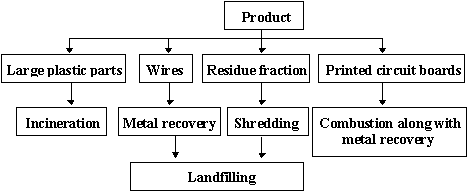
Figure 3.2
Flow of flame retarded plastic through the process used by Elektro-Miljø A/S /57
/
Recycling of plastics During recycling of plastics containing brominated flame retardants, brominated dibenzofurans and brominated dibenzo-p-dioxins may be formed. The information available on the levels of dibenzofurans and brominated dibenzo-p-dioxins in PBDE containing plastics during recycling indicates that the levels within the plastics do not increase during the recycling process /60/. Results on PBDD/PBDF formation during recycling of TBBPA containing thermoplastics showed that the total PBDD/PBDF concentration in the plastics was below 5 mg/kg even after 5 recyclings (ref. in /7/.
3.1.2 Other Recycling Processes
Shredding
The first step in the recycling of vehicles and large domestic appliances is a fragmentation in a shredder, where the metals are separated from other materials. Plastics, rubber, paper, wood, dirt, etc. end up in several fractions of shredder residues. The plastic parts mainly end up in a fraction called "fluff".
A number of experiments on incineration of shredder waste has been performed in Denmark, but at present the fluff is ordinarily landfilled /58 /.
The number of cars in Denmark is increasing at the moment, and consequently the number of scrapped cars is somewhat smaller than the number of new cars. The uncertainty on the estimate of the content of brominated flame retardants in scrapped cars and other vehicles is, however, primarily a result of the uncertainty on the estimate of the content of brominated flame retardants in cars produced 10-15 years ago.
In the absence of specific information it is roughly estimated that an amount corresponding to 80% of todays consumption with vehicles is discarded. This corresponds to 27 tonnes flame retardants.
Large domestic appliances are also usually fragmented in a shredder.
Steel production Small automotive plastic parts containing brominated flame retardants may follow scrap steel to secondary steel production. Brominated flame retardants are generally not used in fire resistant paint for steel construction. It is not possible to estimate the amount of brominated flame retardants in plastic going into steel production, but it is roughly estimated to be less than 1% of the amount used in vehicles corresponding to less than 1 tonne/year. The plastic parts will be combusted during the melt down.
3.1.3 Export of Scrap
Printed circuit boards from processed EEE waste were exported for recovery of the metals. The printed circuit boards were exported to W. European countries; among others Sweden and Germany. Processes for recovery of the metals have been described by Legarth 1996 /33/. As the first step of the recovery the plastics containing brominated flame retardants are often removed from the scrap by a pre-treatment incineration.
The treated scrap can roughly be estimated to represent 10% of the total turnover of printed circuit boards corresponding to 11-16 tonnes BFRs. Though treated scrap represents less than 10% of the total EEE scrap, it is estimated that the treated scrap represents a larger part of the electronics with a high content printed circuit boards.
Beside this, estimated 1,000-2,000 tonnes EEE waste were exported for reprocessing in other W. European countries. This waste is roughly estimated to account for another 10-20 tonnes BFRs.
Ships and aircraft are exported for recycling abroad. It is very difficult to estimate the total content of brominated flame retardants in these products, as ships and aircraft are relatively old when they are discarded. Considering todays consumption of flame retardants with these products the total amount is roughly estimated to be <15 tonnes per year.
In total it is estimated that around 20-50 tonnes of BFRs are exported with waste products.
No import of flame retardants with waste products has been identified.
3.1.4 Limitations on Recycling of Plastics
There is at present no recycling of plastics containing brominated flame retardants from discarded products.
Recycling of brominated flame retardants with thermosets (e.g. epoxy, polyurethane and unsaturated polyester) is limited by the fact that thermosets in general are not recyclable. Thermosets may be recovered by an alcoholysis where the thermosets are split into their monomers /33/, but this process is not used at the moment. More details can be found in /33/.
For high volume thermoplastic applications like TV back panels and PC-monitor casings, recycling may have a potential, but the recycling is restricted by the fact that the casings are made of a variety of base polymers (e.g. ABS, PC/ABS, HIPS) and contain different additives. The plastics may be downcycled and used for some products like park benches or noise shields, but without a thorough separation of the plastic, brominated flame retardants and other additives would be spread without any control.
For components made of flame retarded engineering plastics like PBT and polyamide, the plastic parts are moreover so small that a separation by means of the current technology is not a paying proposition.
Recycling of flame retarded plastics may be enabled by equipment that can analyse every single item for the presence of bromine and other elements. Such equipment is used by Swedish recycling plants and is planned to be introduced in Denmark in 1999.
3.2 Disposal with Solid Waste
Practically all flame retarded plastic from discarded products will ultimately be disposed of by incineration or landfilled.
The most recent Danish assessment of waste fractions by disposal method refers to 1996 (see table 3.1). Of the 84% domestic waste that was disposed of to incineration or landfilling, 10% was landfilled and the remaining 90% was incinerated. Calculated in the same way, 53% of the bulk waste, that was not recycled, was landfilled and the remaining 47% was incinerated.
These figures will be used for an estimate of disposal of brominated flame retardants.
Table 3.1
Waste fractions by disposal method in Denmark 1996 /59 /
| Waste fraction | Recycling |
Incineration | Landfilling | Special treatments | Total | ||||
103 tonnes |
% |
103 tonnes |
% |
103 tonnes |
% |
103 tonnes |
% |
103 tonnes |
|
| Domestic waste | 284 |
16 |
1,312 |
76 |
140 |
8 |
0 |
0 |
1,737 |
| Bulky waste | 115 |
18 |
250 |
39 |
282 |
44 |
0.6 |
0 |
647 |
| Garden waste | 454 |
95 |
8 |
2 |
18 |
4 |
0 |
0 |
479 |
| Commercial and industrial waste | 4,334 |
70 |
711 |
11 |
1,146 |
18 |
5 |
0 |
6,197 |
| Hazardous waste | 45 |
31 |
6 |
4 |
10 |
7 |
88 |
58 |
147 |
| Hospital waste | 0 |
0 |
6 |
66 |
0 |
0 |
3 |
34 |
9 |
| Processing residues | 2,551 |
69 |
214 |
6 |
919 |
25 |
0 |
0 |
3,684 |
| Not specified | 3 |
26 |
0.2 |
2 |
8 |
72 |
0 |
0 |
11 |
| Total | 7,787 |
60 |
2,507 |
19 |
2,524 |
20 |
95 |
1 |
12,912 |
The numbers in table 3.1 represent averages. For many waste categories the disposal method will depend on the combustibility of the waste. Combustible building waste and office waste will thus usually be disposed of to incineration, if there is available incineration capacity. The incineration capacity is indicated by the fact that 90% of the not recycled domestic waste is incinerated.
Accordingly it will be assumed that also 90% of the combustible building and industrial waste that is not recycled will be incinerated.
Office waste will be included in more of the waste fractions in table 3.1. From the waste statistics (not shown) it appears that 61% of the waste from institutions, trade and offices were disposed of to incineration or landfilling - of this 26% was landfilled and the remaining 74% was incinerated.
The estimated disposal method for the different groups of BFR containing waste is shown in table 3.2.The actual disposal method has been changing fast during the nineties, and for most of the product groups the distribution is based on rough estimates of most probable disposal methods.
Table 3.2
Estimated disposal methods for BFR containing solid waste
3.2.1 Sources of Brominated Flame Retardants to Solid Waste
Estimates on the total content of brominated flame retardants in solid waste are shown in table 3.3.
The amount of flame retardants in the individual waste groups is very uncertain and only best estimates are shown. Considering the uncertainty of the individual groups of waste the total amount of brominated flame retardants in the solid waste is estimated at 260-560 tonnes.
EEE waste For estimation of the total BFRs in printed circuit boards a calculation similar to the calculation of BFRs in new printed circuit boards in table 2 in appendix 6 was carried out (data not shown). For the estimation of the number of disposed units 1997 projections of Hansen et al. were used. To account for the overestimate of the number of office electronics, the projection for office electronics was multiplied with 0.33. The total TBBPA content of the assembled boards of electronics other than consumer electronics is according to Hedemalm et al. /32/ estimated at 490 g/m2. Boards of TV set is estimated to contain 136 g TBBPA per m2, whereas the boards of other consumer electronics are estimated to contain 90 g TBBPA per m2 and 36 g PBDEs per m2.
For estimation of the total BFRs in housing a calculation similar to the calculation of BFRs in housing of new electronics in table 1 in appendix 6 was carried out (data not shown). For the estimation of the number of disposed units 1997 projections of Hansen et al. were used. To account for the overestimate of the number of office electronics the projection for office electronics was multiplied with 0.33. The content of BFRs in housing was estimated from the information on housing of discarded electronics in section 3.1.1.
For the group 'Control and process equipment and other equipment and wiring' the estimate has been roughly based on the present consumption (section 2.2.5) assuming that the amount of discarded equipment corresponds to 30-60% of current consumption. For cables the amount of discarded products is assumed to correspond to 80-100% of the current consumption.
BFRs in discarded small and large domestic appliances and electric tool have been roughly estimated considering the current consumption of BFRs with other part of electric and electronic equipment in section 2.2.3. For lighting it is roughly assumed that BFRs in discarded products equal the current consumption with lighting.
The basis for the estimates of the other groups than EEE waste appears from the respective sections in chapter 2.
EEE waste represents about 78% of the total content of brominated flame retardants in the waste.
Other waste groups of significance are vehicles (7% of total), building materials (6%), and waste from production of printed circuit boards (7%).
Table 3.3
Total content of brominated flame retardants in solid waste (best estimates)
3.2.2 Fate of Brominated Flame Retardants by Incineration
By combining the information in table 3.2 and 5.3 it can be estimated that a total of 170-360 tonnes brominated flame retardants were disposed of to incineration in 1997.
The total bromine content of the flame retardants can be estimated at 100-250 tonnes Br.
The total amount of incinerated waste was 2.5 million tonnes. The flame retardants contributed to a bromine content of 0.004-0.01 % (40-100 mg/kg).
Other bromine sources
On a global basis the brominated flame retardants account for about 20% of the bromine consumption. Of the other applications (see section 1.3) gasoline additives, agrochemical, etc. representing at least 50% of the total consumption will not end up in solid waste. Bromine in trace amount will be present in all kind of waste.
If it is assumed that the flame retardants account for about half of the bromine in the waste the bromine content is 0.01-0.02 %.
Other studies In foreign studies total bromine levels of 0.0015% (15 mg/kg) and 0,002-0.009% have been reported (ref. in /60 /).
By comparison the average chlorine content in the municipal waste in Denmark has been estimated at 0.25% Cl /64/.
Analysis of flue gas and residues
No analysis of brominated flame retardants or elemental bromine in flue gas or residues from Danish municipal solid waste (MSW) incinerators have been identified.
Hence, it is not possible to confirm the estimated amounts of flame retardants in solid waste by total estimated on the outflow of bromine from the incineration plants.
Emission to flue gas
At the operating temperatures of MSW incinerators almost all flame retardants will be destructed. Analyses of other organic compounds, however, demonstrate that trace amounts of the compounds pass the combustion chamber /61 /.
By way of example Hoffmann 1996 /62 / has estimated by comparing the concentration of the phthalate DEHP in the flue gas and residues from the incineration with estimates on the total DEHP content of the waste that approximately 0.1% of the total content of DEHP passed the combustion chamber and ended up in flue gas and residues.
No data on the distribution of BFRs between cleaned flue gas and the residues are available.
By comparison almost 99.9% of dioxins in flue gasses are deposited on particles that are separated during flue gas cleaning (Brna and Kilgroe 1992 ref. in /64/).
If for a worst case estimate it is assumed that 1% passes the combustion chamber and 1% of this passes the flue gas cleaning and is emitted with the flue gas to the atmosphere, the total emission of BFRs from MSW incinerators can be estimated at <0,04 tonnes per year.
The lack of data on brominated flame retardants in residues from municipal incineration is a reflection of the fact that the key issue concerning incineration of brominated flame retardants is the formation of transformation products.
Formation of dioxins and furans
There is a large body of literature that shows that polybrominated dibenzofurans and dibenzo-p-dioxins can be formed from PBDEs, PBBs and TBBPA under certain combustion/pyrolysis conditions.
The formation of polybrominated dibenzofurans and dibenzo-p-dioxins (PBDDs/PBDFs) has recently been reviewed under the International Programme on Chemical Safety (IPCS) /10/ and in the still unpublished appendix A to the EU Risk assessments of PBDEs /60/. A comprehensive review of the data on the formation of PBDDs/PBDFs during waste treatment can be found in the IPCS report /10/, and only a short introduction will be given here.
Incineration PBDDs/PBDFs may be formed during incineration by two mechanisms:
| Formation in the incinerator plant from precursors such as aromatic brominated flame retardants. |
| Formation in the incinerator plant from organic matters and a bromine donor (de novo synthesis). |
Figure 3.3 illustrates how polybrominated PBDDs/PBDFs are formed from pure polybrominated diphenyl ethers by thermal reaction involving free radical mechanism.
Figure 3.3
Formation of polybrominated dibenzo-p-dioxins (PBDDs) and polybrominated
dibenzofurans (PBDFs) from PBDEs (from /63 /)
Reaction (1) occurs in pure thermal conditions (D) and reaction (2) in oxidative ones (D and O2).
Most laboratory experiments have shown that the dioxin formation and destruction depend on the incineration conditions, for example temperatures, oxygen percentage and catalysts. At temperatures of about 300°C the dioxin formation is maximal, and at temperatures above 900-1000°C the dioxins will be degraded again. The dioxin formation may occur in the combustion chamber, but is more likely to occur afterwards during the cleaning and cooling of the flue gasses /64 /.
Formation from precursors may be decreased by efficient combustion in the after-burner, whereas the de novo synthesis cannot be limited by combustion technology but instead with rapid cooling of the gasses and filter systems /64/.
Only a few studies of the effect of addition of plastics containing brominated flame retardants to incinerators have been carried out. Data from MSW incinerators in the Netherlands did not show any significant relationship between dioxin formation and the bromine content of the waste. The bromine content varied between 0.1 and 0.9% of the chlorine content /ref. in 60/.
Analyses are complicated by the fact that polychlorinated dibenzodioxins and dibenzofurans (PCDDs/PCDFs) in general are formed in much higher amount in MSW incinerators than bromo or mixed bromo and chloro dibenzodioxins and dibenzofurans (PXDDs/PXDFs) /65 /. The formation of the mixed forms PXDDs/PXDFs are explained by the extensive bromine-chlorine exchange reactions observed under several tests conditions /10/.
There are some report on the consequences of an increase in bromine input during test operations in incinerators.
In a large-scale experiment at the municipal waste incinerator at Bielefeld-Herford (Germany) material containing 4.8% PeBDE was added to the normal fuel (Lahl et al 1991, ref. in /10/). The fly ash from the electrostatic precipitator was analysed for PCDDs/PCDFs, PXDDs/PXDFs and inorganic bromine. Of the mixed PXDDs/PXDFs congeners only monobromo polychlorinated congeners could be detected. The concentrations ranged from 1.5 to 10.2 mg/kg. The concentration of the purely chlorinated compounds was much higher after the addition of PeBDE than normally detected. The results indicate that the chlorinated compounds may be formed from brominated precursors.
Wanke et al. (1996) (ref in /10/) studied the influence of additional input of BFR containing extruded polystyrene foams and rigid PUR foams to MSW incinerator at a pilot plant. No increase in PCDDs/PCDFs was detected compared with "normal fuel" in the raw gasses in the PUR foam combustion. For both foam types elevated levels of PXDDs/PXDFs were shown. The concentration of PBDDs/PBDFs was low in all experiments.
It must be expected that the formation of dioxins and furans will be dependent on the chemical structure of the flame retardants. There are no experiments where the formation of dioxins and furans after addition of different brominated flame retardants and inorganic bromine is compared.
As discussed by Jensen 1997 /64/ there is still some controversy about the proper incineration conditions for effective destruction of precursors and dioxins and furans.
3.2.3 Landfilling Activities
By combining the information in table 3.2 and 5.3 the total amount of brominated flame retardants disposed of to landfills in 1997 can be estimated at 90-200 tonnes.
Brominated flame retardants may be present in leachate from landfills, but no studies on the fate of brominated flame retardants in landfills have been carried out.
Although leaching of the compounds from plastics on a short-term scale is small, the compounds will sooner or later be released from the plastic; at least at the rate the plastic is degraded. The time scale may be hundreds of years. The question is whether the compounds are degraded before they will end up in the leachate.
As some of the compounds are persistent in the environment long term diffuse emissions from landfills cannot be neglected.
3.3 Turnover with Chemical Waste
The turnover of brominated flame retardants with chemical waste is considered to be insignificant.
3.4 Turnover with Waste Water
There is no Danish analyses of brominated flame retardants in waste water or sewage sludge.
Analyses of sludge
No analyses of brominated flame retardants in waste water have been found in the literature; only analyses of sludge.
Due to the physico-chemical properties of the brominated flame retardants the major part of flame retardants in the waste water will be adsorbed to the particles and end up in the sludge.
Two pooled samples of sewage sludge from a Swedish sewage treatment plant were found to contain 13-15 mg total PentaBDE/kg dry weight (d.w.) and 9-10 mg 2,2',4,4' TetraBDE/kg d.w /66 /. The two samples were pooled from a 32-day period with little rain and a rainy period of 7 days, respectively. There were no differences between the two periods which may indicate that the sources were primarily household and industrial effluents. The study did not include analyses of higher PBDE congeners.
The levels of the PBDEs from triBDE to hexaBDE in sewage sludge from 13 waste water treatment plants in Germany have been reported. The measured levels per kg d.w. were 0.1-1 mg triBDE, 0.2-7.5 mg tetra-BDE, 0.2-7.5 pentaBDE, and 0-1.2mg hexaBDE. In total the concentration of the four PBDEs was <17.2 mg/kg d.w.
TBBPA was found in two sewage sludge samples from two Swedish waste water treatment plants receiving leachate from a landfill with TBBPA containing industrial waste. The two single measurements were 56 and 31 mg/kg d.w., respectively /67 /.
By way of comparison PCB (polychlorinated biphenyls) levels in the sludge from three Danish waste water treatment plants ranged from 4-7 mg/kg dry weight for triPCB to 130-190 for pentaPCB /68 /.
Total production of sludge in Denmark
The annual production of municipal sludge in Denmark is around 170,000 tonnes dry weight /69 /. An order of magnitude of the total turnover of brominated flame retardants with municipal sludge can be estimated using the highest values measured in Sweden.
Estimates on BFRs in sludge
If the sludge on average contained <100 mg TBBPA/kg d.w., the total content of 170,000 tonnes would be <17 kg.
If based on the Swedish and German measurements it is assumed that the total concentration of the congeners from triBDE to hexaBDE is <30 mg per kg d.w. the total content would be <5 kg. The congeners triBDE to hexaBDE are all part of the commercial PeBDE.
There are no measurements of the most used DecaBDE in municipal sludge.
Sources According to the estimates of the EU risk assessment the by far most predominant source of DeBDE release to waste water in the EU is textile washing /3/, and the amount in waste water will thus be highly dependent on the use of BFR treated textiles. Next to this source release (via air) from polymer compounding and conversion are estimated to be the most significant source.
Industrial sources There is no data on brominated flame retardants in waste water effluents from Danish industries. Discharges of brominated flame retardants to waste water from BFR production sites have been assessed by /70 /, but from the plastic processing industries, the data were not sufficient to make any calculations of the discharge of BFRs.
Significance of releases
In a study from the Swedish River Viskan, fish and sediment samples collected upstream and downstream from several industrial point sources were analysed for PBDEs and HBCD /71 /. The lowest PBDE and HBCD concentrations were found upstream the industries and the concentration generally increased as more industries were passed. Several textile industries along the river have used DeBDE, and at least one textile factory has used HBCD. The results indicate significant release of brominated flame retardants from the textile industry, but no samples of waste water effluents from the industries were analysed. In Denmark no use of brominated flame retardants in the textile industry has been identified, and the release of brominated flame retardants from the textile industry is assumed to be insignificant.
TBBPA and its demethylated derivative MeTA were analysed in sediment samples upstream and downstream from a Swedish plastic factory using TBBPA /67/. The concentration of TBBPA was upstream and downstream 34 and 270 ng/g d.w., respectively, whereas the concentration of MeTA was 24 and 1,500 ng/g d.w., respectively. Similar differences were found when the concentration of the compounds was normalised to the content of organic matter (measured as ignition loss). Only single samples were taken and the significance of the measurements was not determined. The measurements, however, indicate significant releases of TBBPA from the factory.
Model estimates
Release to waste water from processing of plastics will depend on the actual processes. In the absence of actual measurements the possible emissions will be estimated from the model developed in 'Use category document. Plastic additives' /25/.
For organic flame retardants it is in the model assumed that initial losses from plastic processing (conversion) will be to the atmosphere. Subsequent condensation could result in losses to liquid waste. On the basis of volatile loss factors for worst case conditions, the loss for closed processes, which would be most common, is estimated at 0.002%. For processing significantly in excess of 200°C and for smaller processing sites (<750 tonnes plastic per year) loss factors should be increased by 10x. A calculation based on a loss factor of 0.002-0.02% and an annual consumption of BFR for production in Denmark of 130-190 tonnes, gives a total emission to the air of 2.6-38 kg BFR per year. Only a minor part of this can be assumed to be condensed and released to waste water. For a worst case estimate it will be assumed that half of the released flame retardants ends up in waste water corresponding to <19 kg. The emission to the air will be estimated at the calculates <38 kg.
Particulate emission of flame retardants from compounding of plastics is in /25/ estimated at 0.01-0.05% depending on particle size. The particulates will ultimately end up in solid waste or waste water. The exact amount of BFR used for compounding in Denmark is not known, but under the assumption that the 29 tonnes imported as chemicals are used for compounding a total loss of 2.9-14.5 kg BFR can be estimated. The loss is assumed to be disposed of with solid waste, but a minor part could be released to waste water.
In total it is estimated that the release to waste water from conversion and compounding is <25 kg. Of this PBDEs may account for about 1% and this source is consequently insignificant compared to the discharge from washing activities (mentioned in the next).
The major part of brominated flame retardants is used in electronic and electric products from which direct release to waste water is assumed to be negligible. BFR-containing products in direct contact with water are roofing and textiles.
When textiles containing flame retardants are washed the flame retardants will gradually be lost. It has been reported that fabrics treated with DeBDE and antimony trioxide decreased significantly in oxygen index beyond 15 launderings, indicating that the flame retardants leached from the fabrics /3/.
DeBDE has been used for protective clothing that are still in use. In section 2.2.6 it is estimated that around 50 kg DeBDE or lower PBDEs are likely to be released per year to the waste water from uniforms through the washing processes. No other uses of brominated flame retardants in clothing have been identified, but it is likely that brominated flame retardants are present in protective clothing for some civil applications. Based on the present information the release of PBDEs from clothing is roughly estimated at 50-200 kg per year.
Release of DeBDE from furniture fabrics is in the EU Risk Assessment calculated from a worst case assumption of a washing rate of once per year and assuming that 45% of the flame retardant is removed after 15 washes /3/. Based on these assumptions, the release to waste water from textiles in the UK can be estimated at 360 tonnes DeBDE in the worst case. In Denmark upholstered furniture containing brominated flame retardants is generally not used in private residences, and the fabrics are for most applications not removable. Release to waste water from washing of the fabrics is thus not very likely, and compared to the release from the washing of clothing the release is estimated to be small.
Brominated flame retardants in polyolefins used for roofing may gradually be released to rainwater. No actual release data exist. In the absence of data emission factors from 'Use category document. Plastic additives' /25/ will be used. Using the worst case emission factor for outdoor uses of 10 per year and assuming that the accumulated quantity corresponds to 10 years of the present consumption, the maximal release is estimated at 280 kg per year. On the roof the compounds will be exposed to high UV radiation levels, and a photolytic degradation of the flame retardants on the surface of the roofing is likely to take place.
Rain water PBDEs are very stable compounds, and the major part of PBDEs emitted to the air is likely to be deposited on land or the sea by dry or wet deposition (see. section 1.4). Other brominated flame retardants are more likely to be degraded before depositing. There are no deposition data on brominated flame retardants available. In section 1.4 it is estimated that 0.2-1.5 tonnes brominated flame retardants were emitted from Danish sources in 1997. Only a few percentages of the rainwater falling in Denmark will end up in waste water treatment plants and the supply of PBDEs to waste water treatment plants by rain water is roughly estimated at <2% translating into 50-200 kg per year.
Based on an estimated daily intake of 0.2-0.4 mg PBDE/day (see section 2.3), the total release of PBDEs with human excretions to waste water can be estimated at 0.4-0.8 kg/year. There are no available data on the excretions of other brominated flame retardants.
There are no measurements of leachate from landfills available.
Summary
Sources of brominated flame retardants to waste water are summarised in table 3.4. Under the assumption that the sources marked with ? is of less significance, the total discharge of brominated flame retardants to waste water is estimated at 50-530 tonnes per year. This amount agrees quite well with the estimates above based on sludge analyses from Sweden and Germany.
Table 3.4
Potential sources for brominated flame retardants in waste water
| Sources | Potential discharge |
Main BFR |
| Production of plastics | <15 |
TBBPA, Other |
| Textile washing | 50-200 |
PBDEs |
| Rainwater | <30 |
PBDEs, Other |
| Roofing | <280 |
Other |
| Other uses | ? |
? |
| Leachate from landfills | ? |
? |
| Human excretions | 0.4-0.8 |
PBDEs |
| Total (round) | 50-530 |
Due to the physico-chemical properties of the compounds most of the flame retardants will follow the sludge, and based on studies of other substances e.g. PCBs /68/ it will be roughly estimated that <10% will follow the water phase and be discharged to the aquatic environment. Consequently the total release from waste water treatment plants is estimated at 5-53 kg per year.
There may also be a release with urban run-off discharged directly to the aquatic environments. The main source of brominated flame retardants in the run-off is estimated to be emission from products and production processes and the release via the urban run-off will consequently be insignificant compared to the direct wet and dry deposition. It will roughly be estimated that the urban run-off maximally is half of the discharge to waste water treatment plant corresponding to <80 kg BFRs.
Sludge on agricultural soil In 1996 (most recent statistics) 69% of the municipal sludge was spread on agricultural soil /72 /. Using the same percentage for 1997 estimated 31-330 kg BFRs were spread on the soil.
3.5 Summary
The present information on the turnover of brominated flame retardants with waste products is summarised in table 3.5. It should be emphasised that the emission estimates are based on theoretical considerations.
Table 3.5
Turnover of brominated flame retardants with waste products in 1997
| Process | Disposal/discharge af brominated flame retardants (tonnes BFRs) |
||||
Air |
Water |
Soil |
Landfills |
Destruction |
|
| Processing of electronic waste | ? |
||||
| Shredding | ? |
||||
| Incineration | <0.04 |
170-360 |
|||
| Landfilling | ? |
? |
90-200 |
||
| Effluent from waste water treatment | 0.005-0.05 |
||||
| Precipitation determined effluents | <0.02 |
||||
| Municipal sludge | 0.03-0.3 |
0.006-0.06 |
0.008-0.09 |
||
| Total (round) | ? |
0.005-0.07 |
0.03-0.3 |
90-200 |
170-360 |
4. Summary and Discussion of the Substance Flow Analysis
4.1 Consumption in Denmark
4.2 Emission and Disposal to the Environment and Landfills
4.3 Substance Flow Balance for Brominated Flame Retardants
4.1 Consumption in Denmark
The total consumption of brominated flame retardants with end products in Denmark is summarised in table 4.1.
The total consumption is estimated at 320-660 tonnes.
The principal fields of application were:
| Electric and electronic equipment accounting for about 70% of the total |
| Building materials accounting for about 15% of the total |
| Transportation accounting for about 12% of the total |
The consumption with electric and electronic equipment can be broken down to about 29% of the total consumption with printed circuit board assemblies, 21% with housing, 7% with other parts of electric appliances and machines, 2% with lighting, and 11% with products for wiring and power distribution.
The use of brominated flame retardants is very widespread. Brominated flame retardants are present in almost all products containing electronic components i.e. virtually all electronic products and means of transport and a large part of the electric products. Additionally brominated flame retardants are used in a significant part of plastics in contact with live parts in electric equipment. Switches, plugs, and sockets for lighting are only a few examples.
Unintended uses as contaminant
Natural occurrence of BFRs has not been reported. The total turnover of PBDEs with food is estimated at 0.4-0.8 tonnes per year. Fish is estimated to account for approximately half of the intake with food. The available data indicate that the turnover of TBBPA with fish is considerably lower than the turnover with PBDEs, but data on other BFRs than PBDEs and PBBs are scarce.
Specific substances
The consumption of the different groups of flame retardants is estimated with high uncertainty, as specific information on the content of flame retardants in imported products has been difficult to obtain. For some applications the actual flame retardants present in the products are estimated from more general information on the consumption of flame retardants in Western Europe and other parts of the World.
TBBPA and derivatives are estimated to account for about 47% of the total consumption. TBBPA is mainly used reactively for printed circuit boards and additively for housing of electric and electronic appliances and engineering thermoplastics. TBBPA and derivatives are estimated to account for a larger part of the total consumption than they do at the global and W. European market cf. section 1.3. The reason is that TBBPA and derivatives are estimated to account for the major part of BFRs used for housing of electronics and this may be specific for Northern Europe.
Table 4.1
Consumption of brominated flame retardants with end products in Denmark 1997
| Product group | Total consumption of BFRs |
Consumption of specific compounds (tonnes) |
|||||
Tonnes |
% |
PBDE |
TBBPA |
PBB |
HBCD |
Other BFRs |
|
| Printed circuit boards | 100-180 |
29 |
0.3-5.2 |
100-180 |
0-2 |
||
| Epoxy laminates | 92-150 |
92-150 |
|||||
| Paper/phenolic laminates | 3-4.8 |
0.3-1 |
2.3-3.8 |
||||
| Electronic component encapsulates | 6-22 |
<2.2 |
7.4-22 |
||||
| Other plastic parts | <4 |
<2 |
<2 |
<2 |
|||
| Housing of EE appliances and machines | 80-130 |
21 |
3-10 |
56-89 |
25-49 |
||
| PC monitors | 48-73 |
34-52 |
14-21 |
||||
| Notebook computers | 3-4 |
2-3 |
1-1.4 |
||||
| Other office machines | 20-31 |
17-25 |
3.7-5.5 |
||||
| TV-sets | 3-4 |
1-3 |
1-2 |
2-4 |
|||
| Other consumer electronics | 2-6 |
0.5-2 |
0.5-2 |
2-6 |
|||
| Medical and industrial electronics | 2-14 |
1-4 |
1-4 |
2-10 |
|||
| Small household appliances | 0.5-2 |
0.5-1 |
0.5-1 |
0.5-1 |
|||
| Other parts of EE appliances and machines | 20-50 |
7 |
5-14 |
3-8 |
0-2 |
16-43 |
|
| Switches, relay parts etc. | 10-25 |
2-6 |
2-6 |
8-20 |
|||
| Moulding fillers | 2-5 |
2-5 |
2-5 |
||||
| Other plastic parts | 6-20 |
1-3 |
1-2 |
0-2 |
6-18 |
||
| Lighting | 4-14 |
2 |
1-7 |
4-11 |
1-9 |
||
| Sockets in lamps and fluorescent tubes | 4-7 |
1-3 |
4-7 |
1-3 |
|||
| Plastic cover parts | <3 |
<2 |
<2 |
<2 |
|||
| Switches, electronic parts etc. | <4 |
<2 |
<2 |
<4 |
|||
| Wiring and power distribution | 30-80 |
11 |
7-29 |
4-15 |
1-5 |
2-4 |
20-49 |
| Rubber cables | 2-10 |
1-5 |
1-5 |
||||
| Other cables | <5 |
0-5 |
0-5 |
||||
| Wiring of houses | 11-26 |
2-7 |
2-7 |
2-4 |
7-14 |
||
| Contactors, relays, switches etc. for automation and power distribution | 15-35 |
4-12 |
2-8 |
13-30 |
|||
| Textiles, carpets and furniture | 2-11 |
1.3 |
0-5 |
2-9 |
0-5 |
||
| Protective clothing | <0.1 |
<0.1 |
<0.1 |
<0.1 |
|||
| Curtains, carpets and tents | <1 |
<1 |
<0.5 |
<0.5 |
|||
| Furniture, Foam and stuffing | 2.2-9.7 |
<4 |
2.2-8.7 |
<4 |
|||
| Building materials | 50-100 |
15 |
1-5 |
0-2 |
13-36 |
41-66 |
|
| Expanded polystyrene, EPS | 0.5-2.7 |
0.5-2.7 |
|||||
| Extruded polystyrene foam, XPS | 11-29 |
11-29 |
|||||
| Polyurethane foam | 40-60 |
40-60 |
|||||
| Other uses | 1-7 |
1-5 |
0-2 |
1-4 |
1-6 |
||
| Paint and fillers | 0.6-1.7 |
0.2 |
0.1-0.5 |
0.5-1.2 |
|||
| Paint | 0.1-0.3 |
0.1-0.3 |
|||||
| Fillers and wood proofing | 0.5-1.4 |
0-0.2 |
0.5-1.2 |
||||
| Transportation | 30-90 |
12 |
13-46 |
14-52 |
9.4-30 |
19-71 |
|
| Cars, lorries and busses | 24-72 |
13-41 |
12-37 |
9.4-29 |
18-52 |
||
| Trains | 0.3-4 |
0.04-1.7 |
0.3-4 |
0.3-4 |
|||
| Other means of transport | 1-15 |
0-3 |
1-11 |
0-1.5 |
1.5-15 |
||
| Other uses | <3 |
0.3 |
0-2 |
0-2 |
0-1 |
0-2 |
|
| Total (round) | 320-660 |
99 |
30-120 |
180-360 |
1-7 |
26-80 |
120-300 |
| 1) | Includes derivatives of TBBPA. |
| 2) | Some of the flame retardants are used reactively and the chemical substance per se is only present in the end product in trace amount. For some applications the flame retardants are indicated as either/or (for instance either TBBPA or PBDE) and the sum total of BFRs is lower than the sum of the single groups. |
PBDEs are estimated to account for approximately 12% of the total consumption. It should be noted that the uncertainty on this value is as high as ± 50%. Major application areas are housing and engineering thermoplastics of electric and electronic equipment and plastic parts of transportation.
PBBs account for approximately 1%. Areas where the use of PBBs has been identified are engineering thermoplastics and rubber cables.
HBCD accounts for approximately 11%. Major application areas are expanded polystyrene (EPS and XPS) and textiles for automotive interior.
Other brominated flame retardants accounted for approximately 29%. Specific information of other BFRs in imported products has been difficult to obtain. Major applications are polyurethane insulation (brominated polyetherpolyol), housing of electronics (e.g. tetrabromophtalimide), transportation (e.g. tetrabromophthalic anhydride). Other BFRs may, however, be used within all application areas.
Reactive vs. additive use
When the flame retardants are used reactively and built into the polymer structure, the chemical substance per se is only present in the plastic in trace amount. The product may rather be considered a brominated thermoset with properties that are significantly different from the properties of the flame retardant compound that is used as precursor.
TBBPA used reactively for printed circuit boards may accordingly in the end products be considered another substance than TBBPA used as additive flame retardant in housing. On a global scale additive use of TBBPA has traditionally only accounted for about 10% of the total consumption /8/. Because of the substitution of TBBPA (and derivatives) for PBDEs in housing and other applications, the additive use is estimated to account for a considerably higher part of the consumption of TBBPA with end products in Denmark.
Other main applications by which the brominated flame retardants are used reactively are polyurethanes for insulation and technical laminates based on unsaturated polyester or epoxy.
The consumption of BFRs used as reactive flame retardants can roughly be estimated at about 44% of the total consumption.
Consumer applications of chemicals
Brominated flame retardants are not marketed for non-professional use. Sprays with flame retardants for self treatment of for instance textiles in cars are available, but to the knowledge of the authors the sprays do generally contain other flame retardants.
Trends in consumption with end products
There is no previous substance flow analysis of brominated flame retardants in Denmark.
For some of the traditional major applications, TV-backplates and housing of electronics, the trend in the consumption is downward. For TV-backplates the downward trend is general to all Europe. For the housing of electronics the trend is general to at least Northern Europe.
For other applications in electric and electronic equipment - for instance printed circuit boards - the consumption pattern has been unchanged during the last years, and the total consumption of BFRs for these applications is increasing due to an increase in the consumption of the end products.
The trend in the attitude to brominated flame retardants is that many producers are looking for substitutes for brominated flame retardants, but until now substitution has only had a minor influence on the total consumption of these compounds with end products.
Consumption for production processes in Denmark
Brominated flame retardants are not produced in Denmark. For production processes they are mainly imported with plastic compounds and laminates for production of printed circuit boards.
The total import of brominated flame retardants as chemicals and with semi-manufactures for production in Denmark is shown in table 4.2.
Table 4.2
Import of brominated flame retardants as chemicals and with semi-manufactures for
production in Denmark
| Product group | Total import of BFRs |
Import of specific substances (tonnes) |
||||
Tonnes |
PBDE |
TBBPA and der. |
PBB |
HBCD |
Other BFRs |
|
| Chemicals 1) | 29 |
1 |
2.1 |
26 |
||
| Plastic compounds and masterbatches | 130-190 |
0.1-0.2 |
34-42 |
3.3-4.9 |
6.1-13 |
86-126 |
| Other plastic semi-manufactures | 2.6-7 |
2-5.2 |
0.1-0.3 |
0.5-1.5 |
||
| Laminates for printed circuit boards 2) | 100-160 |
100-160 |
||||
| Total (round) | 260-390 |
1.1-1.2 |
140-210 |
3.3-4.9 |
6.2-13 |
110-150 |
| 1) | The chemicals are predominantly used for production of semi-manufactures that are exported. The data are derived from the trade statistics. |
| 2) | Represent the amount used for print circuit board production in Denmark. |
Consumption of plastic raw materials
TBBPA for thermoplastic polyester (PBT/PET) and brominated polyetherpolyol account for the major part of the consumption of BFRs with plastic compounds in Denmark. The thermoplastic polyesters are flame retarded with TBBPA (derivatives) or PBB, and are used for production of plastic parts for electric and electronic equipment, for instance switches, relays, parts of pumps and electromotors.
Brominated polyetherpolyol is used reactively for production of rigid polyurethane foam for insulation. HBCD is used for production of expanded polystyrene for export.
A minor part of TBBPA is used for housing of electronic equipment. BFRs are only used for a small part of the flame retarded polyamide. Polyamides with non-halogen flame retardants are widely used.
Trends in consumption for production in Denmark
A few years ago PBDE in plastics for housing of electronic appliances represented a major part of the total consumption for production in Denmark, but non-halogen flame retardants have replaced BFRs for most applications.
The consumption of PBDEs as chemical has decreased from about 20 tonnes in 1995 to about 1 tonne in 1997.
Comparison with an W. European average
In section 1.3 it was estimated that the Danish consumption of brominated flame retardants in 1997 should be approximately 600-800 tonnes if the consumption equalled the average W. European consumption. The estimated total in table 4.1 indicates that the consumption in Denmark in total may be a little lower than the average European consumption. The assessments are, however, not totally independent, as the Danish consumption within some application areas has been estimated with a sidelong glance to the W. European consumption figures.
This is in particular true with respect to the distribution of the single groups of flame retardants. A recent market analysis shows PBDEs to a large extent has been replaced by other brominated flame retardants; especially in The Netherlands, Germany and the Nordic countries. PBDEs are hardly used in Danish production and not used by large German suppliers of plastic raw materials. TBBPA and other BFRs have substituted for PBDEs in housing of electronic products on the N. European market and dominant producers of electronic products has a policy of avoiding PBDEs. Market analyses of the European flame retardant market did not show any significant decrease in the use of PBDEs from 1992 to 1996 and PBDEs accounted in 1996 for about 26% of the W. European BFR market (based on information covering 76% of the market). A recent market analysis estimates that the PBDEs only accounted for 11% of the W. European market for brominated flame retardants in 1998.
The is a very significant difference between the consumption of BFRs in Danish production of plastics parts and the distribution of BFRs on the W. European market. PBDEs in Danish production only accounted for about 2% of the total BFR consumption in 1997 in comparison to approximately 26% and 11% of the W. European market in 1996 and 1998, respectively.
4.2 Emission and Disposal to the Environment and Landfills
Based on model considerations, the total emissions from Danish sources in 1997 have been estimated as follows:
| Emission to the air: 0.2-1.6 link tonnes |
| Discharge to aquatic environments: 0.005-0.07 tonnes |
| Release to soil: 0.03-0.3 tonnes |
The estimated emissions to the environment and disposal to landfills are shown in table 4.3.
Table 4.3
Estimated emission of brominated flame retardants to the environments and
disposal to landfills in Denmark 1997
| Process/source | Potential emission/disposal in tonnes BFRs to: |
||||
Air |
Water |
Soil |
Landfills |
Incineration |
|
| Industrial processes: | |||||
| Manufacturing of plastic products | <0.05 |
||||
| Uses: | |||||
| Emission from products in service | 0.2-1.5 |
||||
| Textile wash | 1) |
||||
| Roofing | 1) |
||||
| Human excretions | 1) |
||||
| Other emissions | |||||
| Waste processing: | ? |
||||
| Waste management: | |||||
| Effluent from waste water treatment | 0.005-0.05 |
||||
| Municipal sludge | 0.03-0.3 |
0.006-0.06 |
0.008-0.09 |
||
| Precipitation determined effluents | <0.015 |
||||
| Chemical waste | |||||
| Solid waste incineration | <0.04 |
? |
170-360 |
||
| Landfilling | 90-200 |
||||
| Total (round) | 0.2-1.6 |
0.005-0.07 |
0.03-0.3 |
90-200 |
170-360 |
| 1) | Brominated flame retardants are released to waste water from these uses. The amount is included in 'Municipal sludge' and 'Effluents from waste water treatment plants'. |
Emission to the air
There are no Danish measurements of emission of brominated flame retardants. Hence, all estimates have been based on models and measurements from other countries.
The significance of the emission of brominated flame retardants from products in use has been demonstrated by chamber experiments and measurements in the indoor environment, but the actual rates are very uncertain. Similarly emissions from production processes have been demonstrated by environmental samples from the vicinity of production sites.
Based on model considerations evaporation from products in use and during production is estimated to be the major sources of emission of the flame retardants to the air. The emission of flame retardants used reactively is estimated to be insignificant, and PBDEs and other additively used flame retardants account for the major part of the emission.
When emitted the flame retardants will tend to adsorb to solid surfaces and particles in the air. The dust particles may be released to the environment by airing, end up in vacuum cleaning bags or attach to the interior of appliances. Dust attached to the interior of appliances may be released by dismantling of the appliances.
Discharge to waste water Although the use of brominated flame retardants with protective clothing in Denmark compared to other countries is very limited, laundry of clothing with BFRs is estimated to be one of the major sources of brominated flame retardants to waste water.
Roofing foils and particles containing brominated flame retardants - initially evaporated to the air from production processes and products in use - are estimated to be other major sources of brominated flame retardants to waste water.
Discharge to the aquatic environment
Brominated flame retardants in waste water will tend to follow the sludge. The total discharge to the aquatic environment with waste water effluents is estimated to be <0,068 tonne. As is the case with other organic compounds following the solid phase, the occasional discharges by heavy rainfall bypassing the treatment plants may account for a significant part of the total discharge to the aquatic environment.
Compared to the potential deposition of BFRs from the air, the discharge with waste water is presumably small. The potential deposition of emitted substances will be dependent on the atmospheric stability of the substances. PBDEs seem to be much more stable in the atmosphere than TBBPA and PBDEs emitted to the atmosphere may be spread over long distances.
Emission to soil
The only identified source of release of brominated flame retardants to soil is spreading of municipal sludge on agricultural soil. The flame retardants may to some extent be degraded during the digestion of the sludge, but data are not available for a quantification of the degradation.
Solid waste incineration In total 170-360 tonnes brominated flame retardants were disposed of to solid waste incineration. During the incineration the flame retardants will be destructed. Analyses of the fate of other organic compounds during incineration show that trace amounts of the compounds will pass the combustion chamber and end up in residuals from the incineration. For phthalates for instance up to 0.1% passes through the combustion chamber.
Flame retardants passing the combustion chamber may act as precursor for formation of brominated and mixed halogen dioxins and furans.
Landfilling
In total 90-200 tonnes brominated flame retardants were disposed of to landfills. Flame retardants in products disposed of to landfills may in the long term be released to the air or landfill leachate. Measurements of brominated flame retardants in landfill leachate have not been identified. It is not known to what extent the flame retardants will be degraded within the products or in the soil in the immediate vicinity of the products from where they are released.
4.3 Substance Flow Balance for Brominated Flame Retardants
A schematic representation of the estimated flow of brominated flame retardants through the Danish society is shown in figure 4.1.
Import/export
Approximately 90% of the electronic products produced in Denmark are exported. Building materials is the only major application area of brominated flame retardants where domestic production accounts for a significant share of the consumption; and still the domestic production account for less than half of consumption. It is roughly estimated that imported products account for approximately 90% of the consumption of brominated flame retardants with end products.
Figure 4.1
The estimated flow of brominated flame retardants through the Danish society in
1997
Recycling and deposition
There is at present no recycling of brominated flame retardants with plastics from discarded products. Production scrap is recycled for the same applications as the primary materials.
There are no Danish measurements of atmospheric deposition of brominated flame retardants. Data on atmospheric deposition have neither been identified in the literature.
5. Regulations and Risk Reduction Measures with Respect to Brominated Flame Retardants
5.1 OECD initiatives
5.2 EU Initiatives
5.2.1 Legislation
5.2.2 Hazard/Risk Assessment
5.3 National Regulations
5.4 Ecolabell
5.1 OECD initiatives
In 1991, OECD’s Risk Reduction Programme began an investigation of brominated flame retardants. The goal was to explore the possibility of taking further action to reduce risk. In 1994, an OECD monograph was published /96/ that discussed the commercial and environmental life cycle of these substances as well as risk reduction measures implemented in Member Countries and these countries’ positions on the perceived risk from these substances. This report makes out a substantial point of departure for the following sections.
Discussions were held in 1995 between Member Countries and industry on possible activities that could be carries out to further reduce the risk. The result of these discussions was a proposed commitment, made by the major global producers of brominated flame retardants, to take certain risk management actions on tetrabromobisphenol A, polybrominated biphenyls (PBBs), and polybrominated diphenyl ethers (PBDEs).
This commitment was presented to OECD’s 23rd Joint Meeting of the Chemicals Group and Management Committee in June 1995. The Joint Meeting agreed to oversee such actions and industry agreed to report to OECD every two years, regarding their implementation of this initiative.
The state of the OECD work per November 1998 is that it was recommended to the Joint Meeting that industry should give the final report on production-related emissions and possible risk reduction measures in year 2000 /73/.
5.2 EU Initiatives
The EU activities focus partly on regulation of specific hazardous substances at the use-phase and the waste-phase, partly on risk assessment of existing chemical substances.
In the early nineties a proposal was put forward from the Commission on regulation of PBDE. The proposal was withdrawn because of lack of majority.
5.2.1 Legislation
The Directive 76/769 on the approximation of the laws, regulations and administrative provisions of the Member States relating to restrictions on the marketing and use of certain dangerous substances, regulates, among other, the following relevant substances:
| Tris(2,3dibromopropyl) phosphate (TRIS), used to fireproof textiles and garments, and especially children's garment, was prohibited by Directive 79/663/EEC. /74 / |
| Polybrominated biphenyls (PPB). These substances should not be employed in textile articles which come into contact with the skin. /75/ |
Hazardous waste
The Council Regulation No 259/93/EEC on the supervision and control of shipments of waste within, into and out of the European Community. The red list of wastes in Annex IV, includes polychlorinated biphenyl (PCB) and/or polychlorinated terphenyl (PCT) and/or polybrominated biphenyl (PBB), including any other polybrominated analogues of these compounds, at a concentration level of 50 mg/kg or more. /76/
5.2.2 Hazard/Risk Assessment
Under the Regulation on Existing substances, EEC/793/93, France and the UK have jointly assigned DeBDE and OcBDE for risk assessment and the UK have assigned PeBDE. Sweden has assigned HBCD for risk assessment.
5.3 National Regulations
The following review of recent and ongoing regulatory and related activities are based on a survey among the mentioned countries. There might exist other activities than those mentioned in the following. An enquiry has been forwarded to 20 OECD Member States, and replies have been received from Sweden, Norway, Finland, UK, Germany, Holland, Austria, USA and Denmark. The description of the regulations and initiatives in the remaining countries are mainly based on /OECD, 1994/.
A summary of the national activities is given in table 5.1.
Table 5.1
Survey of national activities concerning regulation, soft regulation, risk and hazard
assessment activities and national positions on the issue of brominated flame retardants
Austria
Prohibitions
Austria has banned the production, the placing on the market, and the use of PBBs for all applications. Furthermore, the placing on the market and the use of tris(2,3-dibromopropyl)phosphate and tris(aziridin-1-yl)phosphinoxid are forbidden in textiles intended to get in contact with skin.
Assessments
The Austrian government awaits the results from the risk assessments under the EU Existing Substances Programme, and has not initiated studies related to the risk and to the use of brominated flame retardants.
Belgium
No risk reduction actions have been taken on brominated flame retardants, and further study is needed, before a national statement on risk can be developed.
International commitments
Belgium is committed to the declaration from The Fourth North Sea Conference, where special attention is devoted to the substitution of brominated flame retardants by less hazardous substances.
Denmark
Prohibitions
Use of tris(2,3-dibromopropyl) phosphate (TRIS) and application of PBBs to textiles implying skin contact are banned /77 /. This executive order is the implementation of EU directive 76/769.
Soft regulation
Brominated flame retardants (as such) have been put on the Danish List of Undesirable Substances /78 /.
The list was introduced to inform major actors - manufacturers, product developers, purchasing agents and others with interest in use of chemicals in products - about compounds where the use should be reduced or stopped in the long view. The inclusion of a chemical does not imply decisions on future prohibitions, but it advertises the EPA's attention on the compounds.
BFRs have been selected to the list, due to high priority to the elimination of these substances in the marine environment.
Assessments
The Danish Environmental Protection Agency has initiated the present substance flow analysis and assessment of alternatives.
International commitments
Denmark is committed to the declaration from The Fourth North Sea Conference, where special attention is devoted to the substitution of brominated flame retardants by less hazardous substances.
Finland
Prohibitions
Polybrominated biphenyls are not to be used in textile articles, such as garments, undergarments and linen, intended to come into contact with the skin. These prohibitions are in accordance with EC Directive 83/264 which is implemented in EC Directive 76/769.
International commitments
Despite the lack of national activities, Finland has urged the restrictions of the use of brominated flame retardants in the OSPAR framework.
France
Prohibitions
France has implemented EC Directives restricting the use of tris(2,3-dibromopropyl) phosphate and PBBs in textiles.
Assessments
France and the UK have been jointly assigned DeBDE and OcBDE for risk assessment under EC Council Regulation 793/93 which requires them to propose any risk reduction action required.
International commitments
France is committed to the declaration from The Fourth North Sea Conference, where special attention is devoted to the substitution of brominated flame retardants by less hazardous substances.
Germany
Prohibitions, voluntary agreements
For PBDE, the following regulations and voluntary agreements are currently of relevance in Germany:
There is evidence that PBDEs can form dioxins and furans. Therefore, these substances are subject to the provisions of the Chemicals Prohibition Ordinance, which provides that substances or products which exceed the limit values laid down for polychlorinated and polybrominated dioxins and furans are not to be put into circulation. Significant quantities of dioxins and furans, mainly brominated ones, can already be formed during the processing of PBDE-protected plastics, so that the above regulation indirectly rules out the use of PBDEs as flame retardants. The same applies to PBBs by analogy.
For PBBs and TRIS, additional provisions are laid down in the Foodstuffs and Commodities Act. They apply to commodities in whose manufacture textiles are used. Protective clothing is exempted. Similar provisions are contained in EU Directive 83/264/EEC.
In 1989, the Chemical Industry Association (VCI) and the Association of the Plastics Producing Industry (VKE), in a statement to the Federal Government, voluntarily agreed to discontinue the production and further use of PBDEs and PBBs.
Soft regulation
In addition, for various product categories (e.g. personal computers) requirements have been established within the framework of Germany's Environmental Label, the Blue Angel. For example, an award of the label to these products is possible only if no halogenated organic flame retardants have been used in their manufacture. Only components that are exposed to particularly high temperatures (as of printers) are exempted from this requirement.
Assessments
A research project dealing with flame retardants is being carried out by the Federal Environmental Agency since 1 September 1998. The relevance of flame retardants on the German market will be determined over a two-year period. For selected product categories, alternative substances and designs will then be identified and evaluated. In a third step, selected alternative flame retardants will be assessed in terms of their environmental and toxicological properties.
International commitments
Germany is committed to the declaration from The Fourth North Sea Conference, where special attention is devoted to the substitution of brominated flame retardants by less hazardous substances.
German Dioxin Ordinance
The German government adopted in 1994 a second modification of the Chemicals Prohibition Ordinance which imposes limits on chlorinated dioxins and furans, as well as on brominated dioxins and furans. Prohibitions apply to products (which could contain brominated flame retardants), if they contain these pollutants above certain levels. This has an impact on the recycling of flame retarded materials.
The German Dioxin Ordinance specifies the maximum allowable quantities of 2,3,7,8-substituted chlorinated or brominated dioxins and furans that can be present in products marketed in Germany. With respect to brominated dioxins and furans, the Ordinance prohibits any product containing more than 10 ppb of the sum of four congeners :
| 2,3,7,8-tetrabromodibenzo-p-dioxin (TBDD) |
| 2,3,7,8-tetrabromodibenzofuran (TBDF) |
| 1,2,3,7,8-pentabromodibenzo-p-dioxin (PeBDD) |
| 2,3,4,7,8-pentabromodibenzofuran (PeBDF) |
Secondly, the Ordinance prohibits any product containing more than 60 ppb of the sum of eight congeners :
| 2,3,7,8-TBDD |
| 2,3,7,8-TBDF |
| 1,2,3,7,8-PeBDD |
| 1,2,3,7,8-PeBDF |
| 2,3,4,7,8-PeBDF |
| 1,2,3,4,7,8-Hexabromodibenzo-p-dioxin (HxBDD) |
| 1,2,3,7,8,9-HxBDD |
| 1,2,3,6,7,8-HxBDD |
These levels will drop to 1 and 5 parts per thousand million (ppb), respectively, in July 1999. Parts weighing less than 50 grams are excluded from these requirements.
Italy
No risk reduction actions have been taken on brominated flame retardants as a result of government requirements. However, some risk reduction measures have been taken on a voluntary basis by some public organisations and industries to exclude the use of halogenated flame retardants.
Japan
The Japanese actions are solely based on voluntary industrial initiatives.
Japan industries restrict voluntarily the production and use of PBBs, hexa-bromodiphenyl ether (HxBDE) and tetrabromodiphenyl ether (TeBDE).
Norway
Prohibitions, voluntary agreements
Norway has banned the use of PBBs and TRIS in textiles intended to come in contact with the skin.
Soft regulation
In 1997 national objectives of the phase out of chemicals dangerous to health and environment were decided. To ensure a sufficiently fast release-reduction of the most dangerous chemicals, specific objectives were set for these. According to this, the release of brominated flame retardants shall be reduced significantly before the year 2010.
Assessments
In relation to the preparation of The Fourth North See Conference in 1995, a preliminary substance flow analysis was made. The analysis focused at the use of brominated flame retardants in Norwegian produced goods.
A more comprehensive substance flow analysis is planned to be carried out during the year of 1999.
International commitments
Norway is committed to the declaration from The Fourth North Sea Conference, where special attention is devoted to the substitution of brominated flame retardants by less hazardous substances.
The Netherlands
Prohibitions, voluntary agreements
In the early nineties, a Dutch Decree was prepared to phase out PBBs and PBDEs, and prohibit having these compounds or products or preparations containing these substances in stock, or to make them available to third parties. The decree has never come into force. Instead, the Dutch minister made an agreement with the industry about a volunteer phase out of PBBs and PBDEs.
The Dutch government has declared that it will not take any measures, as long as the trend in the use of PBBs and PBDEs is declining. The use of PBBs and PBDEs by Dutch companies is monitored yearly. In 1998 an evaluation of the voluntary agreement was planned to be made. At the beginning of 1999 this evaluation was not initiated.
Assessments
In 1990 a risk assessment of PBBs and PBDEs was published. It was on the basis of this risk assessment, the Dutch government in the early 1990s proposed a resolution governing these PBBs and PBDE. In 1994 a re-evaluation was carried out on the most important aspects of the risks of these compounds. The results were interpreted as less serious to human beings and environment than the results from the first assessment.
International commitments
The Netherlands is committed to the declaration from The Fourth North Sea Conference, where special attention is devoted to the substitution of brominated flame retardants by less hazardous substances.
Sweden
Prohibitions, voluntary agreements
Sweden has banned the use of PBBs and TRIS in textiles intended to come in contact with the skin. This executive order is the implementation of EU directive 76/769.
Soft regulation
The Swedish government states in the bill 1997/98:145 that
| the use of brominated flame retardants should be limited |
| the use of PBBs and PBDEs will be phased out |
In Sweden, brominated flame retardants have been put on a list of undesirable substances' (Begränsningslistan).
There are two systems for ecolabels in Sweden, the TCO’95 and the Nordic Swan. The ecolabel systems restrict the use of BFRs. The two systems are described below in section 5.4.
The Swedish IT organisation has developed an ECO declaration that enables the consumer to get information if PBBs or PBDEs are present in larger plastic parts, for example housings, enclosures and chassis.
Assessments
Sweden has assigned HBCD for risk assessment under EC Council Regulation 793/93, which requires Sweden to propose any risk reduction action required.
Since 1991 the Swedish authorities have initiated a range of studies examining varying aspect of flame retardants including brominated flame retardants.
In 1998 the Swedish authorities, KemI, sent out inquiries to companies handling goods potentially containing PBBs and PBDE. The knowledge about flame retardants was feeble, and questionnaires had to be forwarded to suppliers. The investigation indicated that PBDEs is used in cars produced in Asia and America and in components used in electronics.
A project is running at the Swedish Institute of Production Engineering Research with the objective of establishing a dialogue between various actors in the field of flame retardants, worldwide. One of the objectives is to demonstrate the use of halogen-free, flame retardant solutions for printed wiring boards and printed board assemblies.
International commitments
Sweden is committed to the declaration from The Fourth North Sea Conference, where special attention is devoted to the substitution of brominated flame retardants by less hazardous substances.
Switzerland
Manufacture, supply, import and use of PBBs and terphenyls and products containing these substances, have been prohibited. By the same ordinance, supply and import of capacitors and transformers containing halogenated aromatic substances such as polychlorinated and polybrominated biphenyls, halogenated diarylalkanes or halogenated benzene have been banned.
International commitments
Switzerland is committed to the declaration from The Fourth North Sea Conference, where special attention is devoted to the substitution of brominated flame retardants by less hazardous substances.
United Kingdom
Prohibitions
The UK has implemented EC Directives restricting the use of tris(2,3-dibromopropyl) phosphate (TRIS) and PBBs in textiles.
Assessments
The UK Department of the Environment has commissioned research aimed at developing techniques for risk-benefit analyses. PBDEs has been studied in a pilot project. Furan generation in fires and the possible bioaccumulation of PBDEs degradation products through the food chain are issues of concern that the UK believes should be investigated further.
The UK and France have jointly assigned DeBDE and OcBDE for risk assessment under the EC Council Regulation 793/93 which requires them to propose any risk reduction action required. Additionally the UK have assigned PeBDE.
The Department of Trade and Industry Consumer Safety Unit initiated in 1998 a report, investigating the risks and benefits of flame retardants in consumer products /100/.
International commitments
United Kingdom is committed to the declaration from The Fourth North Sea Conference, where special attention is devoted to the substitution of brominated flame retardants by less hazardous substances.
United States
Prohibitions, voluntary agreements
The industry has voluntarily discontinued the use and the production of PBBs in the late 1970s. The Environmental Protection Agency (US EPA) has issued a Significant New Use Rule that requires anyone intending to resume the manufacture of eight specified PBBs to notify EPA 90 days prior to manufacture.
Assessments
The US authorities have the following three level risk assessment strategy, where special attention is devoted to the formation of dioxins and furans:
| The first level is testing of a number of existing flame retardants for brominated dioxin/furan contamination. This testing should be completed in 1994 and risk assessment may lead to risk management recommendations for one or more substances. |
| The second level is testing of certain flame retardants to determine their direct hazard potential. Final decisions on the testing required will be made in early 1994. Completion of the testing will take a number of years. Thus risk assessment/management actions are not imminent. |
| The third level is testing on a case-by-case basis of new brominated flame retardants for dioxin/furan contaminations originating from manufacture and/or combustion. This testing could lead to risk management decisions on a chemical-by-chemical basis. |
It has not been possible to clarify, if these risk studies have been finished, and what conclusions have been drawn.
5.4 Ecolabels
Ecolabels are one of the main tools in the soft regulation of - among other issues - chemicals in the products as well as process related auxiliaries. In the following, the requirements regarding brominated flame retardants of four of the - to the Danish market - most important ecolabel systems are described. Furthermore, the described systems are the most widespread ecolabels in Northern Europe.
The included ecolabels are:
| The Nordic Swan, which is adopted as the official label by the authorities in Sweden, Norway, Finland and Denmark. |
| The Flower, which is the official label in the European Union. |
| The Blue Angel, which is the national label in Germany, and the first and hence most established ecolabelling system in Europe. |
| The TCO 95 label, initiated and controlled by the Swedish Confederation of Professional Employees (TCO), is designed for computer equipment, and is recognised internationally. The label integrates requirements regarding both health and environmental aspects of the products, and is hence not solely an ecolabel. |
The table above gives a comprehensive view of product groups in which requirements regarding brominated flame retardants are included in the four ecolabelling systems. Along with this, the requirements regarding brominated flame retardants that must be fulfilled, the number of applicants and the number of products are described in the table.
Other national ecolabels
In Europe a number of national ecolabelling systems except the above mentioned exists. These are the Spanish ecolabel - "AENOR Medio Ambiente", the Catalonian ecolabel - "El Distintiu", the Dutch Ecolabel - "Milieukeur", and the Austrian Ecolabel - "Umweltzeichen". These labels are not included in this survey, but they do state requirements on the use of brominated flame retardants in some product groups.
Requirements
Some of the specific product requirements described abowe in the table do not state requirements directly on brominated flame retardants, but on the use of halogenated organic compounds in general. This is notably the case with the German Blue Angel.
When brominated flame retardants are mentioned directly, the compounds most often are polybrominated biphenyls (PBBs) and polybrominated diphenyl ethers (PBDEs).
In general, the German Blue Angel also requires the use of non-carcinogenic alternative flame retardants where brominated flame retardants are prohibited, but flame retardancy necessary.
Computers and textiles where the Nordic Swan and the Blue Angel do state requirements to the content of brominated flame retardants, are under development within the EU flower. The requirements stated in the draft version are included in the table. In two relevant product groups - "Dishwashers" and "Refrigerators and Freezers" - no requirements are stated to the content of brominated flame retardants from the EU flower.
Both the Scandinavian Swan and the German Blue Angel have six relevant product groups with registered applicants and products. The Swan has four product groups without applicants, and the Blue Angel has one. In general, the empty product groups are relatively new.
Parts > 25 g
For personal computers and other office machines there are specific requirements for plastic parts >25 g. For personal computers the requirements stated by the Nordic Swan and German Blue Angel only regard housing/enclosure. The TCO 95 and the draft version of the EU Flower require that all plastic parts >25 g are not to contain flame retardants with organic bound bromine.
The 25 g corresponds to a FR4 laminate of approximately 20x30 cm (600 cm2). A personal computer contains approximately 2.700 cm2 separated on a number of printed circuit boards.
Table 5.2
The requirements of four important ecolabels and the number of awarded products and
applicants.
6. Fire Safety Standards in Denmark, Germany and UK
6.1 Introduction
6.2 Denmark
6.2.1 Electronic Products
6.2.2 Electrical Appliances
6.2.3 Lighting
6.2.4 Wiring
6.2.5 Textiles and Carpets
6.2.6 Building Insulation Materials
6.2.7 Other Building materials
6.2.8 Transportation
6.3 Germany
6.4 UK
6.5 Summary
6.1 Introduction
General requirements for fire protection from governments through relevant legislation are the basis for standards and 'codes of practise', which are again based on recognised technical principles. In this legislation the requirements are normally kept in quite general terms. Proof of their fulfilment requires determination of verifiable criteria.
This is where the different standardisation organisations come into the equation. These Organisations master the knowledge and experience in their field. The members are representatives from governments, test institutes, industrial societies and insurance companies.
Depending on area of application the standards are national or international.
Most building standards are national since every country has specific sets of rules that have developed through the ages. Efforts to harmonise building codes are being made and have already occurred in the Nordic countries, where fire testing of building materials is almost identical.
EU
In the EU the harmonisation of requirements are the responsibility of the EU Commission. The technical requirements to which the products must comply are defined by European Standards. These European Standards are issued by the European Committee for Standardisation (CEN) and the European Committee for Electrotechnical Standards (CENELEC). These standards also assists in eliminating technical barriers to trade between Member States as well as between these and other European states.
IEC
In the same way in the electrical field International Standards are being developed by the International Electrotechnical Commission (IEC) in order to remove trade barriers.
ISO
All other technical fields are covered by the International Organisation of Standardisation (ISO). The aim of ISO is to promote the worldwide development of Standards in order to break down trade barriers and to encourage cooperation in intellectual, scientific and economic activities. The members of the ISO Committees are the national standards organisations.
Nordic countries
In the Nordic countries we have got Nordtest (NT) and Internordic Standards (INSTA), and of course the national standards covered by Dansk Standard (DS), Svensk Standard (SS), etc.
Germany and the UK
The Standardisation Organisations in Germany are Deutsches Institut für Normung (DIN) and Verband Deutscher Elektrotechniker (VDE), and in the UK British Standard (BSI).
Approving Institutions
The Official Approving Institutions are e.g., in Denmark ETA-Danmark A/S and Søfartsstyrelsen, in Germany Deutsche Institut für Bautechnik, See-Berufsgenossenschaft and Germanischer Lloyd, and in the UK Lloyds Register and the local building authorities.
Brominated flame retardants
The use of Brominated Flame Retardants (BFRs) is not directly regulated by standards. Normally a fire requirement in a standard causes the use of BFRs due to the fact, that the plastic needed for the product is difficult to replace with another plastic, which can fulfil the fire requirements without the use of BFRs.
Standards covered
In the following, when a standard is mentioned it is where it may lead to the use of BFRs. Since the area of fire protection standards are vast, not all standards are covered by this chapter, so if the reader is interested in a special field it is advisable to seek more information from e.g. Dansk Standard.
6.2 Denmark
6.2.1 Electronic Products
UL 94
Consumer electronics as TV-sets, amplifiers, CD-players, tape recorders, etc. are regulated by the European/International standard EN/IEC 60065 (in Danish Stærkstrømsbekendtgørelsen section 101). This standard describes a series of different test methods which evolves from the American Standard UL94. The classifications for UL94 listed in order from the more to the less rigorous (form V-0 to HB) are:
UL94(V-0)
V-0 is a standard with the following principles: The test specimen is hanged vertically above a piece of cotton fabric, a gas flame is applied to the bottom edge, after 10 seconds immediately withdraw the burner and record the afterflame time (t1) in seconds, repeat the procedure (t2). The test is repeated five times, if the afterflame time (t1 or t2) for any specimen is less than 10 seconds and the sum of afterflame times for the ten applications are less than 50 seconds and the second afterflame time (t2) plus the afterglow time (t3) for the second repetition is less than 30 seconds for any specimen, the material can be classified V-0. There must not be any afterflame or afterglow up to the holding clamp, and the cotton fabric must not be ignited by flaming particles or drops.
UL94(V-1)
V-1 which is the same procedure as UL94 (V-0) except that t1 and t2 for any specimen must be * 30 seconds. And the sum of afterflame times for the ten applications * 250 seconds. And t2 + t3 for any specimen must be * 60 seconds.
UL94(V-2)
V-2 is the same method as V-1 but glowing or burning drops are allowed to ignite the underlying surface.
If only one specimen from a set of five specimens does not comply with the requirements, another set of five specimens is to be tested. In the case of the total number of seconds of flaming, an additional set of five specimens is to be tested if the totals are in the range of 51 - 55 seconds for V-0 and 251 - 255 seconds for V-1 and V-2. All specimens from this second shall comply with the appropriate requirements, in order for the material, in that thickness, to be classified V-0, V-1 or V-2.
UL94(V-5A) and (V-5B)
V-5A
A rod shaped specimen is placed vertically and an attempt is made to ignite the specimen five times 5 seconds. It must not continue to burn or glow for more and 60 seconds after the Bunsen burner has been removed. And the material must not drip.
V-5B
Sheets of the same thickness are tested in a horizontal position. The flame is applied to the centre of the specimen. Classification in V-5B if the specimen exhibits burn through hole, other criteria as for UL94 V-5A.
Materials classified 5-VA or 5-VB shall also comply with the requirements for materials classified V-0, V-1 and V-2.
UL94(HB)
HB. A test where three specimens of the cabinet material is placed in an angle of 45* and ignited ( if possible) with a Bunsen burner. In order to be classified HB
- The burning rate must not exceed 40 mm/min over a 75 mm span for specimens having a thickness of 3.0 - 13 mm.
- The burning rate must not exceed 75 mm/min over a 75 mm span for specimens having a thickness less than 3 mm.
- The specimen must cease to burn before the 100 mm reference mark.
If only one specimen from a set of three specimens does not comply with the requirements, another set of three specimens is to be tested. All specimens from this second set shall comply with the requirements in order for the material in that thickness to be classified HB.
UL94(HF-2) and (HF-1)
HF-2 and HF-1 for foamed products. In this method two sets of five specimens stored under different conditions are tested, an attempt is made to ignite the test specimen with a fishtail burner. The flame is kept under the specimen for 60 seconds. The following conditions must be met:
- Only one specimen must burn for longer than 2 seconds.
- No specimen must burn for more than 10 seconds.
- No specimen must glow for more than 30 seconds.
- No specimen must burn or glow at a distance of 60 mm from the ignition point
- For HF-1 no drops must ignite the underlying surface.
- For HF-2 the underlying surface is allowed to be ignited.
If a set of five specimens does not comply with the requirements because of one of the following situations, another set of five specimens subjected to the same conditioning shall be tested:
- A single specimen flames more than 10 seconds, or
- Two specimens flame for more than 2 seconds but less than 10 seconds, or
- One specimen flames more than 2 seconds but less than 10 seconds, and a second specimen flames more than 10 seconds, or
- One specimen does not comply with the additional criteria.
All specimens from this second set shall comply with the requirements in order for the foamed plastic material in that thickness and density to be classified HF-1 or HF-2.
Single components, transformers, connection cables and switches
EN/IEC 60065 also describes a variation of the same simple flame test for single components, transformers, connection cables and switches. An attempt is made to ignite the sample with a gas flame which is on for a period of time, after the flame has been removed the sample has to self extinguish within 10 - 30 seconds, this test is repeated.
Printed circuit boards in TV-sets
Printed circuit boards in TV-sets have to comply with the test method UL94(V-0), unless they are in a metal casing or a casing made of a material which comply with the test mentioned above.
If the material does not pass this test it has to be tested according to the Needle Flame Test (EN/IEC 60695-2-2). Five specimens representative of the production of printed circuit boards used in the appliance are tested. A burner with a bore of 0.5 ± 0.1 mm and a flame 12 ± 2 mm long is placed for 30 seconds in an angel of 45º to the specimen, after the flame has been removed the time the specimen is burning must not exceed 15 seconds, while the mean burning time for the five specimens must not exceed 10 seconds.
TV cabinets
In TV-sets (except black & white TV-sets with a picture tube with a diagonal measurement of less than 38 cm) the back plates and the parts of the cabinet which have got ventilation holes meant to discharge heated air have according to the standard EN/IEC 60065 to comply with a test similar to UL94 (HB).
Computers, printers, telephone systems
Electronic products such as computers, printers, telephone systems, photocopiers and other office machines are regulated by the Eurpean/International standard EN/IEC 60950 (in Danish Stærkstrømsbekendtgørelsen section 137), this standard refers to several different test methods and classifications for the different parts of which the appliances are made.
Most materials
Most materials in electronic products have to comply with UL94 (V-2) or better (V-0, V-1).
Encapsulations for movable appliances
Encapsulations for movable appliances with a weight of up to 18 kg have to comply with UL94 (V-1). Or it has to comply with the Needle Flame Test just with the difference that the test is repeated, on the same place, after 60 seconds. The afterflame time must not exceed 1 minute.
For movable appliances with a weight above 18 kg or for stationary appliances the encapsulation has to comply with UL94 (V-5).
Foamed materials
Foamed materials has to comply with UL94 (HF-2) or better (HF-1). The foamed material can also be tested according to the Needle Flame Test.
6.2.2 Electrical Appliances
Electric household appliances are regulated by the European/International standard EN/ IEC 60335 (in Danish Stærkstrømsbekendtgørelsen section 134 -1). This standard has got 58 sub-standards depending on the type of appliance, washing machine, hairdryer, hoovers, etc. EN/IEC 60335 refers to the test method EN/IEC 60695-2-1 (Glow Wire Test) or the Needle Flame Test. The Glow wire Test is specified as a test using non-flame ignition source. The glow-wire is a specified loop of resistance wire, which is electrically heated to a specified temperature, this temperature is dependant on the component which is tested, the details are given in IEC 60695-2-1/1:1994. The glow-wire tip is then brought into contact with the specimen for 30 seconds ± 1 second. The test is passed if, after removal of the tip:
- There is no flame or glowing.
- The flame or glowing extinguish within 30 seconds, and the surrounding parts and the layer below have not burned away completely.
6.2.3 Lighting
Lighting
Lighting are regulated by the European/International standard EN/IEC 60 598-1 (in Danish Stærkstrømsbekendtgørelsen section 138-1). This standard states that insulation materials which keeps power supplying parts in place have to pass the Needle Flame Test. And that insulation materials which do not keep power supplying parts in place, but are protecting against electric shock, have to pass the Glow-Wire Test at 650°C.
Covers, shades and similar parts
Covers, shades and similar parts which are not used as insulation, and which do not pass the Glow-Wire Test at 650°C, have to be placed at a distance of at least 30 mm from any heated part of the fittings. Unless the material is protected by a cover at least 3 mm from the hot parts, this cover must have passed the Needle Flame Test.
Fittings
In fittings meant for installation in entrance ways such as stairways, and escape routes in public buildings and residential housing, the encapsulation of the fittings has to pass the Needle Flame Test or the Glow-Wire Test at 750°C. Other parts have to comply with either the Needle Flame Test or the Glow-Wire Test at 650°C.
6.2.4 Wiring
Sockets and switches
The standard for sockets and switches is the European/International standard EN/IEC 884-1 (in Denmark named Stærkstrømsreglementet, section 107-1.). This standard states that the parts of the insulation material which may be exposed to thermal action, which can reduce the safety of the material, has to comply with the Glow-Wire Test. The test is carried out at three different temperatures
| 850°C for insulation materials which are necessary to keep power supplying parts and parts of the earth circuit in place in fixed sockets. |
| 750°C for insulation materials which are necessary to keep power supplying parts and parts of the earth circuit in place in portable equipment. |
| 650°C for insulation materials which are not necessary to keep power supplying parts and parts of the earth circuit in place, but which can touch these. |
The test standard for single insulated wire or cables is the European/International standard EN/IEC 332-1. The test is as follows: A test sample of one piece of finished wire or cable is mounted vertically, supported two places. The flame from a gas burner is applied at an angle of 45º to the cable for a time corresponding to the diameter of the cable (see IEC 332-1). The cable is then inspected and the distance from the lower edge of the top support to the onset of charring is measured.
Single small vertical insulated copper wire
The test standard for a single small vertical insulated copper wire or cable is the European/International Standard EN/IEC 332-2. This standard specifies a method of testing a small insulated wire under fire conditions when the method specified in EN/IEC 332-1 is not suitable because some small conductors may melt during the application of the flame. The range of application recommended is for solid copper conductors from 0.4 mm to 0.8 mm diameter and for stranded conductors from 0.1 mm2 to 0.5 mm2 cross-section. The method of the test is as follows: A test sample of one piece of finished wire or cable is mounted vertically. The flame from a gas burner is applied to the cable for 20 ± 1 second. The cable is then inspected and the charred portion shall not have reached within 50 mm of the lower edge of the top clamp.
Bunched wires and cables
For bunched wires and cables the standard is the European/ International EN/IEC 332-3 where a number of 3.5 m test cables are mounted in a test rig and ignited by one or two ribbon type gas burners. When the burning has ceased the maximum extent of the damage is measured.
Electrical and optical fibre cables
Electrical and optical fibre cables used in spaces transporting environmental air have to comply with UL 910. The test chamber for this test is made like a duct, a cable tray with the cable specimens (7.32 m long) in a single layer is installed in the duct, the gas burner is ignited and the test is carried on for 20 minutes. The maximum flame-propagation distance is measured.
6.2.5 Textiles and Carpets
There are no fire requirements for clothing textiles except for protective clothing, which are regulated by four different Danish/European standards:
Protective clothing for industrial workers exposed to heat
DS/EN 531 which concerns protective clothing for industrial workers exposed to heat, this standard refers to the test method DS/EN 532 The test method for limited flame spread: This test uses six test specimens of 200x160 ± 1mm, three with the longer dimension in the width direction of the material and three in the length direction. The specimens are mounted vertically in a special holder. The igniting flame is applied for 10 seconds. When tested according to DS/EN 531 the material has to meet the following requirements:
- No specimen shall give flaming to the top or either side edge.
- No specimen shall give hole formation.
- No specimen shall give flaming or molten debris.
- The mean value of afterflame time shall be * 2 s.
- The mean value of afterglow time shall be * 2 s.
Protection against heat and flame
DS/EN 533 which concerns protective clothing - protection against heat and flame. Performance is expressed in terms of limited flame spread index based on the results of testing by DS/EN 532. Three levels of performance are specified:
- Index 1 materials do not spread flame, but may form a hole on contact with a flame.
- Index 2 materials and material assemblies do not spread flame and do not form a hole on contact with a flame.
- Index 3 materials and material assemblies spread flame and do not form a hole in contact with a flame. They give only limited afterflame.
Welding and Allied Processes
DS/EN 470-1 which concerns protective clothing for use in welding and allied processes, this is also tested according to DS/EN 532 and has to comply with the same requirements as DS/EN 531.
Firefighters
DS/EN 469 which concerns protective clothing for firefighters. This is also tested according to DS/EN 532 and has to meet the same requirements as in DS/EN 531 & 470-1 except for part 2 which is changed to:
No specimen shall give hole formation in any layer, except for the outer layer of a multilayer assembly.
Upholstered furniture, mattresses and curtains
There are no fire requirements for upholstered furniture, mattresses and curtains.
Carpets
Fire requirements for carpets are given in the Danish Standard DS 1063.2, Fire classifications - Floorings. The carpets are tested according to the Danish Standard/Inter Nordic Standard DS/INSTA 414. The principles of the test are: A specimen is mounted at an angle of 30* to the horizontal plane with a forced air flow passing over the exposed surface. A burning wooden crib is placed on the surface of the specimen. Damage inflicted to the specimen and light absorbed by the smoke are observed.
A carpet can be classified as a class G flooring according to DS 1063.2 if four specimens, two cut in one direction and two cut perpendicular to the first two, meet the following requirements:
- That the mean damage of the carpet is less than 550 mm from the centre of the burning crib.
- That the mean damage of the underlay is less than 550 mm from the centre of the burning crib.
- That the length of the damage of both the carpet and the underlay for each test is less than 800 mm from the centre of the burning crib.
- That the mean of the four maximum smoke densities measured within the first 5 minutes is less than 30%.
- That the mean of the four maximum smoke densities measured within the first 10 minutes is less than 10%.
It is not likely that BFRs are used to meet the requirements, since there are more cost efficient flame retardants available for these kinds of products.
6.2.6 Building Insulation Materials
Insulation materials
According to the Danish building regulation BR95 part 6.7.5. insulation materials have to be non-combustible. This requirement excludes the use of plastic based insulation materials in general. There are however some exceptions mentioned in the building regulation. If combustible insulation materials are used there are no fire requirements which necessitates the use of BFRs.
Insulation materials which are combustible can be used in the following places:
- In hollow walls, in floor constructions on BS-horizontal division 60, in floors, crawl spaces and roof constructions where the underlying construction is at least BD-30.
- For insulation in external walls in residential properties or similar. The Insulation material has to be covered with at least class 1 covering without cavities behind.
- Other constructions which contains combustible insulation materials have to be approved by the ministry of housing.
Insulation materials in single family dwellings
BR-S 98 part 4.3.8. states that insulation materials in single family dwellings have to be at least Class A materials (DS 1065-1). Constructions which contains insulation materials which is not at least Class A materials can be used if they are approved by the ministry of housing.
The following constructions which contains insulation materials which is not at least Class A material can be used without approval:
- In hollow walls, in terrain floors, crawl spaces and in floor constructions on BS-horizontal division 60.
- In roof constructions where the insulation material, which is not at least Class A material, is used as additional insulation on top of insulation materials which are at least a Class A material.
- On external walls insulated on the outside or inside with an insulation material which is not at least Class A material, covered with at least Class 1 covering.
6.2.7 Other Building materials
Walls and ceilings
Products used for walls and ceilings are regulated by DS 1065-1, Fire Classification - Building materials - Class A and Class B materials which divides the materials in two different classes:
Class A materials which are
- slightly ignitable
- releasing a slight amount of heat and
- generating a slight amount of smoke
Class B materials which are
- normally ignitable
- releasing a normal amount of heat and
- generating a normal amount of smoke
according to the criteria stated below.
A material is classified as slightly ignitable, if tested by ISO 5657, the mean time, before continuous ignition, of five specimens tested at 40 kW/m² is less than 1 minute and at 30 kW/m² is less than 3 minutes. It is classified normally ignitable if the mean time at 30 kW/m² is less than 1 minute and less than 3 minutes at 20 kW/m².
Ignitability test
The principles of ISO 5657, also called the Ignitability Test, are as follows. Specimens of the product are mounted horizontally and exposed to thermal radiation on their upper surface at the selected radiation levels. A pilot flame is applied at regular intervals to a position 10 mm above the centre of the specimen to ignite any volatile gases given off.
A material is classified as releasing a slight amount of heat if tested by DS/INSTA 412 three tests all over a period of 10 minutes shows that the temperature curve for the smoke, as an average for the three tests, does not lie above the limiting Curve A (see DS 1065-1) for more than 30 seconds, and that the area thus enclosed between the mean temperature curve and the limiting curve is not greater than 15 minutes x °C. A material is classified as releasing a normal amount of heat if the same applies to three tests but over a test period of 5 minutes per test and with the limiting Curve B (see DS 1065-1).
A material is classified as generating a slight amount of smoke if in three tests in accordance with DS/INSTA 412, over a test period of 10 minutes, it is shown that the area below the mean density curve for the smoke is not greater than 50 minutes x density %. A material is classified as generating a normal amount of smoke if the three tests over 5 minutes shows that the area below the density curve is not greater than 150 minutes x density %.
The Swedish Box method
DS/INSTA 412, the Swedish Box method, specifies a procedure to determine the tendency of exposed surface of a building product to release heat and generate smoke. The principles are that four specimens are mounted in an enclosure, the fire chamber, so that they cover three walls and the ceiling. The fire chamber is force ventilated and the specimens are exposed to constant heat from a propane burner with its flame impinging on the rear wall and the part of the ceiling. The combustion gases leave the fire chamber through a chimney. The temperature and the light transmission of the combustion gases in the chimney are continuously recorded during the test. The condition of the specimens after the test is noted. This includes melting, foaming, charring, expansion, shrinkage, delamination or any other behaviour.
Only a very few plastic based materials can obtain the highest level (Class A) and the use of BFRs are therefore limited to a very few products e.g. High Pressure Laminates (HPL) which can be used in a number of places. As only a very small amount of plastic products are classified as Class B materials the use of BFRs can be singled down.
Roof coverings
Products used as roof coverings are regulated by DS 1063.1 Fire classification - Roof Coverings which states that a roof covering can be class T if the specimens after six DS/INSTA 413 tests, at two different air flows, meet the following requirements:
- That the mean damage of the roof covering is less than 550 mm from the centre of the burning crib.
- That the mean damage of the underlay is less than 550 mm from the centre of the burning crib.
- That the length of the damage of both the roof covering and the underlay for each test are less than 800 mm from the centre of the burning crib.
The principle of the DS/INSTA 413 is the same as for the flooring test DS/INSTA 414.
Other floor coverings
Fire requirements for other floor coverings than carpets are given in the same standard as used for carpets namely DS 1063.2, Fire classifications - Floorings. The floor coverings are tested according to DS/INSTA 414.
Wall coverings
Wall coverings have to comply with DS 1065-2, if a wall/ceiling module is delivered from the manufacturer with a thin layer of e.g. paint or wallpaper. But if the thin layer of paint or wallpaper is being added at a later date, by e.g. the new owner of the house, the authorities have chosen to disregard the compliance with the standards.
DS 1065-2, Fire classification coverings. In this connection a covering means the outer layer on a wall, floor or roof construction. The classification has only relation to testing in accordance with DS/INSTA 411 and classification in accordance with DS 1065-1. The coverings are classified into two classes as follows:
– Class 1 coverings
– Class 2 coverings
Where a covering is classified as Class 1, if it
– gives protection of material behind it and against fire in any cavities for at least 10 minutes
and in addition either
– solely consists of class A materials
or
– is a composite or layered covering, in which the surface on the front side has reaction to fire properties as a class A material, i.e. that the covering when tested (in accordance with DS/INSTA 412 and ISO 5657) from its front side meets all the classification requirements for a class A material.
And a covering is classified as Class 2, if it
– gives protection of material behind it and against fire in any cavities for at least 10 minutes
and in addition either
– solely consists of class B materials
or
– is a composite or layered covering, in which the surface on the front side has reaction to fire properties as a class B material, i.e. that the covering when tested (in accordance with DS/INSTA 412 and ISO 5657) from its front side meets all the classification requirements for a class B material.
The principles of the test method DS/INSTA 411, Coverings: fire protection ability, are as follows: The covering is attached to the lower side of a horizontally oriented combustible base and is exposed from below in a furnace, to standard heating and pressure conditions, during a specified time stipulated in advance. The temperature on the lower side of the combustible base is recorded. The covering is observed and the time when damage is inflicted on it is noted. After the test the damage to both the covering and the combustible base is noted.
6.2.8 Transportation
Automobiles and busses
Products for use in the interior of automobiles and busses are regulated by the international standard ISO 3795 which does not contain any explicit requirements. These are laid down in legal provisions or conditions of supply.
Mini busses and busses
In Denmark the Detailed regulations for vehicles 1998 state that the interior of mini busses and busses has to be made of materials which comply with ISO 3795 with a flame spread of no more than 250 mm/minute or have to comply with the American standard FMVSS 302 which states that the flame spread must not be more than 101.6 mm/min.
Materials with a faster flame spread can be used:
– as floor coverings, seat coverings and seat upholstery if the total area of the material is less than 300 cm2 and the total volume is less than 100 cm3.
– in other parts of the interior if the total area is less than 300 cm2 measured in any area of a maximum of 625 cm2 and the total volume is less than 100 cm3.
The principle of ISO 3795 is that a sample is held horizontally in a U-shaped holder and is exposed to the action of a defined low-energy flame for 15 seconds in a combustion chamber, the flame acting on the free end of the sample. The test determines if and when the flame extinguishes, or the time in which the flame passes a measured distance.
Plastic fuel tanks
Plastic fuel tanks have to comply with the tests in ECE Regulation No. 34 which is applied to by all European countries with a significant automotive industry. The tests and requirements are as follows:
A fuel tank is filled with fuel to 50% of its nominal capacity and installed in a test rig or in a vehicle assembly which should include any parts which may affect the course of the fire in any way. The filler pipe is closed and the venting system should be operative. Flame is applied to the fuel tank in four phases from an open trough filled with petrol:
- Preheating: The fuel in the fire through is ignited and burns for 60 s.
- Direct flame exposure: The fuel tank is subjected to the flame of the fully developed fuel fire for 60 s.
- Indirect flame exposure: Immediately after completing phase b, a defined screen is placed between the fire through and the tank. The latter is subjected to this reduced fire exposure for a further 60 s.
- End of test: The fire through covered by the screen is brought to the initial position. The tank and fire through are extinguished.
The requirements of the test are met if, at the end of the test, the tank is still in its mount and does not leak.
Cables
There are no other requirements for cables than they have to be fixed properly and be protected when running through the body work.
Trains
Products used in trains are normally regulated by UIC 564-2, a standard developed by the European Railway Companies. This standard describes a whole series of tests, of these tests seven are about reaction to fire. The use of BFRs could come into consideration in order to be able to pass these tests.
- Anlage 4: This method is used to determine the reaction of fire of rigid materials such as plywood, fibre panels, decorative laminates, etc. It cannot be applied to thermoplastics. The principle of the test is as follows. The lower surface of a specimen, held at an angle of 45* to the horizontal, is exposed to an alcohol flame. A note is made of the afterburn, the fall of particles or burning drips and the extent of damage to the specimen.
- Anlage 5: This method is used to determine the reaction to fire of the textiles used in the interior lining, curtains, seats, etc. The specimen held in a frame in a vertical position is exposed to a gas flame applied at an angle of 45* for 30 seconds. A note is made of the afterburn or points still alight after the burner has been extinguished, the fall of particles or burning drips.
- Anlage 6: This method is used to determine the reaction to fire of rubber profiles used for sealing purposes in doors and windows. The vertically suspended specimen is exposed to a gas flame applied to the lower end at an angle of 45* for 30 seconds. A note is made of the afterburn or points still alight after the burner has been extinguished, the fall of particles or burning drips.
- Anlage 8: (ISO 3582) This method is used to determine the reaction to fire of cellular plastic and cellular rubber materials. The specimen held horizontally in a frame is ignited by a gas flame the gas flame is kept on for 60 seconds. A note is made of the afterburn or points still alight after the burner has been extinguished, the fall of particles or burning drips.
- Anlage 9: This method is used to determine the reaction to fire of electric cables. The specimen is held vertically in front of a metal frame, a gas flame is applied in an angle of 45* 300 mm from the bottom of the specimen. A note is made of the afterburn or points still alight after the burner has been extinguished, the fall of particles or burning drips and the length of the carbonised zone.
- Anlage 10: This method is used to determine the reaction to fire of the pneumatically-sprung rubber connections for intercommunication gangways. It covers two methods, A & B, at the choice of the railway. Version A: The end of a specimen lying in a vertical plane and inclined at 70* to the horizontal is exposed to a given gas flame for a given period. The test is carried out on six specimens all with a different time periods ranging from 5 to 30 seconds with steps of 5 seconds. The afterburn is noted after the gas burner has been extinguished. Version B: The specimen, secured in a frame in the vertical position, is exposed to a gas flame applied to the edge of the specimen at an angle of 45* for 30 seconds. A note is made of the afterburn or points still alight after the burner has been extinguished, the fall of particles or burning drips.
- Anlage 11: The object of this method is to determine the reaction to fire of the rigid thermoplastic materials. The specimen, secured in a frame in a vertical position is exposed to a gas flame inclined at angle of 45*. The flame is applied for 3 minutes. A note is made of the afterburn or points still alight after the burner has been extinguished, the fall of particles or burning drips.
Ships
In ships the restrictions on the use of combustible materials underlie the regulations in chapter II-2 of the International Convention for the Safety of Life at Sea, 1974 (SOLAS 1974), which again relates to the International Code for Application of Fire Test Procedures, FTP Code (resolution MSC.61(67)), which provides requirements for the following tests with relation to BFRs:
- test procedure for surface flammability
- test procedure for primary deck coverings
- test procedure for vertically supported textiles and films
- test procedure for upholstered furniture
- test procedure for bedding components
Surface flammability and primary deck coverings
The test procedure for surface flammability of bulkhead, ceiling and deck finish materials (Resolution A.653(16)) provides methods for evaluating flammability characteristics of 155 mm x 800 mm specimens in vertical orientation. The specimens are exposed to a graded radiant flux field supplied by a gas-fired radiant panel. Means are provided for observing the times to ignition, spread and extinguishment of flame along the length of the specimen, as well as for measuring the compensated millivolt signal of the stack gas thermocouples as the burning progresses. Experimental results are reported in terms of : heat for ignition, heat for sustained burning, critical flux at extinguishment and heat release of specimen during burning. The classification specifications are as follows:
| Bulkhead, wall and ceiling linings | Floor coverings | ||||||
| CFE (kW/m2) |
Qsb (MJ/m2) |
Qt (MJ) |
qp (kW) |
CFE (kW/m2) |
Qsb (MJ/m2) |
Qt (MJ) |
qp (kW) |
| ³ 20.0 | ³ 1.5 | £ 0.7 | £ 4.0 | ³ 7.0 | ³ 0.25 | £ 1.5 | £ 10.0 |
where CFE = Critical flux at extinguishment
Qsb = Heat for sustained burning
Qt = Total heat release
qp = Peak heat release rate
Primary deck coverings must fulfil the above mentioned requirements for floor coverings and must not produce burning droplets.
Vertically supported textiles and films
The test for determining resistance to flame of vertically supported textiles and films begins with determining the mode of flame application. This is done on a test specimen of 220 mm x 170 mm pinned in a sample holder. Firstly a gas flame is applied for 5 s. on the face of the specimen then if sustained ignition is not achieved the flame is applied to a new specimen for 15 s. If the ignition is not achieved the procedure is repeated on a new specimen but at the bottom edge of the specimens. The ignition condition to be used for testing the specimens should be that at which sustained ignition is first achieved when the order of test listed above is allowed. In absence of sustained ignition the specimens should be tested under conditions showing the greatest char length. Using the burner position and flame application time found to be appropriate for the specimens under test, a further five samples should be tested as described and the after flame times noted. Any evidence of surface flash should be noted. if afterglow is observed to occur the specimen should remain in the holder until glowing has ceased. The extent of the char is measured.
To investigate if burning drops of thermoplastic materials are capable of igniting combustible materials, cotton wool should be laid immediately below the specimen holder. Note should be made of any ignition or glowing of the cotton wool.
Upholstered furniture
The test procedure for upholstered furniture in ships (A.652(16)) prescribes methods for assessing the ignitability of material combinations, e.g. covers and filling used in upholstered seating, when subjected to either a smouldering cigarette or a lighted match as might be applied accidentally in the use of upholstered seats. It does not cover ignition caused by deliberate acts of vandalism. The principle is to subject an assembly of upholstered materials arranged to represent, in stylised form, the join between the seat and back (or seat and armrest) surfaces of a chair to the two ignition sources. The burning match being represented by a gas flame approximating to the calorific output of a burning match. The test specimen fails the cigarette test if progressive smouldering or flaming is observed at any time within a period of 1 hour. The flame test is failed if after 120 s after removal of the test flame, flaming or progressive smouldering is observed.
Bedding components
The test for ignitability of bedding components in ships (A.687(16)) is carried out with the specimen placed in a horizontal position on a test rig. The ignition source is placed on top of the specimen. The determination of the ignitability is carried out using smouldering and flaming ignition sources. A smoulderable insulation of cotton wool pad on a smouldering cigarette is used as a smouldering ignition source, which is intended to simulate possible smoulderable materials used in bedding. The flaming ignition source is a small gas flame. The ignition of the specimen in progressive smouldering or flaming is observed. If a mattress specimen is to be tested it is placed directly on the test rig. If the specimen is a blanket, pillow, quilt or thin light mattress it is placed on mineral wool which is laid on the test rig. The ignition source is placed on top of the specimen. The time is measured from the moment the ignition source is placed on the specimen. The test duration is one hour from this moment. If the bedding is sold as flame retardant they should be cleansed thrice according to manufacturers instruction. For classification criteria see FTP Code.
Aircraft
Materials used in the interior of aircraft have to comply with JAR(Joint Aviation Regulation )/FAR (Federal Aviation Regulation) Part 25. Requirements for materials and parts used in crew and passenger compartments are given in JAR/FAR § 25.853. They also apply to other aircraft where appropriate.
Vertical test method
In compliance with JAR/FAR 25853(a) and (b), where JAR/FAR 25853(a) covers ceiling panes, wall panels, galley structures, etc. and (b) covers floor covering, textiles, seat cushions, padding and other fabrics, the test method is as follows. A minimum of 3 specimens are tested hung in vertical position and exposed to a Bunsen burner flame at the lower end of the specimen (a) materials for 60 s. and (b) materials for 12 s. The specifications are as follows:
| class | (a) | (b) |
| burn length | £150 mm | £ 200 mm |
| afterflame time | £15 s | £15 s |
| flame time of drippings (if any) | £3 s | £5 s |
Horizontal test method
In compliance with JAR/FAR 25853 (b-2) and (b-3), where JAR/FAR 25853 (b-2) covers acrylic windows, parts constructed of elastomeric materials, seat belt containers, etc. and (b-3) covers other parts which are not mentioned in other paragraphs. This test method corresponds to ISO 3795. The specifications for the horizontal test are as follows:
| class | b-2 | b-3 |
| maximum permitted rate of flame spread | 66.5 mm/ min | 100 mm/ min |
45° Test Method
In compliance with JAR/FAR 25855 (a-1) which covers thermal and acoustic insulation and liners used in cargo and baggage compartments. A minimum of three specimens are supported at an angle of 45* to horizontal and a Bunsen burner flame is applied for 30 s and then removed. The classification requirements are as follows:
– no penetration of specimen
– afterflame time £15 s
– glow time £10 s
60° Test Method
In compliance with JAR/FAR 25. 1359(d) which covers insulation, electric conductors and cables. A minimum of three specimens of the cable must be tested. The specimen is placed at an angle of 60* to horizontal and stretched. A Bunsen burner flame is applied for 30 s approx. 20 cm from the bottom end. The classification requirements are as follows:
– burn length £76 mm
– afterflame time £30 s
– flaming time of drippings £3 s
6.3 Germany
Within the context of brominated flame retardants fire safety requirements in Germany differ significantly from the requirements in Denmark as regards building insulation materials, textiles and carpets.
Electronic and Electric Products
Electronic and electric products are regulated by the same standards as in Denmark.
Like in Denmark electric household appliances are regulated by EN/IEC 60335, the test method is VDE 0471, part 2-1 which is the German equivalent to the Glow Wire Test.
Lighting
As in Denmark lighting is regulated by EN/IEC 60 598-1.
Wiring
Sockets and switches have to comply with the same standards as in Denmark yet again the Glow-Wire Test is the German equivalent VDE 0471, part 2-1.
The standards for wires, cables and optical fibres are the same as in Denmark.
Textiles and Carpets
In Germany in contrary to Denmark they have regulations for some textiles.
Curtains, draperies and large tents are regulated by ISO 6941 or EN 1101. ISO 6941 is an International Standard which specifies a method for the measurement of flame spread properties of vertically oriented textile fabrics intended for apparel, curtains and draperies in the form of single- or multi-component fabrics. The principle of the method is that a defined ignition flame from a specified burner is applied for a defined period of time to textile specimens which are vertically oriented. The flame spread time is the time in seconds for a flame to travel between marker threads located at defined distances. Other properties relating to flame spread may also be observed, measured and recorded. EN 1101 is a European Standard which refers to The international ISO 6940 as the test method. The principle of ISO 6940 is that a defined ignition flame from a specified burner is applied to textile specimens which are vertically oriented. The time necessary to achieve ignition is determined as the mean of the measured time for ignition of the fabric.
Upholstered furniture is regulated by the European standards EN 1021-1 and EN1021-2. EN 1021-1 (smouldering cigarette) the principle of this test method to subject an assembly of upholstery materials to a smouldering cigarette ignition source. The assembly is arranged to represent in stylised form a junction between a seat and back (or seat and armrest) such as it might occur in a typical chair. The ignitability of an assembly is determined by applying smoker’s materials such as a cigarette. The test method measures the ignitability of the overall composite of materials, i.e. cover(s), interliner, infill material, etc., as constructed on the test rig. The result shall not be stated as being applicable to the general behaviour of any individual component.
The principle of EN 1021-2 is the same as for EN 1021-1 except that the ignition source is a small gas flame.
Mattresses are regulated by the European Standard EN 597-1 and EN 597-2.
The standard EN 597-1 lays down a test method to assess the ignitability of mattresses, upholstered bed bases or mattress pads when subjected to a smouldering cigarette. Air mattresses and water beds are excluded from this standard. The principle of the test is to subject a full upper surface or upper surface characteristic features of the mattress, the bed base or the mattress pad to the contact of smouldering cigarettes so that all the zones having different characteristics are tested.
The standard EN 597-2 lays down a test method to assess the ignitability of mattresses, upholstered bed bases or mattress pads when subjected to a gas flame equivalent to a match flame. Air mattresses and water beds are excluded from this standard. The principle of the test is to subject a full upper surface or upper surface characteristic features of the mattress, the mattress pad or of the bed base to the contact of a gas flame which is equivalent to a match flame by disposing the gas flame so that all the zones having different characteristics are tested.
Protective clothing is regulated by EN 531, EN 533, EN 470-1 and EN 469 as in Denmark.
Floor coverings are regulated by DIN 4102 part 14 a test method which describes a procedure for measuring the critical radiant flux of horizontally mounted floor covering systems exposed to a flaming ignition source in a graded radiant heat energy environment, in a test chamber. The basic elements of the test chamber are: An air-gas fuelled radiant heat energy panel inclined 30º to and directed at a horizontally mounted floor covering specimen. The radiant panel generates a radiant energy flux distribution ranging, along 100 cm length of the test specimen from nominal maximum of 1.1 W/cm2 to a minimum of 0.1 W/cm2. The test is initiated by open-flame ignition from a pilot burner. The distance burned to flame-out is converted to W/cm2 from a flux profile graph.
Building insulation materials
In Germany the regulations and standards are different from those in Denmark; here the insulation foams are tested according to DIN 4102 part 1 class B1 where the test is carried out in the "Brandschacht" a chimney-like chamber with the inner dimensions 800 mm x 800 mm. In this chamber is a square burner 200 mm x 200 mm with small gas flames along the edge. During the test the "Brandschacht" is fed a constant airflow. Four test specimens (190 mm x 1000 mm) are then mounted around the burner. The specimens are exposed to flame from the burner for 10 minutes. The exposure to flame may be terminated prematurely if it is clear that the response of the specimens to fire has ended. If there is after smouldering of the specimens, they are to be left in the "Brandschacht" after the end of exposure to air with the air supply maintained until the response to fire has clearly ended.
It is known that if EPS (expanded polystyrene) and XPS (extruded polystyrene foam) are to be classified as B1 (Schwerentflambar) BFRs are often used.
Other building materials are also tested according to DIN 4102 part 1.
Transportation
Products for use in the interior of automobiles & busses are regulated by ISO 3795 as in Denmark, but with a maximum flame spread of 110 mm/min, and by ISO 6941.
Products used in trains are generally regulated by DIN 5510 and in certain cases by UIC 564-2.
The German Standard DIN 5510 refers to a series of test methods:
- DIN 53 438 which is used for small parts used in walls and ceilings. The principle of this test is that a small gas flame "kleinbrenner" is applied to a vertical specimen at an angle of 45* either on the edge or on the face of the specimen. The flame is held in position for 15 seconds. A note is made of the rate of flame spread and whether or not anupper limit is reached.
- DIN 54 837 which is used for other products used in walls and ceilings. The principle of the test is the same as for DIN 53 438 except that the specimen and burner are placed in the "Brandschacht" chamber and the flame is applied for three minutes. A note is made of the afterburn, the maximum height of flame, the fall of particles or burning drips, smoke generation and the extent of damage to the specimen.
- DIN 4102 part 1 which is for non combustible materials, this is not relevant for plastics.
- DIN 4102 part 14 which is used for floor coverings.
- DIN 54 341 which is used for seats. The principle of the test is that a paper pillow is placed on the mock up seat and ignited, the seat is placed in a chamber according to DIN 50050 part 2. A note is made of the time it takes for the flames to reach the upper edge of the back rest, the maximum flame height, extent of damage, time of afterflame and afterglow, smoke generation, the temperature in the chamber and the fall of particles and burning drips.
Since the standards for ships are international, the standards and test methods are the same as in Denmark.
Aircraft standards are also international, so the standards are the same as in Denmark.
6.4 UK
Within the context of brominated flame retardants fire safety requirements in the UK differ significantly from the requirements in Denmark as regards building insulation materials, textiles and carpets.
Electronic and electric products
Electronic and electric products are regulated by the same standards as in Denmark and Germany.
Electric household appliances are regulated by EN/IEC 60335, which refers to the Glow-Wire Test just as in Denmark and Germany.
Lighting
Lighting is regulated by EN/IEC 60 598-1as in Denmark and Germany.
Wiring
Like in Denmark & Germany sockets and switches have to comply with UL94 (V-0) or IEC 695-2-1 (Glow Wire Test).
Single insulated wires or cables have to comply with the British Standard BS 4066:Part 1 which is mostly equal to EN/IEC 332-1 the only exception is the calculation of the time the flame has to be applied to the specimen. The flame shall be applied for a time derived from a formula which contains the weight of a cable sample with a length of 600 mm.
Single small insulated wires or cables have to comply with the British Standards BS 4066:Part 2 which is identical to EN/IEC 332-2.
Bunched wires or cables are regulated by the British Standard BS 4066 : Part 3 which is identical to EN/IEC 332-3.
Optical fibre cables have to comply with UL 910.
Textiles and Carpets
The UK has got the most rigorous requirements for textiles, The Upholstered Furniture (Safety) Regulations which was introduced in 1980.
These regulations state that furniture of any description which is ordinarily intended for use in a dwelling, this includes caravans, has to comply with certain standards and has to be labelled accordingly.
According to the regulations upholstered furniture including baby cots, prams and loose pillows has to comply with the British Standard BS 5852: Part 1:1979 and BS 5852: Part 2: 1982. These two standards are by 1990 collected in BS 5852:1990 which is equal to, but not superseding the two previous standards, because the law has not been adjusted accordingly.
The general principle of BS 5852:1990 is that the test specimen is subjected to smouldering and then to flaming ignition; the smouldering source being a cigarette and the flaming sources being selected from a series of three butane gas flames and four burning wooden cribs. The series are designed to represent a range of actual intensities that might be accidentally encountered in various end-use environments.
Mattresses and bed bases are regulated by the British Standard BS 6807:1990. The principle of this standard is that the test specimen is subjected to smouldering and flaming ignition sources placed on top of and/or below the test specimen. The test can be made with or without covers, like bed covers.
Curtains are regulated by the British Standard BS 5867 part 2 which again refers to BS 5438. This standard contains three different tests:
- A wide vertical strip of fabric or assembly is taken, and a specified small butane flame is applied to the face of the strip for prescribed times. The minimum flame application time is found that causes ignition of the specimen.
- A wide vertical strip of fabric or assembly is taken, and a specified small butane flame is applied to the face of the strip for a prescribed time. The extent of vertical and horizontal spread of flame is observed. Flaming debris behaviour may be described and the duration of flaming and afterglow and extent of hole formation may be measured.
- A wide vertical strip of the fabric or assembly is taken and a specified small butane flame is applied to the face of the strip for a prescribed time. The rates of vertical and horizontal spread of flame are measured. Flaming debris behaviour may be described and the duration of flaming and of afterglow may be measured.
Protective clothing is regulated by the European Standards EN 531, EN 533, EN 470-1 and EN 469 just as in Germany and Denmark.
Building insulation materials
Insulation foams are tested according to BS 476 part 6 and part 7.
The British Standard BS 476 part 6 specifies a test method where the test specimen is mounted in a holder in a combustion chamber which also contains a horizontally mounted gas burner and two electrical heating elements. The result is being expressed as a fire propagation index, that provides a comparative measure of the contribution to the growth of fire made by an essentially flat material, composite or assembly. It is primarily intended for the assessment of the performance of internal wall & ceiling lining.
BS 476 part 7 specifies a test method for measuring the lateral flame spread along the surface of a specimen orientated in the vertical position, and a classification system based on the rate and extent of flame spread.
Wall coverings are regulated by BS 476 part 7.
Other building materials are also mainly tested according to BS 476 part 6 and part 7.
Transportation
Products for use in the interior of automobiles & busses are regulated by the International Standard ISO 3795 (which is identical to the British Standard BS AU 169) as in Denmark & Germany, and by ISO 6941as in Germany.
Trains
Products for use in the interior of trains are regulated by the British Standard BS 6853 which is a code of practice that gives guidance on the design and construction of trains in respect of fire, including the choice and testing of materials. Materials are tested according to the following methods:
Panelling, flooring and rigid cellular rubber/plastics according to BS 476 part 6 & 7.
Seating according to BS 5852.
Textiles according to BS 5438 for vertical use.
Solid or flexible cellular rubber/plastics according to BS 2782:Part 1: Method 140A to 140D.
Where Method 140 A is equivalent to ISO 1210 which is an International Standard which specifies a small-scale laboratory screening procedure for comparing the relative burning behaviour of vertically or horizontally oriented plastic specimens exposed to a small-flame ignition source. This method of test determines the afterflame/afterglow times and damaged length of specimens. This method is not applicable to materials that shrink away from the applied flame without igniting. The principle of the test is that a test specimen bar is supported horizontally or vertically by one end and the free end is exposed to a specified gas flame. The burning behaviour of the bar is assessed by measuring the linear burning rate or the afterflame/afterglow time.
Method 140 B is equivalent to ISO 9773 which is an International Standard comparing the relative burning behaviour of vertically oriented thin and relatively flexible plastic specimens exposed to a low-energy-level flame ignition source. These specimens cannot be tested using ISO 1210 since they distort or shrink away from the applied flame source without igniting. The principle of the test is as follows: A test specimen having a nearly cylindrical form is supported vertically by one end and the free end is exposed to two successive applications of a specified gas flame. The burning behaviour of the specimen is assessed by measuring the afterflame and/or afterglow time.
Method 140C is equivalent to ISO 10351 which is an International Standard comparing the relative burning behaviour of small specimens of plastics and also their resistance to burn-through when exposed to an ignition source of medium energy level (500 W flame). This method requires the use of two specimen configurations to characterise material performance. Bars are used to assess burning behaviour, while plates are used to assess the resistance of the material to burn-through.
Method 140 D describes a procedure for determining the degree of flammability of a test piece (550 mm x 35 mm) of thin flexible polyvinyl chloride sheeting, for production control purposes. The principle of the test is that a strip of material is stretched in the form of a semicircle over a suitable frame. One end of the strip is subjected to the flame from a small specified volume of burning alcohol. The test result is reported as the distance over which the strip has burned or charred under these conditions.
Cables are tested according to BS 4066.
Ships and aircraft
Since the standards for ships are international the standards and test methods are the same as in Denmark and Germany.
Aircraft standards are also international so the standards are the same as in Denmark and Germany.
6.5 Summary
General requirements for fire protection from government through relevant legislation are the basis for fire safety standards. The use of brominated flame retardants is not directly regulated by the standards which only state requirements to the flammability of the products or materials. For some polymers these requirements may at present only be fulfilled by the use of BFRs.
In the chapter the fire safety requirements in Denmark are compared to the requirements in Germany and the UK, in the aim of identifying areas where the use of flame retardants in Denmark may differ from the use in neighbouring countries. Within these areas the use of brominated flame retardants in products purchased in Denmark may not be determined by the actual requirements in Denmark but rather be a spin off of the requirements in the larger neighbouring countries.
Electronic and electric equipment
In Denmark fire safety of electronic and electric equipment is regulated by the statuary order 'Stærkstrømsbekendtgørelsen'. The statuary order refer to international standards and the requirements regarding electric and electronic are basically the same in Denmark and neighbouring countries.
In general all parts of electronic and electric equipment which keep power supplying parts in place have to comply with different flammability tests. For some electronic appliances, for instance TV sets and moveable appliances the standards also state requirements regarding the encapsulation (housing) of the products. The requirements are graduated with the most rigorous requirements for parts in direct contact with power supplying parts of appliances, lighting, wiring, etc.
UL 94 Many of the methods evolves from the American Standard UL94 and the UL94 classification is often used for technical information on flame retarded materials. The classification is as follows with the more rigorous requirements to the left:
Non-foamed material: UL94 V-0 > V-1 > V-2 > V-5A > V-5B >HB
Foamed material: HF1 > HF2
Building insulation materials
The fire safety of building materials is in Denmark regulated by the Danish building regulation BR 95. This requirement excludes the use of plastic based insulation materials in general. There are however some exceptions mentioned in the building regulation. If combustible insulation materials are used there are no fire requirements which necessitates the use of flame retardants. In Germany the regulations and standards are different from those in Denmark; here plastic insulation foams can be used if they comply with a test according to DIN 4102 part 1 class B1. If EPS and XPS are to be classified as B1 BFRs are most often used.
Clothing
There are no fire safety requirements for clothing in Denmark except for protective clothing. Four different standards cover protective clothing for workers exposed to heat, workers exposed to heat and flame, for use in welding and allied processes and clothing for fire-fighters. The requirements are the same in the UK and Germany.
Furniture
here are no requirements for upholstered furniture, mattresses and curtains in Denmark. The UK has the most rigorous requirements for furniture, and BFRs are widely used in the UK to comply with the requirements.
Transportation
There is a wide range of standards regulating the fire safety of means of transport. In general there are rigorous requirements and most materials have to comply with different flame tests. The requirements for vehicles, ships and aircraft are broadly similar in the three countries.
7. Materials and Products with Alternative Flame Retardants
7.1 General Aspects
7.2 Electronic and Electrical Appliances
7.2.1 Printed Circuit Boards
7.2.2 Electronic Component Encapsulates
7.2.3 Housing of Electronic and Electric Appliances
7.2.4 Switches, Sockets, etc.
7.2.5 Other EE Equipment Parts
7.3 Lighting
7.4 Wiring
7.4.1 Wires and Cables
7.4.2 Wall Sockets and Mounting Boxes
7.4.3 Relays, Contactors, Starters, etc.
7.5 Textiles
7.5.1 Furniture
7.5.2 Carpets
7.5.3 Clothing
7.6 Building Materials
7.6.1 Expanded Polystyrene and Extruded Polystyrene Foam
7.6.2 Rigid Polyurethanes
7.6.3 Foils
7.7 Paint
7.8 Transportation
7.9 New Flame Retardant Concepts
In the following section, products containing halogen-free flame retardants substituting for the main applications of brominated flame retardants are reviewed.
A description of the main alternatives to brominated flame retardants is included in section 8.
The exposition of alternatives should not be interpreted as a recommendation from the authors or the Danish EPA to use specific flame retardants or specific products.
7.1 General Aspects
Flame retardants safe lives. A recently published assessment from the University of Surrey of the risks and benefits in the use of flame retardants in consumer products concludes that: 'Information available suggests that the benefits of many flame retardants in reducing the risk from fire outweigh the risks to human health' /100/. The assessment proposes that continued reduction in fire losses can be achieved by reducing the inherent fire risk of consumer products by product modification (e.g. using flame retardants or low flammability materials) particularly for higher risk items like furniture and TV-sets.
When replacement of brominated flame retardants is discussed, it is thus essential that the alternatives do not increase the risks to human health, but on the other hand the goal must be a situation where - with reference to the quotation above - the benefits of all used flame retardants outweigh the risks to human health and the environment.
Previous reviews
Alternatives to brominated and other halogenated flame retardants in EE equipment have previously been reviewed by the German Electrotechnical and Electronic Association, ZVEI (1992) /34/ and OECD (1994) /11/.
Alternatives
Brominated flame retardants only account for about 15% of the global flame retardant consumption. Consequently a large number of compounds may be considered as alternatives to BFRs. The Index of Flame Retardants (1997) /13/, an international guide to more than 1000 products by trade name, chemical, application, and manufacturer, contains more than 200 commercial flame retardant chemicals.
The alternatives in question here, however, are compounds that can be used as substitutes for BFRs for applications where BFRs are in use today. The review will focus on alternatives that are commercially available or upcoming. In section 7.9 some new halogen-free flame retardants still at the experimental stage will shortly be mentioned.
Subjects to be considered
Alternatives will most often on the face of it have some disadvantages in comparison with the currently used material. For the selection of alternatives for a specific application the following subjects have to be considered:
| Physical/chemical properties of alternatives during manufacturing. |
| Physical/chemical properties of alternatives during use. |
| Environmental and health risk of alternatives during manufacturing, use and disposal. |
| Price of alternatives. |
| Expenses of changes in tools and machinery. |
In principle there will be alternatives to halogen-containing flame retardants for almost all applications - it depends on the costs and/or technical disadvantages the user is willing to accept.
Changes in machinery
The expenses of changes in tools and machinery may be a very significant restriction to the introduction of alternative plastic materials, and this parameter is very sensitive to the time factor of substitution. If substitution can take place within the frame of the periodical renewal of machinery, the extra expenses will often be very limited. The expenses, however, will be dependent on the actual machinery of the individual manufacturer and it is not possible to give a general estimate on these expenses. Consequently these expenses will not be included here.
In a discussion of the feasibility of substitution of brominated flame retardants it is necessary to discuss to what extent the alternatives fulfil the same function as the current used material. With a term applied from the field of life cycle assessment (LCA) it is necessary to define the ‘functional units’. The functional units will here be defined as some physical/chemical requirements to the end product containing the flame retarded plastic part.
Three levels
The substitution of brominated flame retardants can then take place at three levels:
- The brominated flame retardant can be replaced by another flame retardant without changing the base-polymer.
- The plastic material, i.e. the base polymer with flame retardants and other additives, can be replaced by another plastic material.
- The product can be replaced by a different product, or the function can be fulfilled by the use of a totally different solution.
An example of the latter can be a solution where a reduction of the risk of flame spread in electronics is achieved by a metal sheet covering the plastic in contacts with current-carrying parts.
Fire safety requirements
In Denmark fire safety standards for electric appliances do not set up material specific requirements. The object of the tests is the whole appliance. It is convenient, however, when discussing substitutes for BFR-containing plastics to refer to properties of the plastics tested with material specific test methods.
Flammability parameters
Two parameters often used are the limiting oxygen index and the UL94 flammability rating. The UL94 tests have been described in section 6.2.1.
Limiting oxygen index
The limiting oxygen index expresses the minimum percentage of oxygen required to sustain ignition and combustion. If the limiting oxygen index is 20% (atmospheric concentration) or lower, the plastic will continue burning when ignited in atmospheric air.
There is no simple relation between UL94 rating and oxygen index, but the oxygen index gives a broad indication of the flammability performance of the material.
Oxygen indexes of a number of base polymers and V-0 grade plastics based on the same polymers are shown in table 7.1. The oxygen index of the polymers and plastics will vary somewhat and slightly different values can be found in different references.
The flammability of the plastics will be dependent on the thickness of the materials, and in the specification of the flammability of the materials the necessary thickness for the rating will often be mentioned.
The oxygen index is also dependent on addition of reinforcement material. The addition of for instance glass fibres will lower the oxygen index of the plastic material.
Selfextinguishing polymers
Polymers with a limiting oxygen index of more than about 30% are selfextinguishing, i.e. they can be used as flame retardant grades without addition of flame retardants. The three plastics, polysulfone, polyaryletherketone and polyethersulfone in table 7.1 have so high oxygen index that flame retardant grades are obtained without addition of flame retardants.
Table 7.1
Limiting oxygen index of base polymers and V-0 grades of some plastics
| Base polymer | Abb. | Limiting oxygen index of base polymer 1) (%) |
Examples of oxygen index of V-0 grades 2) |
| Acrylonitrile butadiene styrene | ABS | 31 |
|
| Polystyrene | PS | 18 |
26 |
| Polyketone | PK | 20 5) |
35 |
| Polybutylene terephthalate | PBT | 22 |
29-36 |
| Polyamide | PA | 24.5 |
28 |
| Polyphenylene ether | PPE | 28 |
37 3) |
| Polycarbonate | PC | 29 |
35 |
| Polysulfone | PSU | 29.5 |
36 (V-1) 4) |
| Polyaryletherketone | PAEK | 37 |
|
| Polyethersulfone | PES | 38 |
45 |
| 1) | Oxygen indexes derived from /111/ (except polyketone). |
| 2) | As referred to MatWeb, The Online Materials Information Resource (covering more than 50 suppliers of polymers) /101 /. Thickness of the materials for V-0 rating is not included here. |
| 3) | Polyphenylene Ether + Styrene-Butadiene Blend |
| 4) | Only available in V-1 grade. |
| 5) | Derived from /112/. |
Flame retardants
Flame retardants are added to inhibit or suppress the combustion process. The necessary load of flame retardants required to obtain a certain flammability rating of a plastic material will depend on the flammability of the base polymer. As an example, the red phosphorus concentration required for UL94 V-0 rating for a number of polymers is shown in table 7.2. The required concentration is broadly inversely proportional to the oxygen index of the polymer ranging from 15% in polystyrene (LOI ~ 18) to 1.2% in polycarbonate (LOI ~ 29).
The results show that the required flame retardancy of the polymers can be obtained with red phosphorus. Similar results may be shown for other non-halogen flame retardants as magnesium hydroxide, melamine derivatives, organophosphorus compounds and zinc borate (may be in combination). There are a number of non-halogen flame retardants available to make the polymers flame resistant - the main question is to what extent the addition of the flame retardants has some adverse effect on other technical properties of the polymers and increase the total costs.
Table 7.2
Red phosphorus concentration required forUL94 V-0 rating (applied from /11/)
| Resin | Concentration (%) |
| Polystyrene | 15 |
| Polyethylene | 10 |
| Polyamide | 7 |
| Polyethylene terephthalate | 3 |
| Filled phenolic resin | 3 |
| Polycarbonate | 1.2 |
Relative price of alternatives
The price of some of the alternatives and most used brominated flame retardants are shown in table 7.3. Prices for more flame retardants can be found in IAL Consultants 1999 /18/. The prices of the alternatives are in general not higher than the BFRs but higher loading is often necessary. This is in particular true with respect to the inorganic compounds aluminium trihydroxide and magnesium hydroxide. Due to the low price of aluminium trihydroxide alternative materials may not be more expensive than BFR containing materials, but magnesium containing materials will usually be significantly more expensive.
Table 7.3
Prices of flame retardants on the W. European market 1998 (after /18/).
| Flame retardant | Price (DM/kg) |
| TBBPA | 3.20-3.70 |
| PBDE | ~ 8.00 |
| HBCD | 7.20-7.75 |
| Ethylene bis(tetrabromophtalimide) | ~ 8.50 |
| Tri-(aryl/alkyl) phosphate | 6.00-8.00 |
| Ammonium phosphate | 7.00-8.50 |
| Aluminium trihydrate | 0.45-1.65 |
| Magnesium compounds | 5.00-8.00 |
| Ammonium phosphate | 7.00-8.50 |
| Red phosphorus | 13.00-14.00 |
| Zinc compounds | 5.50-14.00 |
| Melamine/melamine derivatives | 2.80-9.00 |
In the following halogen-free commercially available raw materials and end products that fulfil the requirements of the market will be presented. Prices of the alternative materials in comparison to BFR containing materials will be included in the presentation.
7.2 Electronic and Electrical Appliances
Possible substitutes of brominated flame retardants in electronics were in 1992 reviewed by the German Electrotechnical and Electronic Association, ZVEI /34/.
In the report a number of substitution initiatives in the German industry was discussed - initiatives that meanwhile have led to introduction of a number of commercially available halogen-free flame retarded plastics. A 1992 review of possible halogen-free flame retardants by base polymers from the report is shown in table 7.4.
Table 7.4
Halogen-free flame retardants for polymers used in EE-equipment, 1992 (Based on
/34/)
| Polymer base | Halogen-free flame retardants |
| Polyethylene (PE) | Aluminium trihydroxide Red phosphorus |
| Polypropylene (PP) | Magnesium hydroxide Red phosphorus Intumescent systems |
| Polystyrene (PS) | PS-PPO blends with phosphate esters |
| Acrylonitrile-Butadiene- Styrene (ABS) | ABS-PC blends with phosphate esters |
| Polyamides (PA) | Melamine-cyanurate Red phosphorus Magnesium hydroxide |
| Polybutylene terephthalate (PBT) | |
| Polycarbonate (PC) | Phosphate esters with PTFE 1) |
| 1) | Polytetraflouroethylene in concentrations <0.3% as anti-drip agent (actually not halogen-free as noted in /34/). |
For some of the main applications in electronics, substitution is, however, still on the experimental stage. At the Swedish Institute for Production Engineering Research (IVF), Göteborg, an international research project on flame retardancy in electronics, including demonstration of halogen-free alternatives for printed circuit boards, is presently going on /102 /. The project is planned to completed during the spring of 1999.
7.2.1 Printed Circuit Boards
In order to meet international standards (UL 94 V-0, see section 6) printed circuit board base materials have to be flame retarded. At present this is predominantly achieved by using TBBPA retarded epoxy-laminates or paper/phenolic laminates with TBBPA or PBDEs.
Epoxy laminates
Alternatives
A printed circuit board with a halogen-free epoxy resin has been presented by Gentzkow et al. (1997) /103/. A detailed description of the material and investigation of products formed during combustion of the material can be found in /104/.
The alternative epoxies contain tailor-made nitrogen and phosphorus constituents, that form flame retardant structures during processing and curing of the material.
The alternative material is more expensive than traditional printed circuit board base material but has, according to Gentzkow et al. /103/, higher dimensional stability at elevated temperatures that should result in reduced waste and repair during processing.
Price of alternative
The alternative is available from a major German producer of laminates for printed circuit boards. The price of the alternative is at present 2-4 times the price of a traditional FR4 printed circuit board laminate.
It is estimated by Gentzkow et al. /103/ that the price of the alternative printed circuit board base material in full-scale industrial production will be 20 to 30% higher than current bromine-based materials.
According to the producer of laminates, a new halogen-free epoxy-based laminate should be on the market in spring 1999 at an expected price of about 30% higher than current bromine-based materials.
Japanese produced halogen-free FR4 laminate should be available on the world market, but it has not been possible to obtain specific information on the laminates.
Products with alternatives
The halogen-free FR4 laminates are only used in a limited number of products, among them a programmable logic control for control and monitoring of industrial processes. Computers with halogen-free epoxy laminates are not available (Dec. 1998).
According to an article in Environmental Data Services (1997) /105/, the halogen-free epoxy circuit board will not be used widespread until electronic components with halogen-free coatings are available on the market. As long as the component encapsulates contain BFRs, it will no be possible to make a complete halogen-free assembled printed circuit board and the products cannot be marketed as 'halogen-free'.
This ascertainment is only right in so far as the prices of halogen-free products are significantly higher than the brominated.
Epoxy laminates with nitrogen/phosphorus constituents
Halogen-free flame retardants for thermosets (e.g epoxy and unsaturated polyester) have been described by Hörold and Hürth-Knapsack (1988) /106/. By a combination of ammonium polyphosphate and aluminium trihydroxide FR formulations for polyurethanes, polyester (UP) and epoxy laminates can be made. For epoxy laminates UL94 V-0 rating can be passed with a filler rate of about 60 parts powdered flame retardants to 100 parts resin. Similar flame retardancy can be obtained by a combination of aluminium trihydroxide and red phosphorus. The flame retardants may be used for technical laminates in electronic/electrical applications or laminates used in trains and aircraft .
As to the knowledge of the author of this report, the use of the formulation for electronic/electrical applications is still at the experimental stage.
Phenolic laminates
In paper/phenolic laminates for printed circuit boards TBBPA or PBDEs are typically applied as additive flame retardants.
Several types of halogen-free FR2 laminates are traded on the Danish market. The laminates are flame retarded with nitrogen and phosphorus constituents. The specific compounds and concentrations are considered confidential.
Price of alternative
Halogen-free FR2 laminates are according to the producers of the same price as European produced bromine based FR2 laminates.
Products with alternatives
TV-sets and other home-electronics with halogen-free FR2 laminates are available on the market.
Alternative materials
Ceramic laminates are available today for specific applications, but they are expensive compared to the epoxy based laminates. According to experts within the line of business, the application of ceramic laminates is not expected to be widespread within the years to come.
7.2.2 Electronic Component Encapsulates
Encapsulates for semiconductors and other electronic components have traditionally been made of epoxy based thermosets containing brominated flame retardants.
Epoxy based
An epoxy based halogen-free moulding compound for electronic component encapsulations of same the structure as described for FR4 laminates /103/ has been developed together with the laminates. The compound is at present not commercially available and electronic component encapsulates based on the resin are not available. Commercialisation of the material in 1999 is planned in a co-operation of Japanese and German companies.
Casting resins of epoxy and unsaturated polyester flame retarded with red phosphorus should be available for encapsulation of electronic devices, but it has not been possible to obtain specific information on the current application of the resins.
Polyphenylene sulphide
Low fluidity and susceptibility to humidity have been the main drawback to the use of thermoplastics in electronics encapsulates. Recent experiments with polyphenylene sulphide (PPS) have shown that the polymer can be improved for encapsulate application. The improved polymer has lower viscosity required for damage-free moulding, is unaffected by the heat generated in soldering, and remains viable in highly humid conditions /107/. The polyphenylene sulphide is selfextinguishing and does not need flame retardant additives. The new encapsulates have initially been applied to power transistors, and mass production is planned to start in January 1999.
The production cost of the PPS encapsulates is according to the producer not higher than the cost of traditional encapsulates.
7.2.3 Housing of Electronic and Electric Appliances
Traditionally BFRs have been applied for housing of business electronics and TV-sets made from HIPS, PC or ABS among other polymers /11/.
According to /11/ the consumption of DeBDE with HIPS and PC made up 30% and 5%, respectively, of the total consumption of DeBDE. In Denmark BFR-containing ABS rather than HIPS, however, has been used for production of housing for consumer electronics and electromedical appliances.
In 1997 only bromine-free FR-grades of PC was used for Danish production, and the consumption of BFR containing ABS was only a few percentages of the former consumption.
Alternatives
Presently, no halogen-free ABS is commercially available.
There are several halogen-free alternatives for housings on the market:
| ABS/PC blends containing triphenyl phosphate. A product that can meet the V-0 rating containing 1.2% phosphorus and 13% triphenyl phosphate has been described by Green (1992) /108 /. |
| Polystyrene (PS) containing organic phosphorus compounds. |
| Polyphenylene ether/ polystyrene/butadiene (PS/PPE) blends containing organic phosphorus compounds. |
| Polycarbonate (PC) containing organic phosphorus compounds. |
For most of the compounds the specific organic phosphorus compounds used are considered confidential, but according to a review of phosphorus-containing flame retardants, triaryl phosphates and resorcinol bis(diphenylphosphate) are used as flame retardants for polyphenylene ethers and PC/ABS /109 /.
Triphenyl phosphates have been used (and may still be used) for PC/ABS blends. According to /109/, the triaryl phosphates vaporise at the high temperatures required for processing engineering plastics and resorcinol bis(diphenylphosphate) that is less volatile has to a large extent substituted for the triaryl phosphates in modified PPE and PC/ABS.
'The Index of Flame Retardants' /13/ specifically mentions the following triaryl phosphates as used in thermoplastics: Tricresyl phosphate, triphenyl phosphate, and triisopropylphenyl phosphate. Tricresyl phosphate and triphenyl phosphates are described in section 8.1 and 8.1.2.
Price of alternatives
The price of halogen-free alternatives to BFR-containing ABS e.g. ABS/PC blends is comparable to the price of PBDE free ABS on the market, but some 20-30 % higher than the cheapest PBDE containing ABS compounds.
Products with alternatives
Most TV-set backplates and PC-monitor housings on the North European market are today halogen-free. It should be noted, that the fire safety requirements for TV backplates and PC monitor housing in Europe can be met using materials of lowest fire safety performance, the HB rating, whereas V-0 rating is required for TV-set enclosures in the USA. The fire safety requirements for TV backplates in Europe will presumably be V-1 rating from year 2002.
The above mentioned alternatives are also available in V-0 grades /101/, but the price differences between brominated plastics and alternatives may be higher.
Alternative solutions
In at least one product the PC monitor casing does not contain flame retardants. Fire safety is obtained by a constructive solution, where the electronic parts are separated from the casing by an aluminium sheet. The price of the solution is higher that traditional solutions, but there is no information on the exact difference.
7.2.4 Switches, Sockets, etc.
The flame retarded plastics used for switches, sockets and other applications where the material is in direct contact with live parts of electronic and electrical appliances are chiefly FR grades of thermoplastic polyester (PBT and PET) and polyamides (PA).
PA and PBT have traditionally been flame retarded with brominated flame retardants. According to OECD (1994) /11/ PBT/PET and PA accounted for 20% and 15%, respectively, of the global consumption of DeBDE.
In Danish production TBBPA has substituted for DeBDE in PBT and PET. Brominated styrene is used in minor part of the flame retarded grades of polyamides.
For polyamides several halogen-free alternatives are available on the market, but it is still difficult to find substitutes for bromine containing PBT.
The characteristics of PBT that are most difficult to substitute are high dimensional stability and low water absorption. Beside these characteristics PBT has great stiffness and strength, high resistance to chemicals and heat distortion, good dielectric properties and high gloss and surface hardness.
Alternatives
By the early nineties experiments on halogen-free grades of engineering thermoplastics were initiated by several of the leading European producers of plastic materials (see e.g. /34/).
Today there is a number of halogen-free engineering thermoplastics on the market. The main question is to what extent they actually can be considered as substitutes for the BFR-containing engineering plastics.
Substitution is of cause most difficult where the high UL94 V-0 rating is required. In table 7.5, examples of commercial halogen-free V-0 rating grades of engineering thermoplastics are listed.
PBT and PET may be flame retarded with diarylphosphonate /34/, melamine cyanurate /11/ or red phosphorus /11/.
Tests of halogen-free grades of PBT have been performed by various companies and preliminary data sheets on the compounds are available, but at present there is, as to the knowledge of the authors, only one commercial halogen-free V-0 grade PBT available on the market. The halogen-free grades have evinced some technical drawbacks, e.g. insufficient thermal stability.
The halogen-free PBT has been tested and is planned to be mass-produced by the end of 1998 by a Japanese producer /110 /. It has not been possible to obtain information on the flame retardant used in the PBT or the price of the compound. As to the producer, the halogen-free PBT should maintain the same machine properties and flame resistancy as bromine containing PBT.
Table 7.5
Examples of commercial halogen-free V-0 rating grades of engineering
thermoplastics 1)
| Base polymer | Abb. | Flame retardant |
| Polybutylene terephthalate | PBT | ? |
| Polyamide | PA | Red phosphorus Magnesium hydroxide Melamine cyanurate 2) Melamine polyphosphate |
| Polyketone | PK | Magnesium hydroxide |
| Polyphenylene sulphide | PPS | Selfextinguishing |
| Polysulfone | PSU | Selfextinguishing |
| Polyaryletherketone | PAEK | Selfextinguishing |
| Polyethersulfone | PES | Selfextinguishing |
| 1) | The list includes plastics listed in MatWeb, The Online Materials Information Resource (covering more than 50 suppliers of polymers) /101/. Information on flame retardants has been provided by producers of the plastics. |
| 2) | V-0 rating grade is only available for un-reinforced grades. |
Polyamide (nylon) is commercially available in a number of products with at least four different flame retardants, either red phosphorus, magnesium hydroxide, melamine cyanurate, or melamine polyphosphate (some are e.g. described in /111 /).
Red phosphorus has actually been used for many years in polyamide /11/. Red phosphorus can be used as a flame retardant additive for a wide variety of plastics. However, it is most efficient in oxygen-containing polymers. The red phosphorus concentration required in polyamide for UL-94 V-0 rating is according to /11/ about 7%. According to one producer of red phosphorus containing polyamide, the mechanical properties of the polyamide are hardly impaired by the small quantities of phosphorus. One disadvantage of the red phosphorus is that the polyamides due to the reddish colour can only be offered in the colours grey and black.
There are risk factors working with red phosphorus including flammability and autoignition, and disproportionation will give toxic phosphine. Suitable stabilisation and encapsulation in polymers have led to commercial concentrates with 50% red phosphorus /108/.
Where red phosphorus cannot be used for aesthetic or other reasons, magnesium hydroxide may be used as a halogen-free alternative. Effective flame retardancy is only possible, however, when around 50% (w/w) of magnesium hydroxide is added to the plastic (V-0 grade). The high loading of magnesium hydroxide has an adverse affect on mechanical and processing properties of the polyamide.
In un-reinforced polyamide where extreme toughness is crucial, flame retardancy can be achieved by melamine cyanurate. Reinforced melamine cyanurate containing polyamide is only provided in V-2 rating grades.
A newly introduced reinforced polyamide with melamine polyphosphate is available in grades that meet the V-0 requirements.
Halogen-free polyamides may for some applications be used as substitutes for PBT. The polyamide has significantly higher water absorption than PBT and less dimensional stability. It has not been possible to identify a case of substituting polyamide for PBT.
In Danish production halogen-free grades of polyamide have for several years substituted for bromine-containing grades. In the assessment from OECD /11/ polyamide accounted for 15% of the DeBDE consumption, nearly as much as the consumption with PBT/PET. The lack of BFR containing polyamides in Danish production is not due to a characteristic consumption pattern in the Danish industry, but the fact that halogen-free grades of polyamide are used for most applications.
Polyketones can be rendered flame retardant with the use of magnesium hydroxide /112 /. The aliphatic polyketone used is an alternating polymer comprised of ethylene, carbon monoxide, and a minor amount of propylene. With a loading of 30% (w/w) uncoated magnesium oxide, the limiting oxygen index of the compound rose from 20% to 33%. UL94 V-0 rating (at 1/16 inch) could be obtained with a magnesium oxide loading of 20-30%.
A range of V-0 rating grades of polyketone is available for applications in the automotive and electrical/electronic appliance markets. There are at present no examples in Scandinavia of production processes where polyketones have substituted for BFR containing plastics.
The price of the polyketone is about 50% higher than that of polyamide (nylon 6).
Self extinguishing high performance polymers
There are a number of high performance thermoplastics such as polysulfone, polyaryletherketone (PAEK) or polyethersulfone (PES) which are selfextinguishing, i.e. they do not need flame retardant additives. The polymers are used for applications where high temperature resistance is needed or low smoke densities in the event of a fire are important (e.g. aircraft, ships or tunnel constructions). The relatively high price makes these high performance polymers less attractive alternatives to e.g. brominated PBT. The high performance polymers have additionally some drawbacks as regards the isolating performance of the plastics.
Prices of alternatives
The price of halogen-free grades of polyamide is basically the same as bromine containing grades.
The restraint on replacing bromine containing PBT by halogen-free polyamide is not the price, but the technical properties of the plastics. The price of PBT and polyamide is quite the same.
Halogen-free polyketone is about 50% more expensive than polyamide, and the price difference gives some restraints on replacing e.g. PBT/PET by halogen-free polyketone.
The price of high performance thermoplastics such as polysulfone, polyaryletherketone (PAEK) or polyethersulfone (PES) is significantly higher than the price of PBT and PA. In general terms the price varies from 2x for polysulfone to significantly more for the most expensive.
Products with alternatives
Products with halogen-free polyamide are widespread.
Products with halogen-free PBT have not been identified.
Summary
Halogen-free grades of polyamide are available for most applications, and halogen-free end products are widespread. There may be some specific applications where substitution is difficult, but they have not been identified.
Bromine containing PBT/PET may be replaced by halogen-free polyamides, polyketones or other polymers.
For many applications the technical requirements of the end products may be reached by the alternatives, but a substitution will often require changes in machinery and design of the products. The cost of such changes will be very dependent on the time scale of the substitution. If replacement of the brominated polymer is to follow the frequency of replacements of tools and machinery a time horizon in the order of 10 years is needed.
7.2.5 Other EE Equipment Parts
Wires for electronics
Brominated flame retardants are used for wires within electronic equipment. No
information on alternatives for wires for internal use in electronics has been obtained.
Totally halogen-free solutions for data-network based on halogen-free wires and components are available on the market
7.3 Lighting
Sockets
PBT with brominated flame retardants is used for sockets for both incandescent lamps and fluorescent tubes.
It has not been possible to identify halogen-free thermoplastic sockets, but sockets of porcelain and Bakelite - a phenol based thermoset - are available.
Prices of alternatives
Sockets of porcelain are widespread used in more expensive lamps. The porcelain sockets have the advantage that they last the whole life of the lamp, but they are in the order of magnitude 5 times more expensive that the plastic sockets.
Plastic cover parts
Brominated flame retardants may be used in plastic cover parts close to heating parts of the lamp. The covers may be made of many different plastics. An example of substituting halogen-free polyamides for all BFR containing plastics is known from a Danish producer.
The technical requirements of plastic cover parts of lighting are usually not very stringent, and it is estimated that all BFR containing parts can be replaced by halogen-free plastics or metal - possibly in combination with minor changes in the design.
7.4 Wiring
The driving force in development of bromine free products for wiring is to avoid the formation of toxic and corrosive gasses by fire and to increase the recyclability of the materials. In this respect the brominated flame retardants share the fate with PVC and chlorinated additives.
7.4.1 Wires and Cables
Flexible rubber cables containing brominated flame retardants are used for provisional wiring on construction sites.
For non flexible wires a large number of halogen-free alternatives with aluminium trioxide are marketed for most applications.
Alternative products
Cables containing chlorinated flame retardants are available on the market at the same price as bromine containing cables.
Halogen-free rubber cables are available on the market, but only for small cross sectional areas. The rubber contains aluminium trihydroxide and zinc borate as flame retardants, and the flame retardancy is additionally improved by addition of EVA (ethylene vinyl acetate). The halogen-free cables are available for a product range covering about 2/3 of the market volume.
The halogen-free rubber compound for cables is according to one producer about 15% more expensive than a BFR-containing compound for the same application.
For larger cross sectional areas, where higher flame retardancy is required, no halogen-free cables have been identified. According to a leading producer of cables, bromine-free rubber cables for the whole product range is planned to be on the market by the end of year 2000.
Halogen-free rubbers with flame retardancy based on the synergistic effect of aluminium hydroxide and vinyl acetate is also marketed for other applications, e.g. floor coverings.
Alternative solutions
Several halogen-free flexible cables, based on e.g. crosslinked polyethylene or EVA copolymers (ethylene vinyl acetate) with aluminium trihydroxide as flame retardant are available on the market. This type of cable has for many years been used in the offshore industry and is today widely used for switchboard cabling, coil and transformer wiring, etc. Although somewhat flexible, these cables cannot be considered alternatives to rubber cables used for construction sites where higher flexibility and wear resistance are required.
7.4.2 Wall Sockets and Mounting Boxes
Wall sockets, switchboxes and mounting boxes for wiring in houses are made from a number of plastics among others PET, PP, PS and PC.
The relatively cheap PS and PE are used for e.g. mounting boxes.
Alternatives to polyethylene and polystyrene
Halogen-free polymer blends for wall sockets and mounting boxes used in buildings are available on the market.
A high density polyethylene (HDPE) based masterbatch, flame retarded with magnesium hydroxide, is available for production of wall sockets, plugs, etc. For wall sockets the masterbatch is used in a concentration of approximately 15% to meet the fire safety requirements.
To meet the UL-94 V-2 class, the masterbatch has to be used in 100%. In comparison, the equal BFR-based masterbatch is only used in 10-15% to meet the V-2 class. The high load of the magnesium hydroxide will be a main disadvantage with respect to processing properties of the HDPE.
Price of alternative
The price difference between a brominated and halogen-free HDPE compound depends on the actual load of the masterbatch. According to one specific Swedish masterbatch-producer, the price of a halogen-free HDPE compound used for wall sockets will be about 20% higher than a BFR-containing HDPE compound. For a V-2 class HDPE compound, the price of the halogen-free compound is approximately 60% higher than that of the BFR-containing compound.
Products with alternatives
Magnesium oxide containing wall sockets, ceiling, junction and mounting boxes, etc. are available on the market.
Complete data networks with halogen-free cables, sockets, switches, etc., are available as well. It should be noted that data networks is low-voltage.
Other alternatives
Polypropylene, flame retarded with ammonium polyphosphate with a halogen-free synergist, is available for wiring materials, but it has not been possible to obtain specific information on applications.
7.4.3 Relays, Contactors, Starters, etc.
Contactors, relays, circuit breakers, etc. - widespread used in the power supply system and for industrial automation - are often made of flame retarded engineering thermoplastics like PBT/PET and polyamide. The considerations in section 7.2.4 also apply to these applications.
Contactors
Contactors without halogens and phosphorus have recently been introduced on the market. No information has been obtained on the used flame retardants.
There seems to have been no focus on brominated flame retardants for these applications and the halogen-free contactor is the only commercially available halogen-free end products, it has been possible to identify. The development of halogen-free contactors, however, illustrates a move in the direction of halogen-free products also within this product group.
7.5 Textiles
Types of textiles
Textiles comprise a wide range of products with the main categories: Furniture, clothing, interiors, and technical textiles including tents.
Textiles may be rendered flame retardant by chemical after-treatment of the otherwise flammable fibres, by use of fibres which have been flame retarded during production, by use of inherently flame retardant fibres or by a combination of these methods.
In general, a wide range of non-halogenated alternatives to brominated flame retardants for textiles exists. The textiles may be flame retarded with phosphorus and nitrogen based additive flame retardants, or may be based on synthetic and natural fibres with good inherent flame retardancy characteristics, e.g. wool, down and leather.
A wide range of textile-solutions, beside those mentioned here, exists.
FRs for wool
Wool is regarded as a naturally flame-resistant fibre for many applications. For certain applications, such as use in aircraft, it is necessary to meet more stringent requirements. The Zirpro process, one of the most used methods for this purpose, is based on the exhaustion of negatively charged zirconium and titanium complexes on wool fibre. Specific agents used for this purpose are potassium hexafluoro zirconate, K2ZrF6 and potassium hexafluoro titanate, K2TiF6. Various modifications of this process have been made to improve durability and compatibility with wool shrinkproof finishes /113 /.
These compounds are halogen containing salts. To the knowledge of the authors, in practise only alternatives to the Zirpro process involving organo-halogens exist.
FRs for cotton
The currently available flame retardants for cotton may be divided into three groups, described in the following table 7.6. All these after-treatments are characterised by not being permanent.
Table 7.6
Currently available flame retardants for cotton (Based on /114 /)
| Type | Durability | |
| Salts | Ammonium polyphosphate | Non-durable or semi-durable, depending on N |
| Diammonium phosphate | Non-durable | |
| Organo phosphorous | Cellulose reactive methylated phosphonamides | Durable to more than 50 launderings |
| Polymeric tetrakis (hydroxymethanol) phophonium salt condensates | Durable to more than 50 launderings | |
| (Back) Coatings | Antimon/halogen (aliphatic or aromatic bromine-containing species) | Semi-durable to fully durable |
| Chlorinated paraffin waxes | Semi-durable | |
Modifications for polyester fibres
Polyester fibres may be flame retarded by incorporating a co-monomeric phosphinic acid unit into the PET polymeric chains. Various additives and co-monomeric modifications are available, see the following table 7.7.
Table 7.7
Flame retardant modifications for polyester fibres Based on /114/
| Generic type | Nature |
| Phosphine acid derivative (Trevira® CS) | Co-monomer |
| Bisphenol S (Toyobo® GH) | Additive |
| Cyclic phosphonate (Amgard ® 1045) | Dimeric additive |
Flame and heat resistant textiles
Advanced classes of heat and fire resistant textiles have been developed especially to fulfil military and aerospace requirements. The fibres are organic polymers typically containing aromatic structures. Examples are meta-aramides and para-aramides.
The fibres are characterised by a high limiting oxygen index, typically in the interval of 30-50. When subjected to temperatures typically above 400°C, they convert to protecting, aromatic char structures /114/.
Price
The comparison of the price of BFR-based and non-halogenated flame retardants is not straight forward, as the durability may differ to a great extent.
However, if an antimony-bromine system is compared to a system based on organo-halogens with equivalent capabilities, the latter costs about the double.
7.5.1 Furniture
The relative advantage of brominated flame retardants, and probably an explanation of the widespread use in the United Kingdom, is the applicability to almost all fibre types and fabric constructions, meeting the correct level of flame retardancy according to the British Standard, combined with a relatively low cost. These features enable the application to any product, even though the original design and choice of materials do not include considerations regarding fire retardancy.
Upholstery
It is, however, possible to avoid the use of halogenated flame retardants including BFRs and still meet the requirements stipulated by the BS 5852:1990, required by the British Upholstered Furniture Safety Regulations, and that is the normal required standard within the contract market for textiles in Denmark (e.g. for use in offices, theatres, institutions).
As an example from a Danish textile industry, a producer of fabrics reports that it has been possible to replace the brominated flame retardants by flame retardants based on phosphorus, nitrogen and zirconium depending on the textile. The phase out has had no consequences for the fulfilment of various standards. The producer supplies to both transportation industries and the contract market, fulfilling the requirements of aircraft, car industry, contract products for institutions and offices.
Foam
During the latest decade, brominated flame retardants have been totally phased out of flexible foams produced in Denmark. The used alternatives are chlorinated phosphate esters, in some cases combined with melamine. Halogen-free additives, containing ammonium polyphosphates, and reactive phosphorus polyols are used or will be used in the near future for automotive seats and foam-lamination of textiles.
Also an increase of the density of the foams may be sufficient to meet mild requirements. Such foams are supplied in Denmark for exclusive furniture. The product is expensive compared to other fire retardant solutions based on halogens and phosphorous substances.
Both car and foam manufactures mention high density foams as a possible solution which meets the requirements for fire retardant foams (e.g. MDI based polyurethane foams replacing the normally used TDI based foam).
It has not been possible to obtain unambiguous information on the price differences of the alternatives. Seemingly the prices for the solutions based on phosphorous compounds are comparable to the halogen based products.
7.5.2 Carpets
In Denmark, the most used flame retardant is aluminium trihydroxide, and all known requirements can be fulfilled without the use of brominated flame retardants.
The solutions based on aluminium trihydroxide are also price competitive compared to solutions based on BFRs.
7.5.3 Clothing
Protective clothing
In general, the use of halogen antimony systems for protective clothing in Denmark has disappeared today. The prevalent systems are either based on cotton treated with an organo-phosphorus washable treatment, or inherently flame retardant synthetic fibres, such as modified polyesters. Often the textile must be both heat and flame resistant, and hence the above described char forming meta-aramides and para-aramides are often chosen.
Some heavy duty clothes, e.g. for use in welding may imply the use of flexible glass fibre, where the binder might be flame retarded with a brominated compound, but also phosphorus based flame retardants may be used.
Other clothing
The use of flame retardants for night dresses is discussed above in the substance flow analysis. There are no such requirements in Denmark. The most used system is probably cotton treated with a organo-phosphorus compound. As described in the substance flow analysis, it is most unlikely that other types of clothing than protective clothing are to be found on the Danish market.
No information on prices compared to clothing flame retarded with BFRs has been obtained.
7.6 Building Materials
7.6.1 Expanded Polystyrene and Extruded Polystyrene Foam
European produced EPS and XPS are flame retarded with HBCD. Other known alternatives are also brominated, and most often also aromatic (HBCD is a cyclo-aliphatic compound). Hence no alternative halogen-free additives exist.
In Denmark though, no requirements exist regarding the flammability of these types of insulation materials. EPS building insulation used in Denmark is predominantly domestically produced, and as a consequence of the lack of requirements for flame retardant insulation panels no flame retardants are added. Contrary to this, XPS is solely imported, and is - depending on the supplier - always flame retarded. For the greater part of the applications of XPS, the flame retardant quality is not required in Denmark.
Alternative materials
As the alternative materials have very different characteristics from the EPS and XPS products, a direct comparison is difficult. However, some of the basic characteristics of some possible solutions are sketched below.
Mineral wool is widely used in Denmark. The material is not flammable. The insulation power of the product is comparable to that of the EPS and XPS materials. The relative price is very dependent on the actual application, but costs roughly the double compared to EPS-solutions. Regarding working environment the EPS/XPS have some advantages compared to mineral wool, and the two products are not completely comparable.
An alternative material for some applications is foam glass. The material consists solely of glass and has good insulation power (a practical l at about 45 mW/m K).
The foam glass material has though a considerably higher density than the XPS and EPS products (about 120 kg/m3 vs. round 40 and 20 kg/m3 respectively).
The product costs roughly 4 times more than the XPS product and hence roughly 8 times more than the EPS product.
Summary
The major share of the consumption of brominated XPS/EPS materials may be substituted by alternative materials - or replaced by non retarded grades of the same products.
It is typically the actual application that will be guiding for both the technical applicability and the relative price of the different alternatives. However, if a general comparison is made, the price of mineral wool are comparable to that of XPS, and approximately the double of that of EPS. Foam glass products cost about fifty percent more than XPS, and about three hundred and fifty percent more than EPS.
According to /43/ expanded PUR is a slightly more expensive solution for façade insulation than mineral wool.
7.6.2 Rigid Polyurethanes
Alternative flame retardants
Flame retardants for rigid PUR foams may be based on ammonium polyphosphates or red phosphorus. These types of flame retardants are commercially produced for rigid polyurethane foams, and permit the fulfilment of strong requirements of railway and aircraft standards (e.g. DIN 5510, ABD 031). According to /115 /, ammonium polyphosphate and red phosphorus enable applications up to the level of the strict DIN 4102 Class B1.
These alternative halogen-free flame retardants are to the knowledge of the authors not used commercially in Scandinavia. On a European scale, production of insulation panels with halogen-free flame retardants does exist, but only on a small scale.
If a flammability level corresponding e.g. to the strict German DIN 4102 B1 is needed, however, no halogen-free alternative is apparently commercially available today; but. a combination of chlorinated phosphate esters and red phosphorus are commercially available. The B1 level is, however only needed in very few cases such as mining and prisons, and only a few manufacturers in Europe are supplying products of this grade. According to industry information, developments of halogen-free B1 rigid foams are in progress.
Alternative solutions - pre-insulated pipes
The requirements stipulated in the Scandinavian standards, may be met through encapsulation of the plain PUR material with steel tubes, spiro-tubes or PE-tubes (without FRs), depending on the required level of fire safety. This solution does, though, not live up to the German test, as this test focuses on the weakest material, and not at the functional unit in which the PUR insulation is encapsulated.
Façade insulation
A normally used solution for façade insulation and after insulation are based on mineral wool.
According to /43/ PUR is a slightly more expensive solution for façade insulation than mineral wool.
7.6.3 Foils
Foils used for roofing are made of PVC or polyolefins (PE or PP). The polyolefins are predominantly made flame retarded with brominated flame retardants.
Alternatives
Halogen-free foils are produced commercially, and makes out a considerable part of the Danish market for flame retarded roofing foils. The used flame retardant is ammonium polyphosphate, and the product fulfils all requirements.
The price of the product is approximately 10% higher than the price for foils flame retarded with halogen-based chemicals.
7.7 Paint
Intumescent paints
Flame retardant paints do usually not contain brominated flame retardants. It has not been possible to identify applications where the requirements cannot be meet by halogen-free paints.
Flame retarded intumescent paints are typically based on epoxy polymers. The retardancy effect is obtained by the combination of a carbon source, a catalyst (e.g. ammonium polyphosphates), and a blowing agent (e.g. melamine). Many different systems exist, but they do in general contain phosphorus and nitrogen components.
No information for comparison of prices has been available.
7.8 Transportation
Most of the materials and components described above are used in transportation. Hence the transportation industries and especially the car producing industries, have a very central role as regards the use of flame retardants and the development of more health and environmentally friendly solutions.
In general the above described alternative solutions will be of relevance to the transportation industry. To the knowledge of the authors there are today no halogen-free vehicles. The tendency in the N. European automotive industry is to replace brominated flame retardants, but the use is still widespread in e.g. textiles, and is today present in electric and electronic components of all vehicles.
The solutions described in section 7.2 - 7.7, are to a varying degree implemented in the different means of transport.
Cars
Some manufacturers have phased out the use of BFRs in all components except electronic components. Several manufacturers have banned the use of two specific groups; PBDEs and PBBs.
Trains
The Danish State Railways (DSB) has at the latest purchase of trains, in co-operation with contractors and to the greatest extent possible, avoided the use of BFRs. It has though been reported from the suppliers/sub-suppliers that BFRs are presently some specific components, most probably in electrical/electronic components.
Also the German Railways (DB) aims at avoiding the use of BFRs in the rolling stock.
Unsaturated polyester resins are often used, and may be flame retarded up to the most rigorous requirements with ammonium polyphosphate or red phosphorous combined with varying amounts of aluminium trihydroxide.
Phenolic laminates are widespread used for means of transport. Brominated flame retardants and ammonium bromide are widely used for flame retardancy of the laminates.
Halogen-free alternatives flame retarded with aluminium trihydroxide are available on the market. No information on price differences has been obtained.
Other means of transport
Specific information on the use of alternatives in other means of transport not been obtained. As for cars and trains, the solutions described above in section 7.2 - 7.7 are relevant regarding aircraft, ships, etc.
7.9 New Flame Retardant Concepts
Most of the flame retardants used as alternatives to brominated flame retardants have been known for many years. The ultimate alternatives may be basically different flame retardants systems.
Preceramic polymers
In the aim of developing new halogen-free and more environmentally friendly flame retardant systems, research from the National Institute of Standards and Technology, Gaithersburg has developed flame retardants based on so-called ‘preceramic polymers’ /116/. The principle of the method is the use of oligomeric or polymeric material that converts into ceramic (inorganic char) when heated above its decomposition point.
One system based on a mixture of silica gel and potassium carbonate (K2CO3) has been described by Gilman et al. 1996 /117/. The mixture was tested on a range of polymers, and it was concluded that the mixture was an effective flame retardant (at 10% w/w) in polypropylene, polyamide, polymethylmethacrylate, poly (vinyl alcohol), cellulose, and to a lesser extent polystyrene and styrene-acrylonitrile. A similar approach has been taken by researchers from Institute of Biochemical Physics, Moscow using a polyvinyl alcohol char former and silicon-organic systems /118 /
The flame retardants are still at the experimental stage, but the results indicate that preceramic polymers may be useful future flame retardants.
.
8. Alternative Flame Retardants
8.1 Organophosphorus
8.1.1 Triphenyl Phosphate
8.1.2 Tricresyl Phosphate
8.1.3 Resorcinol bis(diphenylphosphate)
8.1.4 Phosphonic acid, (2-((hydroxymethyl)carbamyl)ethyl)-, dimethyl
ester
8.1.5 Phosphorus and Nitrogen Containing Thermosets
8.2 Inorganic
8.2.1 Aluminium Trihydroxide
8.2.2 Magnesium Hydroxide
8.2.3 Ammonium Polyphosphate
8.2.4 Red Phosphorus
8.2.5 Zinc Borate
8.3 Nitrogen Containing
8.3.1 Melamine
A large number of non-halogen compounds that can be used as substitutes for brominated flame retardants exist. In the following section representatives of the main groups of alternatives will be described.
To the extent reviews of environmental and health hazards of the compounds are available, a short summary will be given in the section. It has been out of the scope of this study to perform a thorough review of the literature on exposure and environmental & health hazards of the compound.
Chlorinated flame retardants
The scope of the present study is brominated flame retardants, but in the endeavour at developing alternatives, the focus more generally is on halogenated versus halogen-free flame retardants. For this reason chlorine containing alternatives to BFRs will not be included.
Seven chloro-organic phosphates used as flame retardants in polyurethanes and unsaturated polyesters have in 1995 been evaluated under the Nordic Council of Ministers /119/. In the aim of evaluating the need for risk reduction measures, human toxicity and ecotoxicity data were gathered for these seven flame retardants among other chloro-organic compounds. Although data on some of the compounds were scarce, it was in the report concluded that human toxicity and ecotoxicity data indicate that the assessed substances are dangerous to human health and the environment, and that the substances are not ready biodegradable and may accumulate in the environment.
Included compounds
The section will include the following compounds:
Organophosphorus
| Triphenyl phosphate |
| Tricresyl phosphate |
| Resorcinol bis(diphenylphosphate) |
| Phosphonic acid, (2-((hydroxymethyl)carbamyl)ethyl)-, dimethyl ester |
| Phosphorus and nitrogen constituents for thermosets |
Inorganic
| Aluminium trihydroxide |
| Magnesium hydroxide |
| Ammonium polyphosphate |
| Red phosphorus |
| Zinc Borate |
Nitrogen containing
| Melamine |
Risk assessments
It has not been possible to identify a comprehensive risk assessment of any of the alternatives in question.
Environmental Health Criteria
Reports in the Environmental Health Criteria series have been prepared for two of the compounds, triphenyl phosphate /120/ and tricresyl phosphate /121/.
Environmental Health Criteria reports have moreover been prepared for the following flame retardants: hexachlorocyclopentadiene (EHC 120), tris(2,3-dibromopropyl) phosphate and bis(2,3-dibromopropyl) phosphate (EHC 173), chlorendic acid and anhydride (EHC 185), and chlorinated paraffins (EHC 181).
Swedish flame retardants project
Within the framework of the Swedish flame retardants project, human health hazard assessments for a number of flame retardants have been carried out (1995) /122 /. The summaries for phosphonic acid, (2-((hydroxymethyl)carbamyl)ethyl)-, dimethyl ester (Pyrovatex*) and melamine in the following will be based on the these assessments.
Beside these compounds the Swedish report includes assessments for:
| Tris(1,3-dichloro-2propane) phosphate 2-propanol,1,3-dichloro-,phosphate |
| Phosphoric acid, tris(2-chloro-1-methylethyl) ester |
| Resorcinol bis(diphenylphosphate) |
| Tris(isopropylated-phenyl) phosphate |
| Phosphonic acid, methyl-bis(5-ethyl-2-methyl-1,3,2-diozaphosphosphorian-5-yl) methyl)ester, P,P’-oxide |
| Sodium tetra borate decahydrate and boric acid |
| Antimony trioxide and antimony pentoxide. |
Risk and benefits in the use of flame retardants
More recently an analysis of risk and benefits in the use of flame retardants in consumer products has been carried out by the Polymer Research Centre, University of Surrey for the UK Department of Trade and Industry, Consumer Safety Unit. The analysis includes assessments of human toxicity of the flame retardants aluminium trihydroxide, antimony trioxide, DeBDE (and other PBDEs), TBBPA, melamine, and tris-(chloropropyl)-phosphate (TCPP). The summaries of aluminium trihydroxide and melamine, in the following will be based on these assessments.
Trade names
Trade names in the section refer, if nothing else is mentioned, to ‘The index of flame retardants’ from 1997 /13/. The list of trade names is not be complete; only examples are given.
8.1 Organophosphorus
A wide range of organophosphorus compounds may be used as flame retardants in plastics and textiles. Many of the compounds contain halogens.
Of the halogen-free organophosphorus flame retardants in particular triaryl phosphates have been used as alternatives for brominated flame retardants (triaryl indicates the presence of three benzene rings).
The actually used compounds are often considered confidential. In the following two representatives of the triaryl group, triphenyl phosphate and tricresyl phosphate will be described. Information on the use pattern, however, indicates that there is a tendency towards using resorcinol bis(diphenylphosphate) in thermoplastics.
The organophosphorus flame retardants have come under intense environmental scrutiny. Results on acute toxicity to algae, invertebrates and fish indicate substantial differences between the various aryl phosphates /123/.
Other halogen-free phosphorus flame retardants are dimethylmethyl phosphonates used as additive flame retardants in rigid polyurethane foams and polyester resins, and diethylethyl phosphonate.
Organophosphorus compounds are widely used for textile applications. Phosphonic acid, (2-((hydroxymethyl)carbamyl)ethyl)-, dimethyl ester (Pyrovatex®) is included as representative of the group.
Phosphorus compounds - often in combination with nitrogen compounds -incorporated into the polymer structure are some of the main candidates for substituting brominated flame retardants for thermosets. The actually used compounds will vary with the application. As an example, compounds for epoxy based laminates are described.
8.1.1 Triphenyl Phosphate
Triphenyl phosphate (TPP) is used as flame retardant PC/ABS blends, in other engineering thermoplastics, and in phenolics. In the following chemical/physical properties and risk identification summary are epitomised from ‘Triphenyl phosphate’, International Programme on Chemical Safety, 1991 /120/.
| Chemical name: | Phosphoric acid, triphenyl ester |
| Synonyms: | Triphenyl phosphate; TPP |
| Trade name examples /13/: | Disflamoll ® TP; Phosplex® TPP; Reofoss® TPP Reomol® TPP |
| CAS no: | 115-86-6 |
| Molecular formulae: | C18H15O4P |
| Mol. weight: | 326.3 |
| Boiling point (°C): | 245 (11 mmHg), 220 (5 mmHg), 234 (5 mmHg) |
| Melting point (°C) | 49-50 |
| Vapour pressure (mmHg): | 0.15 (150 °C); 1.90 (200 °C); 1.0 (193,5) °C |
| Solubility (mg/litre): | 1.9; 0.73; 2.1 (± 0.1) |
| Oct-water coeff (log Pow): | 4.63; 4.61; 4.76 |
In Denmark the limit value of triphenyl phosphate in workplace air is 3 mg/m3.
Human health risk
Animal data indicate that TPP has low toxicity. It produces no irritant effects on animal skin. Despite an early report to the contrary, TPP is not considered neurotoxic in animals or man. TPP is not mutagenic. The available data indicate no hazards to man.
No evidence that TPP causes delayed neurotoxicity has been found in animal experiments. No adequate data on the effects of TPP on reproduction are available. Contact dermatitis due to TPP has been described.
Exposure
Exposure of the general population to TPP through various environmental media is likely. TPP has often been detected in urban air, although the levels are low. There are insufficient data to evaluate the significance of the general population exposure to TPP (1991).
The presence of TPP and other organophosphorus compounds in the indoor environment has recently been reported (e.g. /124 , /21/).
Environmental fate and levels
Triaryl phosphates (including TPP) enter into the aquatic environment mainly via hydraulic fluid leakage as well as by leaching and volatilisation from plastics, and to a minor extent, from manufacturing processes. Triphenyl phosphate is rapidly adsorbed on sediments. Its biodegradation is rapid. The bioconcentration factors measured for several species of fish range from 6-18,900 and the depuration half-life ranges from 1.2 to 49.6 hours.
Maximum environmental levels reported are 23.2 ng/m3 in air, 7,900 ng/l in river water, 4,000 ng/g in sediment, and 600 ng/g in fish.
Effects on organisms in the environment
The growth of algae is completely inhibited at TPP concentrations of 1 mg/l or more, but is stimulated at lower concentrations.
TPP is the most acute toxic of the various triaryl phosphates to fish, shrimps and daphnids. The acute toxicity index of TPP for fish (96 h LC50) ranges from 0.36 mg/l in rainbow trout to 290 mg/l in bluegills. Sublethal effects on fish include morphological abnormalities such as congestion, degeneration, and haemorrhage from the smaller blood vessels and behavioural abnormalities. The immobility of fish exposed to 0.21-0.29 mg per litre completely disappeared within 7 days, when the fish were transferred to clean water.
IPCS concludes that as water concentrations of TPP in the environment are low and toxic effects on aquatic organisms are unlikely. Since TPP is removed rapidly from the tissues of fish when exposure ends and bioconcentration factors are moderate, bioaccumulation is not considered to be a hazard. However, disposal of TPP-treated vinyl fabric upholstery into a pond would result in a sufficiently high concentration of TPP to kill fish.
Effects on aquatic communities are possible near production plants.
Recommendations of IPCS
There is a need for further research (1991). There are no recommendations of the IPCS on the use of TPP.
8.1.2 Tricresyl Phosphate
Tricresyl phosphate (TCP) is used as PVC plasticiser, flame retardant flame retardants in polystyrene and other thermoplastics. The use of tricresyl as flame retardant seems, however, not to be widespread.
In the following chemical/physical properties and risk identification summary are epitomised from ‘Tricresyl phosphate’, International Programme on Chemical Safety, 1990 /121/.
| Chemical name: | Phosphoric acid, tritolyl ester |
| Synonyms: | Tricresyl phosphate, TCP, tritolyl phosphate, trimethylphenyl phosphate |
| Trade name examples /13/: | Antiblaze® TCP; Disflamol® TKP; Kronitex® TCP; Lindol®; Lindol® XP Plus; Pliabrac® TCP |
| CAS no: | 1330-78-5 |
| Molecular formulae: | C21H21O4P |
| Mol. weight: | 368.4 |
| Boiling point (°C): | 241-255 (4mmHg); 190-200 (0.5-10 mmHg) |
| Melting point (°C) | - |
| Vapour pressure (mmHg): | 1 E-4 (20 °C) |
| Solubility (mg/litre): | 0.36; 0,34 ± 0.04 |
| Oct-water coeff (log Pow): | 5.11; 5.12 |
The commercial product is a mixture of the isomers tri-o-cresyl phosphate (CAS no. 78-30-8), tri-m-cresyl phosphate (CAS no. 563-04-2), and tri-p-cresyl phosphate (CAS no. 78-32-0). There is a significant difference in toxicity between the isomers. The o-isomer is very toxic and is usually excluded as much as possible from the commercial products.
In Denmark the limit value of tri-o-cresyl phosphate in workplace air is 0.1 mg/m3.
Human health risk
Human poisoning involving accidental ingestion of tri-o-cresyl phosphate (TOCP) or occupational exposure of workers has frequently been observed. These examples are usually in relation to the use of the compound as hydraulic fluid and not the use as flame retardant. Both the o-isomer and isomeric mixtures containing TOCP are considered major hazards to human health.
Accidental human exposure to a single large dose results in gastrointestinal disturbance. In the case of exposure to small cumulative doses "delayed neurotoxicity" gradually proceeds after a latent period of 3-28 days. Some neurophysiological studies indicate widespread neurotoxic patterns and prolongation of terminal latencies with relatively small decreases of motor nerve conduction velocities. TCP produced from synthetic cresol, which contains less than 0.1% of o-cresol, is not neurotoxic.
No adequate data on mutagenicity and carcinogenicity (1990). TCP is not toxic to chick embryos are available.
Exposure of the general population to tricresyl phosphate (TCP) through environmental media, including drinking-water, can be regarded as minimal. TCP has been measured in air at concentrations up to 70 ng/m3 in Japan but reached a maximum of only 2 ng/m3 on a production site in the USA.
The release of TCP to the environment derives mainly from end-point use.
Environmental effects
The measurements of environmental concentrations of TCP in water have shown only low levels of contamination. As a consequence of the physico-chemical properties of TCP, there is a high potential for bioaccumulation. However, this does not occur in practice, owing to low concentrations of TOCP in the environment and living organisms and to its rapid degradation. Residues in fish and shellfish of up to 40/ ng/g have been reported, but the majority of sampled animals contained no detectable residues.
TCP bound to sediment accumulates in the environment and sediment concentrations with up to 1,300 ng/g in river sediments and 2,160 ng/g in marine sediments have been reported. Since there is no information either on the bioavailability of these residues on burrowing or bottom-living organisms or on their hazards, the possibility of effects on such species cannot be discounted (1990).
TCP spillage leads to hazard to the local environment.
Freshwater algae are relatively sensitive to TCP, the 50% growth inhibitory concentration ranging from 1.5 to 5.0 mg/l. Among fish species, the rainbow trout is adversely affected by TCP concentrations below 1 mg/l, with sign of chronic poisoning, but the tidewater silverside is more resistant (LC50 is 8,700 mg/l). TCP does not inhibit cholinesterase activity in fish and frogs, but it has a synergistic effect on organophosphorus insecticide activity.
Recommendations of IPCS
When tri-substituted creosols are used in the synthesis and manufacture of other compounds, the purified m- and p-isomers should be used in order to avoid the accidental synthesis of o-substituted products.
There are no recommendations of IPCS on the use of TCP.
8.1.3 Resorcinol bis(diphenylphosphate)
Resorcinol bis(diphenylphosphate) is used in engineering thermoplastics. Compared to the triaryl phosphates, resorcinol bis(diphenylphosphate) is less volatile at the high temperatures required for processing.
| Chemical name: | Tetraphenyl resorcinol bis(diphenylphosphate) |
| Synonyms: | Tetraphenyl resorcinol diphosphate |
| Trade name examples /13/: | Fyrolflex® RDP |
| CAS no: | 57583-54-7 |
| Molecular formulae: | C30H24O8P2 |
No summaries of the human and environmental toxicity and fate of resorcinol bis(diphenylphosphate) have been identified.
8.1.4 Phosphonic acid, (2-((hydroxymethyl)carbamyl)ethyl)-, dimethyl ester
Phosphonic acid, (2-((hydroxymethyl)carbamyl)ethyl)-, dimethyl ester is widely used as flame retardant in textiles under trade names as Pyrovatex® and Spolapret®.
Human health hazard of the compound has been summarised within the Swedish flame retardants project on which the following is based /122/.
| Chemical name: | Phosphonic acid, (2-((hydroxymethyl)carbamyl)ethyl)-, dimethyl ester |
| Synonyms: | 3- (Dimethylphosphono) propionic acid methyloamide |
| Trade name examples /13/: | Pyrovatex® 3805; Pyrovatex® CP; Spolapret® OS |
| CAS no: | 20120-33-6 |
| Molecular formulae: | C6H14NO5P |
| Mol. weight: | 211.18 |
Human toxicity
Very little is known about the toxicology of Pyrovatex CP. Biochemical studies have shown that Pyrovatex CP is a weak inhibitor of the enzyme acetyl choline esterase (AChE) activity and the microsomal enzyme system. Acute toxicity studies in rats have shown Pyrovatex CP to be practically non-toxic (LD50 13 g/kg). Further, generic tests showed that the compound may induce chromosome aberrations and reverse mutations, but at high concentrations only (20% of the metaphase cells at a dose of 10 mg/ml).
The assessment concludes that too little is known about the toxicology of the compound for a health risk assessment to be made.
Environmental toxicity and fate of the compound
No summaries of the environmental toxicity and fate have been identified.
8.1.5 Phosphorus and Nitrogen Containing Thermosets
Thermoset resins can be made flame retardants by the use of nitrogen and phosphorus containing constituents that form flame retardant structures during processing and curing of the material.
The thermosets may be made from different precursors and have very different environmental and health properties.
For a halogen-free thermoset developed for use in printed circuit boards and electronic components encapsulates toxicity test of combustion products have been reported in /103,104/. The thermoset was made from tailored amine hardener, polyarylamino isocyanate, and epoxy resins containing structures of cyclic phosphonate esters.
The focus on the toxicity of the halogen-free thermosets has been the formation of toxic fumes during combustion.
No summaries on environmental and human toxicity of halogen-free thermosets have been identified.
8.2 Inorganic
The most used inorganic flame retardants are the metal hydroxides: aluminium trihydroxide, antimony trioxide and magnesium hydroxide. Both aluminium trihydroxide and magnesium hydroxide are used in halogen-free formulations substituting for brominated flame retardants.
Inorganic phosphor compounds, red phosphor and ammonium polyphosphate, are widely used as substitutes for bromine.
Of the zinc compounds zinc borate is used in some halogen-free formulations, but other zinc compounds like zinc stannate (ZN) and zinc hydrostannate (ZHN) may as well be used as synergists together with other flame retardants. There is a growing market for zinc stannate and zinc hydrostannate substituting for antimony trioxide.
The inorganic flame retardants are incorporated into the plastics as a filler, and they are usually considered immobile in the plastics, contrary to the organic additives. Emission during use is thus considered negligible.
8.2.1 Aluminium Trihydroxide
Aluminium trihydroxide is the most used flame retardant. Aluminium trihydroxide functions as a flame retardant in both the condensed and vapour phase. When heated it decomposes and releases water that forms an envelope around the flame, which tends to exclude air and dilute the flammable gases. In addition the decomposition is endothermic, lowering the ambient temperature.
Aluminium hydroxide has a tendency of suppressing smoke evolution. The disadvantage of the compound is that very high loading is necessary (up to 50%) affecting the physical properties of the plastic.
| Chemical name: | Aluminium trihydroxide |
| Synonyms: | Alumina trihydrate; alumina hydrate; hydrated alumina |
| Trade name examples /13/: | Alcan® FRF10; Matinal® OL107, Hydral® PGA; HydraxTM H-120 (many others) |
| CAS no: | 21645-51-2 |
| Molecular formulae: | Al2O3·3H2O |
| Mol. weight: | 78.01 |
| Boiling point (°C): | |
| Melting point (°C) | Loss water at 300° C |
| Vapour pressure (mmHg): | |
| Solubility (mg/litre): | Insoluble in water, sol. in mineral acids |
The toxicity of aluminium trihydrate has recently been assessed by Stevens et. al 1998 /100/.
The appraisal of the assessment is that alumina, aluminium hydroxide and aluminium compounds in general have very low levels of toxicity except when there are high exposure levels or unusual routes of exposure.
In view of the lack of reported adverse effects from the very extensive environmental exposure to aluminium compounds, including alumina, it is estimated to be extremely unlikely that any adverse effects would ensue from the levels of exposure to aluminium trihydroxide in consumer products.
Environmental toxicity
Environmental toxicity is not included in the assessment.
The environmental effects of release of aluminium trihydroxide from flame retarded plastics are presumably insignificant, but this has to be proved by an assessment.
8.2.2 Magnesium Hydroxide
The mechanism of magnesium hydroxide is basically the same as that of aluminium trihydroxide. Magnesium decomposes at 330*C; about 100*C higher than aluminium trihydroxide, and can be used in polymers that are processed at higher temperatures. Magnesium hydroxide forms char and produces less smoke than aluminium trihydroxide.
| Chemical name: | Magnesium hydroxide |
| Synonyms: | Magnesium hydrate; Magnesia magma |
| Trade name examples /13/: | Magnifin® H5; Zerogen® 10; Flamtard® M7 (many others) |
| CAS no: | 1309-42-8 |
| Molecular formulae: | Mg(OH)2 |
| Mol. weight: | 58.3 |
| Boiling point (°C): | |
| Melting point (°C) | Loss water at 350° C |
| Vapour pressure (mmHg): | |
| Solubility (mg/litre): | Insoluble in water and alcohol |
Environmental toxicity and fate of the compound
No summaries of the environmental toxicity and fate of magnesium hydroxide have been identified. The environmental effects of release of magnesium hydroxide from flame retarded plastics are presumably insignificant, but this has to proved by an assessment.
8.2.3 Ammonium Polyphosphate
The relatively water-insoluble ammonium polyphosphate is produced from ammonium phosphates. There are several crystal forms, and the commercial products differ in molecular weight, particle size, solubility, and surface coating /123/. Insoluble ammonium polyphosphate consists of long chains of repeating OP(O)(ONH4) units.
Ammonium polyphosphate is used in intumescent and conventional paints and sealants. In thermoplastics it is used in combination with other flame retardants, e.g. aluminium trihydroxide or melamine.
| Chemical name: | Ammonium polyphosphate |
| Synonyms: | APP |
| Trade name examples /13/: | Amgard® LR1; Apex Flameproof 1945; Exolit® 462; Hostaflam® AP422; Phos-Chek P/30; FRCROS 480 |
| CAS no: | 14728-39-9 68333-79-9 |
| Molecular formulae: | Repeating OP(O)(ONH4) units |
| Mol. weight: | Varying |
No summaries of the human and environmental toxicity and fate of ammonium polyphosphate have been identified.
8.2.4 Red Phosphorus
This allotropic form of elemental phosphorus is unlike white phosphorus not spontaneously flammable but is, however, easily ignited. It is commonly used in polyamides, but may be used in a range of plastics.
The mechanism of red phosphorus is basically the same as that of the other phosphorus compounds. The phosphorus has a high affinity for oxygen that results in initial deoxidation of the polymer in a subsequent dehydration leading to a formation of a protective char.
| Chemical name: | Phosphorus |
| Synonyms: | Phosphorus, amorphous; yellow phosphorus |
| Trade name examples /13/: | Amgard® CHT; Doverguard® 9021; Hostaflam® RP |
| CAS no: | 7723-14-0 |
| Molecular formulae: | P |
| Atom. weight: | 30.97 |
| Boiling point (°C): | |
| Melting point (°C) | 590°C (43 atm) |
| Vapour pressure (mmHg): | |
| Solubility (mg/litre): | Insoluble in water and alcohol |
Red phosphorus is classified F;R11;R16
In Denmark the limit value of red phosphorus (designated yellow phosphorus) in workplace air is 0.1 mg/m3.
No risk evaluation summary for red phosphorus is available.
Human health risk
There are risk factors working with red phosphorus including flammability and autoignition, and disproportionation will give toxic phosphine.
The use of red phosphor and handling hazards have been discussed in several articles from producers of flame retardants or compounds /125 ,126 /.
To overcome the handling problems the phosphorus is used in a microincapsulated and stabilised form. In masterbatches the red phosphorus grains are typically encapsulated in a polymer.
Red phosphorus is widely used, but due to the handling problems there is a tendency that especially smaller producers of plastic products avoid the use of red phosphorous.
Environmental effects
The environmental effects of release of elemental phosphor from flame retarded plastics are assumed to be insignificant, but this has to be proved.
8.2.5 Zinc Borate
Zinc borate is the most widely used of the zinc flame retardants and is particularly used as substitute for antimony trioxide. Compounds having varying amounts of zinc, boron and water of hydration are available /123/.
Zinc borate has a synergistic effect with aluminium trihydroxide and is often used in combination with other flame retardants.
In its mode of action zinc borate behaves like aluminium trihydroxide by endothermic release of water.
| Chemical name: | Zinc borate |
| Synonyms | |
| Trade name examples /13/: | Firebrake® 415; Flamtard® Z10; ZbTM-237 |
| CAS no: | 1332-07-6 |
| Molecular formulae: | xZnO · yB2O3 · zH2O |
| Mol. weight: | Varying |
| Boiling point: | |
| Melting point | 980°C |
| Vapour pressure: | |
| Solubility: | Insoluble in water; sol. in dilute acids |
No summaries of the human and environmental toxicity and fate of ammonium polyphosphate have been identified.
8.3 Nitrogen Containing
8.3.1 Melamine
Melamine and melamine derivatives, e.g. melamine cyanurate and melamine polyphosphate, are used as flame retardants in a range of plastics, sealants, and intumescent paints. The melamine is used as blowing agent in the intumescent (swelling) systems.
Human health hazard of melamine has been summarised within the Swedish flame retardants project (1995) /122/ and recently by Stevens et. al (1998) /100/.
| Chemical name: | 1,3,5-Triazine-2,4,6-triamine (CA) or Melamine (IUPAC) |
| Synonyms: | Cyanurotriamide; cyanotriamine cyanurtriamide; isomelamine; 2,4,6,-triamino-1,3,5-triazine |
| Trade names /13/: | |
| CAS no: | 108-78-1 |
| Molecular formulae: | C3H6N6 |
| Mol. weight: | 126.13 |
| Boiling point (°C): | Sublimates |
| Melting point (°C) | 354° C |
| Vapour pressure (mmHg): | 50 mmHg at 315° C |
| Solubility (mg/litre): | Slightly soluble in water, ethanol, glycol, glycerol and pyridine.Insoluble in diethyl ether and benzene. |
Human health effects
The acute oral LD50 of melamine in rodents is between 3.2 and 7.0 mg/kg body weight. According to Swedish criteria, melamine would be classified as a moderately acute toxic substance /122/
It has been demonstrated that melamine is readily absorbed in the small intestine in rats. The compound is rapidly excreted via the urine. There is no data on the melamine absorption rate through skin /122/).
Melamine was non-sensitising in test on guinea-pigs. Patch test on humans produced no evidence of primary irritation or sensitisation /100/.
The major subchronic effects of melamine on rats (1.6-1.9% in food) were a decrease in the urinary concentrations of sodium, potassium, ammonium calcium and chloride and pH. Melamine also caused a chronic injury to the bladder caused by stones formed during exposure. The formation of stones was not seen in female rats. There was a strong correlation between the presence of bladder stones and carcinoma. Melamine-induced carcinoma is species as well as sex dependent /122/.
Genotoxic studies in bacteria, rat hepatocytes, fly and mice showed no mutagenic effects /122/.
Melamine caused no malformed litter when female rats were exposed on the 4th and 5th day of gestation. Although melamine increased the number of recorptions, it should not be classified as a teratonic chemical /122/.
The toxic effects of melamine are resorption of litter (not significant), changed electrolyte composition of urine, formation of bladder stones and bladder stone induced chronic inflammation, and cancer in the bladder was observed in a single species or in one sex and must be further investigated /122/.
None of the assessments include data on emission from products in use.Steven et al. appraise /100/ that since the available information indicates that melamine has low acute and chronic toxicity no adverse effects are envisaged from the level of exposure expected from the use of melamine as a flame retardant. At the level of exposure precipitation in the renal tubulus and in the bladder should not be a significant risk.
Environmental toxicity
No summaries of the environmental toxicity or fate of melamine have been identified.
9. Summary of Alternatives
Substitutes for brominated flame retardants are available for most applications, but the
substitutes are in general more expensive.
Substitution has mainly taken place for:
| Applications where substitutes have been available at the same price as bromine containing grades (e.g. polyamides). |
| Applications where the demand for halogen-free end products - facilitated by ecolabels and consumer magazine tests - have forced a substitution (housing of electronics). |
Besides brominated flame retardants have been replaced in the aim of substitution of antimony trioxide used in combination with the BFRs.
For applications in textiles, carpets and furniture products with alternative flame retardants have been on the market concurrently with BFR containing products, and regional differences by tradition have to some extent determined the flame retardant system actually used.
Levels of substitution
The substitution of brominated flame retardants can take place on three levels:
| The brominated flame retardant can be replaced by another flame retardant without changing the base-polymer. |
| The plastic material, i.e. the base polymer with flame retardants and other additives, can be replaced by another plastic material. |
| The product can be replaced by a different product or the function of the product can be fulfilled by use of a totally different solution. |
The available information on halogen-free flame retardants for materials where brominated flame retardants are in use today is summarised in table 9.1.
Materials where alternatives are not available
Halogen-free alternative materials are at the moment not available for PBT/PET, ABS and expanded polystyrene.
For ABS - traditionally used for housing of electronic equipment - halogen-free flame retarded grades of PC/ABS blends and PPS/PS blends are widely used as substitutes.
For PBT/PET, experiments have been carried out by several producers of compounds and end products, and preliminary data sheets on alternatives exist. The results have until now not been satisfactory. For some applications polyamide, polyketone or other polymers may substitute for PBT, but a substitution may involve costly changes in tools and machinery.
In Denmark the use of flame retardants in expanded polystyrene is not required as plastic based insulation is normally only allowed when it is encapsulated in non-combustible and approved materials.
Table 9.1
Halogen-free flame retardants in commercial materials
An initial measure of the feasibility of substitution is to assess to what extent halogen-free end products are available on the market and at what price.
Practically no products containing electronics will be totally free of brominated flame retardants. It means that practically all electronic appliances, vehicles, and a significant part of all electric equipment contain brominated flame retardants. This is reflected in the fact that the ecolabels do not require that electronic products are totally free of brominated flame retardants. At present the ecolabels only have requirements of total absence of BFRs for building materials.
Halogen-free products
Hence, at this moment it is necessary to make the assessment at the component level. The availability of commercial halogen-free materials and products, for products covering about 90% of the total consumption of BFRs are summarised in table 9.2.
Halogen-free alternatives are available for both epoxy and phenolic/paper laminates for printed circuit boards, but until now electronic components encapsulated in halogen-free plastics have not been available. Halogen-free alternatives for electronic component encapsulates were developed several years ago, but the driving force for large scale production of halogen-free components on a very competitive market has until now not been strong enough.
Until all components for producing a complete halogen-free assembled printed circuit board are available producers of electronics avoid increased costs. And the increased costs have until now been noticeable; at least for the epoxy based laminates. According to a leading producer halogen-free alternatives at a price of 20-30% extra should be on the market in 1999.
The price depends on the demand. For many applications the price of the alternatives may be inherently somewhat higher due to higher loading of flame retardants or the use of more expensive base polymers, but the very high price differences seen for some products are expected to be reduced along with growing demand for alternatives.
For two major applications, electronic component encapsulates, and switches, relays, circuit breakers, etc. of PBT/PET alternatives are still at the experimental stage, and halogen-free end-products are not marketed (a few exceptions).
Substitution of PBDEs and PBBs
The aim of the present study has not been to discuss the possible substitution of one brominated flame retardant by another. It should, however, be noted that TBBPA and other brominated flame retardants can substitute for PBDEs and PBBs for all applications without significantly changing the properties of the materials. For all plastic materials, grades without PBDEs or PBBs are available on the market. Higher loading is often necessary, when other BFRs are used and in general PBDE containing grades are cheaper (10-20%) than grades with other BFRs.
Table 9.2
Availability of commercial halogen-free materials and products
| Product | Commercial halogen- free material + available (+) available for some applications - not available |
Price of product compared to BFR containing material » about the same > more expensive >> more than twice as expensive |
Commercial halogen-free product + available (+) available for some applications - not available |
| Epoxy based laminates for printed circuit boards | + |
>> 1) |
+ |
| Phenolic/paper based laminates for printed circuit boards | + |
» |
+ |
| Housing of electronics | + |
> |
+ |
| Electronic component encapsulates | (+) |
> |
(+) |
| Components of PBT/PET | - |
- |
|
| Components of polyamide | + |
» |
(+) |
| Wall sockets and mounting boxes | + |
> |
+ |
| Rubber cables | (+) |
> |
(+) |
| Other cables | + |
> |
+ |
| Sockets for incandescent and fluorescent lamps | + |
> |
+ |
| Insulation of cold-storage plants, freezing rooms, etc. | + |
» |
(+) |
| Insulation of foundation, ground deck, parking deck, etc. | + |
» |
+ |
| Protective clothing | + |
varying |
+ |
| Furniture textiles | + |
varying |
+ |
| Furniture foams | + |
» |
+ |
| 1) | Epoxy based laminates for printed circuit boards are expected to be on the market at a price of about 30% more than conventional BFR containing laminates by spring of 1999. |
Fire safety regulation
The addition of flame retardants increases the costs of the plastics and flame retardants are in general only used where fire safety requirements demand lower flammability of products/materials. The standards do not explicitly require the use of brominated flame retardants. For electric and electronic products the use of flame retardants is totally determined by the international standards, and the same standards are used in Denmark, UK and Germany. For building materials and furniture other fire safety requirements exist in Germany and UK. The use of brominated flame retardants with building materials and furniture in Denmark is to a large extent a spin-off of requirements in Germany (building materials) and UK (furniture).
Changed design
For a few applications the use of flame retardants may be omitted, and the fire safety requirements fulfilled by changes in the design of the products. Constructive solutions are possible (and actually used in Denmark) for some of the applications within the building sector. In electric and electronic products the use of flame retardants may be reduced by increased material thickness, increased distance to heat generating parts, or protective metal shields around heat generating parts of the appliances.
One example of a design where flame retardants in a PC-monitor are omitted is described in section 7.2.3. In electric and electronic products these solutions are in general significantly more expensive, and for most applications the use of halogen-free flame retardants is more economic.
Halogen-free flame retardants
There is a large number of commercially available halogen-free flame retardants. They are often used in combination, and the specific compounds and mixtures are often considered confidential. Eleven of the compounds used in alternative products, have shortly been described in the previous sections.
The flame retardants can be arranged into three groups: Organophosphorus, inorganic and nitrogen containing.
Comprehensive risk analyses like the EU risk assessments have not been carried out for any of the alternatives in question, but human and environmental hazard assessments are available for some of the flame retardants (see table 9.3).
Table 9.3
Available toxicity assessments of alternatives
| Flame retardant | Human toxicity assessment |
Environmental toxicity assessment |
| Organophosphorus: | ||
| Triphenyl phosphate | /120/ |
/120/ |
| Tricresyl phosphate | /121/ |
/121/ |
| Resorcinol bis(diphenylphosphate) | - |
- |
| Phosphonic acid, (2-((hydroxymethyl)carbamyl)ethyl)-, dimethyl ester | /122/ |
- |
| Phosphorus and nitrogen constituents for thermosets | - |
- |
| Inorganic: | ||
| Aluminium trihydroxide | /100/ |
- |
| Magnesium hydroxide | - |
- |
| Ammonium polyphosphate | - |
- |
| Red phosphorus | - |
- |
| Zinc Borate | - |
- |
| Nitrogen containing: | ||
| Melamine | /100/, /122/ |
- |
Ideal demands
In the aim of product development the following ideal demands on the flame retardants can be put forward:
| Not hazardous during production |
| Minimum human toxicity |
| Minimum release during use of products |
| Minimum human toxicity |
| Suppress the formation of smoke and hazardous fumes during fire |
| Minimum environmental toxicity |
| Minimum formation of hazardous substances during incineration |
| Recyclable |
| Degradable |
| Decompose into non-hazardous substances |
From a consumer point of view it is of high priority that the flame retardants are not released to the indoor environment during use and do not have adverse effects on human health.
The available information indicates that the organophosphorus compounds can be released from the products in significant amounts. The emission may not be of significance as to human health effects, but the issue claims attention. The attention on the issue is today reflected in the fact that halogen-free products are often marketed as 'free of halogenated and organophosphorus flame retardants'.
The inorganic flame retardants are on the contrary immobilised in the plastics.
Aluminium trihydroxide, the best described of the inorganic flame retardants in question, has the advantage of not being released during use, has minimum human and environmental toxicity, suppresses formation of hazardous fumes and decomposes into non hazardous substances. Similar properties are assumed for magnesium hydroxide, but no assessment have been available.
The major disadvantage of the compounds is that they are not very efficient, and high loading is necessary. If the flame retardants are used in polymers with a higher oxygen index, the loading can be reduced, and the adverse effects of the compounds on the processability of the plastic can be reduced. Such solutions are, however, often significantly more expensive than current brominated flame retardant containing plastics. In spite of these disadvantages the hydroxide flame retardants have been applied in halogen-free compounds of polyamide, polyketone, polystyrene, phenolic resins, and epoxy.
Inorganic phosphorous compounds are widely used as flame retardants. Apart from some handling problems with red phosphorous that can be overcome, they presumably have a more positive score with respect to the demands above than the organophosphorus compounds. An assessment of the possible human and environmental risks of the compounds are, however, necessary for a proper appraisal.
The same is the fact with respect to zinc borate and melamine.
Summary
Substitution is today possible for most applications at a relatively low extra cost, but more information on health and environmental properties of some of the alternatives - including their influence on fire atmospheres - would be of advantage for the choice of alternatives and marketing of products with alternative flame retardants.
Appendix 1
List of Fire Safety Standards in Denmark, Germany and UK.
Recommended reading: Troitzsch, Jürgen; International plastics flammability handbook, 1990, Carl Hanser Verlag, Munich.
| FAR-25 | Federal Aviation Regulation - Part 25 - Appendix F - Part 1 (USA). |
| JAR-25 | Joint Aviation Regulation the European regulations identical to FAR-25. |
| Law no.1324/1988 | Consumer Protection, The Furniture and Furnishing (Fire)(Safety) Regulation 1988. Statutory Instruments 1988 No.1324. England Scotland & Wales. |
| Regulation No.34 | Uniform provisions concerning the approval of vehicles with regard to the prevention of fire risks. Annex to Agreement concerning the adoption of uniform condi-tions of approval and reciprocal recognition of approval for motor vehicle equipment and parts. United Nations. Detailed regulations for vehicles 1998. Department of Road Traffic, Denmark. |
| BR 95 | Bygningsreglement 1995. |
| BR-S 98 | Bygningsreglement for Småhuse 1998. |
| BS 476: Part 6 | British Standard. Method of test for fire propagation for products. Determination of the fire test performance of products used as internal linings in buildings. |
| BS 476: Part 7 | British Standard. Fire tests on building materials and structures. Part 7. Method for classification of the surface spread of flame of products. |
| BS 2782:Part 1: | Method 140A:1992British Standard. Methods of testing plastics. Thermal properties. Determination of the burning behaviour of horizontal and vertical specimens in contact with a small-flame ignition source. |
| BS 2782:Part 1: | Method 140B:1993British Standard. Methods of testing plastics. Thermal properties. Determination of the burn-ing behaviour of flexible vertical specimens in contact with a small-flame ignition source |
| BS 2782:Part 1: | Method 140C:1993British Standard. Methods of testing plastics. Thermal properties. Determination of the com-bustibility of specimens using a 125 mm flame source. |
| BS 2782:Part 1: | Method 140D:1997British Standard. Methods of testing plastics. Thermal properties. Flammability of a test piece 550 mm x 35 mm of thin polyvinyl chloride sheeting (laboratory method). |
| BS 4066:Part 1:1980 | British Standard. Tests on electric cables under fire conditions. Method of test on a single vertical insu-lated wire or cable. |
| BS 4066:Part 3:1994 | British Standard. Tests on electric cables under fire conditions. Tests on bunched wires or cables Tests on electric cables under fire conditions. Method of test on a single small vertical insulated wire or cable. |
| BS 5438:1989 | British Standard. Methods of test for flammability of textile fabrics when subjected to a small igniting flame applied to the face or bottom edge of vertically oriented specimens |
| BS 5852 | British Standard. Assessment of the ignitability of upholstered seating by smouldering and flaming ignition sources. |
| BS 5867: Part 1 | British Standard. Specification for curtains and drapes. Part 1. General requirements. |
| BS 5867: Part 2 | British Standard. Specification for curtains and drapes. Part 2. Flammability requirements. |
| BS 6807 | British Standard. Assessment of the ignitability of mattresses upholstered divans and upholstered bed bases with primary and secondary sources of ignition. |
| BS 6853 | British Standard. British Standard Code of practice for Fire precautions in the design and construction of railway passenger rolling stock. |
| DIN 4102 Part 1 | German Standard. Brandverhalten von Baustoffe und Bauteilen; Baustoffe; Begriffe, Anforderungen und Prüfungen. |
| DIN 4102 Part 14 | German Standard. Brandverhalten von Baustoffe und Bauteilen; Bodenbeläge und Bodenbeschichtungen; Be-stimmung der Flammenausbreitung bei Beanspruchung mit einem Wärmestrahler. |
| DIN 5510 | German Standard.Vorbeugender Brandschutz in Schienenfahrzeugen. Brennverhalten und Brandneberscheinungen von Werkstoffen und Bautreilen. Klassifize-rungen, Anforderungen und Prüfverfahren. |
| DIN 55 050 | Brennverhalten von Werkstoffen. Grosser Brennkasten. |
| DIN 53 438 Part 1 | Prüfung von brennbaren Werkstoffen. Verhalten beim Beflammen mit einem Brenner. Allgemeine Angaben. |
| DIN 53 438 Part 2 | Prüfung von brennbaren Werkstoffen. Verhalten beim Beflammen mit einem Brenner. Kantenbeflammung. |
| DIN 53 438 Part 3 | Prüfung von brennbaren Werkstoffen. Verhalten beim Beflammen mit einem Brenner. Flächenbeflammung. |
| DIN 54 341 | Prüfung von Sitzen für Schienenfahrzeuge des öffentlichen Personverkehrs. Bestimmung des Brennverhaltens mit einem Papierkissen. |
| DIN 54 837 | Prüfung von Werkstoffen, Kleinbauteilen und Bauteilabschnitten für Schienenfahrzeuge. Bestimmung des Brennverhaltens mit einem Gasbrenner. |
| DS/EN 469 | Danish Standard/European Standard/ CEN. Protective clothing for firefighters - Requirements and test methods for protective clothing for firefighting. |
| DS/EN 470-1 | Danish Standard/European Standard/ CEN. Protective clothing for use in welding and allied processes - Part 1: General requirements. |
| DS/EN 531 | Danish Standard/European Standard/ CEN. Protective clothing for industrial workers exposed to heat (excluding firefighters’ and welders’ clothing). |
| DS/EN532 | Danish Standard/European Standard/CEN. Protective clothing - Protection against heat and flame - Test method for limited flame spread. |
| DS/EN 533 | Danish Standard/European Standard / CEN. Protective clothing- protective against heat and flame - limited flame spread materials and material assemblies. |
| DS 1063.1 | Danish Standard. Fire classification - Roof coverings. |
| DS 1063.2 | Danish Standard. Fire classification - Floorings. |
| DS 1065-1 | Danish Standard. Fire classification - Building materials - Class A and class B materials. |
| DS 1065-2 | Danish Standard. Fire classification - Coverings - Class 1 and Class 2 coverings. |
| DS/INSTA 411 | Danish Standard/Inter Nordic Standard. Fire tests - Coverings: Fire Protection Ability. Identical with the Nordtest method NT FIRE 003. |
| DS/INSTA 412 | Danish Standard/Inter Nordic Standard. Fire tests - Building products - Heat release and smoke generation.Identical with the Nordtest method NT FIRE 004. |
| DS/INSTA 413 | Danish Standard/Inter Nordic Standard. Fire tests - Roofings - Fire spread. Identical with the Nordtest method NT FIRE 006. |
| DS/INSTA 414 | Danish Standard/Inter Nordic Standard. Fire tests - Floorings - Fire spread and smoke generation. Identical with the Nordtest method NT FIRE 007. |
| EN 597-1 | European Standard / CEN. Furniture - Assessment of the ignitability of mattresses an upholstered bed bases - Part 1: Ignition source: Smouldering cigarette. |
| EN 597-2 | European Standard / CEN. Furniture - Assessment of the ignitability of mattresses and upholstered bed bases - Part 2: Ignition source: Match flame equivalent. |
| EN 1101 | European Standard, CEN, Textiles and textile products - Burning behaviour - Curtains and drapes - Detailed procedure to determine the ignitability of vertically oriented specimens (small flame). |
| EN 1021-1 | European Standard, CEN. Furniture - Assessment of the ignitability of upholstered furniture - Part 1: Ignition source: Smouldering cigarette. |
| EN 1021-2 | European Standard, CEN. Furniture - Assessment of the ignitability of upholstered furniture - Part 2: Ignition source: Match flame equivalent. |
| EN/IEC 884-1 | European/International Standard. International Electro- technical Commission. Plugs and socket-outlets for household and similar purposes. |
| EN/IEC 60065 | European/International Standard. International Electro-technical Commission. Safety requirements for mains operated electronic and related apparatus for household and similar general use. |
| EN/IEC 60335 | European/International Standard. International Electro-technical Commission. Safety of household and similar electrical appliances. |
| EN/IEC 60 598-1 | European/International Standard Luminaires Part 1: General requirements and tests. |
| EN/IEC 60695-2-1 | European/International Standard Fire hazard testing - Part 2: Test method - section 1/ Sheet 0 , Glow-wire test method - General. |
| EN/IEC 60695-2-2 | European/International Standard. International Electro-technical Commission. Fire hazard testing - Part 2: Test methods - Section 2: Needle-flame test. |
| EN/IEC 60950 | European/International Standard. International Electro-technical Commission. Safety of information technology equipment. |
| EN/IEC 332-1 | European International Standard. International Electro-technical Commission. Tests on electrical cables under fire conditions. Part 1: Test on single vertical insulated wire or cable. |
| EN/IEC 332-2 | European International Standard. International Electro-technical Commission. Tests on electrical cables under fire conditions. Part 2: Test on a single small vertical insulated copper wire or cable. |
| EN/IEC 332-3 | Technical Report. International Electrotechnical Commission. Tests on electric cables under fire conditions. Part 3: Tests on bunched wires or cables. |
| FTP Code | International Code for Application of Fire Test Proce-dures. International Maritime Organization. IMO-884E |
| ISO 1210 | International standard. Plastics - Determination of the burning behaviour of horizontal and vertical specimens in contact with a small-flame ignition source. |
| ISO 3795 | International Standard. Road vehicles and tractors and machinery for agriculture and forestry - Determination of burning behaviour of interior materials. |
| ISO 5657 | International Standard. Fire tests - Reaction to fire - Ignitability of building products. |
| ISO 6940 | International Standard. Textile fabrics - Burning behaviour - Determination of ease of ignition ofvertically oriented specimens. |
| ISO 6941 | International Standard. Textile fabrics - Burning behaviour - Measurement of flame spread properties of vertically oriented specimens. |
| ISO 9773 | International Standard. Plastics - Determination of burning behaviour of thin flexible vertical specimens in contact with a small-flame ignition source. |
| ISO 10351 | International Standard. Plastics - Determination of the combustibility of specimens using a 125 mm flame source. |
| MMM 7.5.1. | Materials & Methods Manual, Scandinavian Airlines System. |
| UIC 564-2 | Internationaler Eisenbahnverband. Vorschriften über Brandverhütung und Feuerbekämpfung für die im inter -nationalen Verkehr eingesetzten Schienenfahrzeuge, in denen Reisende befördert oder die der Reisezuwagen - bauart zugeordnet werden. |
| UL 94 | UL Standard for Safety for Test for Flammability of Plastic Materials for
Parts in Devices and Appliances. HB: Horizontal Burning Test. V-0, V-1, V-2: 20 mm Vertical Burning test. 5V: 500W (125mm) Vertical Burning Test. |
| UL 910 | Test for Cable Flame-Propagation and Smoke-Density Values for Electrical and Optical-Fiber Cables Used in Spaces Transporting Environmental Air. |
| VDE 0471, part 2-1 | Prüfung mit dem Glühdraht und Anleitung. Equivalent to IEC 695 - 2 - 1. |
Appendix 2
Abbreviations used in the Document
Flame retardants:
| 5BT | Pentabromotoluene |
| BDE | Bromodiphenyl ether (e.g. decaBDE) |
| BFRs | Brominated flame retardants |
| DeBB | Commercial decabromobiphenyl |
| DeBDE | Commercial decabromodiphenyl ether |
| EBTBP | Ethylene bis(tetrabromophthalimide) |
| FR | Flame retardant |
| HBCD | Hexabromocyclododecane |
| OcBDE | Commercial octabromodiphenyl ether |
| PBBs | Polybrominated biphenyls |
| PBDEs | Polybrominated diphenyl ethers |
| PDBS | Polydibromostyrene |
| PeBDE | Commercial pentabromodiphenyl ether |
| TBBPA | Tetrabromobisphenol A |
| TBPA | Tetrabromophthalicacid anhydride |
| TRIS | Tris(2,3-dibromo propyl) phosphate |
Polymers:
| ABS | Acrylonitrile butadiene styrene |
| EPS | Expanded polystyrene |
| HIPS | High impact polystyrene |
| HDPE | High density polyethylene |
| PA | Polyamide |
| PC | Polycarbonate |
| PBT | Polybutulene terephthalate |
| PE | Polyethylene |
| PET | Polyethylene terephthalate |
| PK | Polyketone |
| PP | Polypropylene |
| PPE | Polyphenylene ether |
| PPS | Polyphenylene sulfide |
| PS | Polystyrene |
| PTFE | Polytetrafluoroethylene |
| PUR | Polyurethane |
| PVC | Polyvinyl chloride |
| XPS | Ekstruded polystyrene foam |
| UPE | Unsaturated polyesters |
Others:
| EEE | Electric and electronic equipment |
| LOI | Limiting oxygen index |
| MeTA | Dimethylated derivative of TBBPA |
| PBDDs | Polybrominated dibenzo dioxins |
| PBDFs | Polybrominated dibenzo furans |
| PCB | Polychlorinated biphenyls |
| PCDDs | Polychlorinated dibenzo dioxins |
| PCDFs | Polychlorinated dibenzo furans |
| PXDDs | Mixed polyhalogenated dibenzo dioxins |
| PXDFs | Mixed polyhalogenated dibenzo furans |
| UL94 | United Laboratories 1994 (standard) |
Appendix 3
Physical-chemical Properties of Brominated Flame Retardants
The following list of physical-chemical properties of brominated flame retardants is based on OECD 94 /1/ and IPCS 1997 /2/. The list include all brominated flame retardants in commercial use according to IPCS 1997 /2/. A few recently introduced compounds are added and for a few compounds additional information have been obtained from product literature. For these the source of information is indicated. The indicated uses of the flame retardants refer to IPCS 1997 and not the actual use in Danish production. The compounds are listed in order of CAS number.
Brominated flame retardants used for production processes in Denmark 1997
Tetrabromobisphenol A (TBBPA)
Figure : chemical structure
| CAS registry number: | 79-94-7 |
| Chemical formula: | C15H12Br4O2 |
| Relative molecular mass: | 543.92 |
| Melting point: | 178-180°C (180-184°C) |
| Boiling point: | 316°C (approximately) |
| Specific gravity: | 2.18 |
| Flash point: | 178°C |
| Vapour pressure: | < 1 mm Hg at 20°C |
| Solubility: | 0.72 mg/litre water at 15°C |
| Use as flame retardant: | Intermediate for epoxy, unsaturated polyester and polycarbonate resins. ABS, phenolic resins. |
Pentabromotoluene (5BT)
Figure : chemical structure
| CAS registry number: | 87-83-2 |
| Chemical formula: | C7H3Br5 |
| Relative molecular mass: | - |
| Melting point: | 299°C |
| Flash point: | 280-282°F |
| Specific gravity: | 3.15 at 20°C |
| Solubility: | insoluble in water |
| Vapour pressure: | - |
| Use as flame retardant: | PE, PP, PS, unsaturated polyesters, SBR-latex, textiles, rubbers |
Tetrabromophtalic anhydride (TBPA)
Figure : chemical structure
| CAS registry number: | 632-79-1 |
| Chemical formula: | C8Br4O3 |
| Relative molecular mass: | - |
| Melting point: | 276-280°C |
| Flash point: | - |
| Specific gravity: | 2.87 |
| Solubility: | insoluble in water (<0.1) |
| Vapour pressure: | 14.67 |
| Use as flame retardant: | Reactive intermediate for polyols, esters, imides, paper, textiles, epoxides |
Decabromodiphenyl ether (DeBDE
Figure : chemical structure
| CAS registry number: | 1163-19-5 |
| Chemical formula: | C12Br10O |
| Relative molecular mass: | 959.22 |
| Melting point: | 290-306oC (295-310); 300-305oC |
| Boiling point: | 425oC (not applicable under standard conditions) |
| TGA (% wt. loss at oC): | 1% at 319, 5% at 353, 10% at 370, 50% at 414, 90% at 436 |
| Specific gravity: | 3.04 at 20 oC (23.25) |
| Vapour pressure, mm Hg: | 250 oC < 1, 278 oC 2.03, 306 oC 5.03 |
| Solubility at 25 oC: | water20-30 mg/litre |
| Use as flame retardant: | HIPS, Thermoplastic polyesters, PA, textiles |
Dibromopentyl glycol (DBNPG)
Figure : chemical structure
| CAS registry number: | 3296-90-0 |
| Chemical formula: | C5H10Br2O2 |
| Relative molecular mass: | 261.97 |
| Melting point: | 109-110°C (112°C) |
| Boiling point: | 134°C at 1 mm Hg |
| Flash point: | - |
| Specific gravity: | 2.23 (solid) |
| Solubility: | 20 g/l water at 25°C |
| Vapour pressure: | 10 mm Hg at 178°C; 25 mm Hg at 200°C |
| Use as flame retardant: | Unsaturated polyesters, rigid PUR foams, intermediates, elastomers |
Decabromobiphenyl (DeBB)
Figure : chemical structure
| CAS registry number: | 13654-09-6 |
| Chemical formula: | C12Br10 |
| Relative molecular mass: | 943.17 |
| Melting point: | 360-380°C |
| Flash point: | - |
| Density: | 3.2 g/cm3 |
| Solubility: | - |
| Vapour pressure: | - |
| Use as flame retardant: | ABS, polystyrene |
Hexabromocyclododecane (HBCD)
Figure : chemical structure
| CAS registry number: | 25637-99-4 or 3194-55-6 |
| Chemical formula: | C12H18Br6 |
| Relative molecular mass: | 641.77 |
| Melting point: | 170-180°C (decomposition > 200°C) |
| Flash point: | 162-171°C |
| Specific gravity: | 2.24 (2.38 at 20°C) |
| Solubility: | insoluble in water |
| Vapour pressure: | < 133 Pa at 20°C |
| Use as flame retardant | Expanded polystyrene, latex, textiles, coating, HIPS, unsaturated polyesters |
Pentabromodiphenyl ether (PeBDE)
Figure : chemical structure
| CAS registry number: | 32534-81-9 |
| Chemical formula: | C12H5Br5O |
| Relative molecular mass: | 564.75 |
| Melting point: | 202oC (estimated) |
| Flash point: | > 300 oC (decomposition starts above 200 oC) |
| Specific gravity: | 2.28 at 25 oC; 1.78 at 40 oC |
| Solubility: | Insoluble in water (9 x 10⁻⁷ mg/litre at 20 oC) |
| Vapour pressure: | 9.3 mm Hg at 22 oC (6.26-6.66) Torr at 25 oC) |
| Use as flame retardant: | Textiles, PUR |
N,NŽ-Ethylene bis(tetrabromophtalimide)
Figure : chemical structure
| CAS registry number: | 32588-76-4 |
| Chemical formula: | C18H4Br8N2O4 |
| Melting point: | 446 oC |
| Vapour pressure: | - |
| Solubility 25 oC in g/litre: | In water negligible |
| Specific gravity: | - |
| Use as flame retardant: | HIPS, PE, PP, thermoplastic polyesters, PA, rubbers, PC, ethylene copolymers, ionomer resins, textiles |
Tetradecabromodiphenoxy benzene
Figure : chemical structure
| CAS registry number: | 58965-66-5 |
| Chemical formula: | C18O2Br14 |
| Relative molecular mass: | 1366.9 |
| Melting point: | 382°C |
| Flash point: | - |
| Specific gravity: | 3.25 |
| Solubility: | <0.01 (25°C) |
| Vapour pressure: | - |
| Use as flame retardant: | Thermoplastic polyesters, PC, PA |
(Albemarle Corporation)
Brominated polyetherpoyol
| CAS registry number: | 68441-62-3 |
(Used for production in Denmark, but not included in the OECD or IPCS reports. No information on physical/chemical properties)
TBBPA carbonate oligomer (BC58)
Figure : chemical structure
| CAS registry number: | 71342-77-3 |
| Chemical formula: | ( C7H2 Br3O3) (C16H10Br4O3)x (C6H2Br3), x=3-5 |
| Relative molecular mass: | - |
| Melting point: | 230-260°C |
| Flash point: | - |
| Specific gravity: | 2.2 |
| Solubility: | negligible in water |
| Vapour pressure: | - |
| Use as flame retardant: | PE, PP, ABS, PA, polyesters, PC, epoxy resins, unsaturated and linear polyester, phenolic resins |
Brominated styrene
Figure : chemical structure
| CAS registry number: | 88497-56-7 |
| Chemical formula: | (C8H8-xBrx)n, x=2.7, n» 2000 |
| % Bromine: | 68.5 |
| Relative molecular mass: | - |
| Melting range: | - |
| Flash point: | - |
| Specific gravity: | 2.15 |
| Solubility: | insoluble |
| Vapour pressure: | - |
| Use as flame retardant: | - |
(Albemarle Corporation, 1997)
TBBPA carbonate oligomer (BC52)
Figure : chemical structure
| CAS registry number: | 94334-64-2 |
| Chemical formula: | (C7H5O2) (C16H10Br4O3)x, x=3-5 |
| Relative molecular mass: | - |
| Melting point: | 210-230°C |
| Flash point: | - |
| Specific gravity: | 2.24 (2.38 at 20°C) |
| Solubility: | <0.1% in water at 25°C |
| Vapour pressure: | - |
| Use as flame retardant: | - |
Other brominated flame retardants in commercial use according to IPCS 1997
A few recently indtroduced compounds are added. For these the source of information is indicated in italic.
2,4,6 – Tribromophenol
| CAS registry number: | 118-79-6 |
| Chemical formula: | C6H3Br3O |
| Relative molecular mass: | 331 |
| Melting point: | 96°C |
| Boiling point: | 244°C |
| Specific gravity: | 2.55 at 20°C |
| Solubility: | approx. 0.07 g/l (water at 15°C) |
| Use as flame retardant: | Epoxy, phenolic and polyester resins, polyolefins |
Vinyl bromide (VBr)
| CAS registry number: | 593-60-2 |
| Chemical formula: | C2H3Br |
| Relative molecular mass: | 106.96 |
| Melting point: | 139.5°C |
| Boiling point: | 15.8°C |
| Flash point: | 13°C |
| Auto-ignition point: | 472°C |
| Vapour pressure: | 1.3447 at 25°C |
| Specific gravity (d 20/4): | 1.4933 |
| Solubility: | Insoluble in water |
| Stability: | Inflammable, polymerizes rapidly in light |
| Use as flame retardant: | Modacrylic fibers |
Pentabromophenol
| CAS registry number: | 608-71-9 |
| Use as flame retardant: | Epoxy, phenolic and polyester resins, polyolefins |
2,4 – Dibromophenol
| CAS registry number: | 615-58-7 |
| Use as flame retardant: | Epoxy, phenolic and polyester resins, polyolefins |
Tetrabromocyclooctane
| CAS registry number: | 3194-57-8 |
| Use as flame retardant: | Textiles, paints, EPS |
(Albemarle Corporation)
2,3-Dibromo-2-butene-1,4-diol
| CAS registry number: | 3234-02-4 |
| Use as flame retardant: | Intermediate for production of flame retardants |
Tribromophenyl allylether
| CAS registry number: | 3278-89-5 |
| Use as flame retardant: | Expanded polystyrene |
2,2-Bis(bromomethyl)-1,3-propanediol
| CAS registry number: | 3296-90-0 |
| Chemical formula: | C5H10Br2O2 |
| Use as flame retardant: | UP |
(Dead Sea Bromine Group)
1,2-Dibromo-4-(1,2 dibromomethyl) cyclohexane
| CAS registry number: | 3322-93-8 |
| Chemical formula: | C8H12Br4 |
| Melting point: | 70-75°C |
| Density: | 2.27 at 20°C |
| Solubility: | 0.05% in water at 20°C |
| Use as flame retardant: | Expanded polystyrene |
TBBPA bis (2-hydroxyethyl oxide)
| CAS registry number: | 4162-45-2 |
| Chemical formula: | C19H20Br4O4 |
| Melting point: | approximately 112°C |
| Specific gravity: | approximately 1.80 g/cm3 |
| Use as flame retardant: | Unsaturated and linear polyesters, epoxy resins, PUR |
TBPA diester/ether diol (TBPA Diol)
| CAS registry number: | 20566-35-2 |
| Chemical formula: | C15H16O7Br4 |
| Specific gravity: | 1.8 |
| Solubility: | <0.1 (25° C) |
| Use as flame retardant: | PVC, rubber, PUR, coatings, thermoplastics |
TBBPA bis(2,3-dibromopropyl ether)
| CAS registry number: | 21850-44-2 |
| Chemical formula: | C21H20Br8O2 |
| Melting point: | 90-100°C |
| Solubility: | 1 g/litre water at 25°C |
| Use as flame retardant: | Polyolefin resins |
TBBPA bis(allyl ether)
| CAS registry number: | 25327-89-3 |
| Chemical formula: | C21H20Br4O2 |
| Melting point: | 115-120°C |
| Specific gravity: | 1.8 g/cm3 |
| Solubility: | < 1 g/litre water at 25°C |
| Use as flame retardant: | EPS, polystyrene foam |
Tetrabromophthalic acid, Na salt
| CAS registry number: | 25357-79-3 |
| Chemical formula: | C8Br4O4Na2 |
| Use as flame retardant: | Reactive intermediate for polyols, esters, imides, paper textiles, opoxides. |
Polydibromostyrene
| CAS registry number: | 31780-26-4 |
| Use as flame retardant: | Styrenic polymers, engineering plastics |
Octabromodiphenyl ether (OcBDE)
| CAS registry number: | 32536-52-0 |
| Chemical formula: | C12H2OBr8 |
| Relative molecular mass: | 801.47 |
| Melting point: | 200 (167-257) oC |
| Vapour pressure: | 8.78-9.04 Torr at 25 oC |
| Solubility 25 oC in g/litre: | water < 1 |
| Specific gravity: | 2.76 (2.63) |
| Use as flame retardant: | ABS |
Tribromoneopentyl alcohol
| CAS registry number: | 36483-57-5 |
| Chemical formula: | C5H9Br3O |
| Relative molecular mass: | 324.92 |
| Melting point: | 62-67°C |
| Specific gravity: | 2.28 at 20°C |
| Solubility: | 2 g/litre water at 25°C |
| Use as flame retardant: | Rigid and flexible PUR foams. Intermediate for flame retardants |
1,2-Bis (2,4,6-tribromophenoxy)ethane
| CAS registry number: | 37853-59-1 |
| Chemical formula: | C14H8Br6O2 |
| Relative molecular mass: | 687.66 |
| Melting point: | 223-225°C |
| Specific gravity: | 2.58 g/cm3 |
| Solubility: | Insoluble in water (0.2 mg/litre at 20°C) |
| Use as flame retardant: | ABS, HIPS |
TBBPA dimethyl ethyl
| CAS registry number: | 37853-61-5 |
| Chemical formula: | C17H16Br4O2 |
| Use as flame retardant: | Expanded polystyrene |
Tetrabomobisphenol S
| CAS registry number: | 39635-79-5 |
| Use as flame retardant: | Intermediate for production of flame retardants |
Ethylene bis(5,6-dibromonorbonane-2,3-dicarboximide)
| CAS registry number: | 41291-34-3 and 52907-07-0 |
| Chemical formula: | C20H20Br4N2O4 |
| Melting point: | 294°C |
| Density: | 2.07 at 20°C |
| Solubility: | negligible in water |
| Use as flame retardant: | PP |
1,2,5-tris(2,3-dibromo-propoxy)-2,4,6-triazine
| CAS registry number: | 52434-59-0 |
| Use as flame retardant: | PP |
Poly-tribromostyrene (brominated polystyrene)
| CAS registry number: | 57137-10-7 |
| Use as flame retardant: | PE, epoxy and unsaturated polyester resins, PA, ABS |
(Poly)pentabromobenzyl acrylate
| CAS registry number: | 59447-55-1 (polymer) 59447-57-3 |
| Use as flame retardant: | PA, thermoplastic polyesters, ABS, PP, PS, PC |
Tribromophenyl maleimide
| CAS registry number: | 59789-51-4 |
| Chemical formula: | C10H4Br3NO2 |
| Use as flame retardant: | Styrene polymers and copolymers, including ABS, thermoset resins systems and polyolefin elastomers. |
(Dead Sea Bromine Group)
Decabromodiphenyl ethane
| CAS registry number: | 61262-53-1 |
| Use as flame retardant: | HIPS, ABS, PP, PA, polyester, cotton |
1,3-Butadiene homopolymer, brominated
| CAS registry number: | 68441-46-3 |
| Use as flame retardant: | Elastomers |
Poly(2,6-dibromophenylene oxide)
| CAS registry number: | 69882-11-7 |
| Chemical formula: | (C6H2Br2O)x |
| Melting point: | 210-240°C |
| Specific gravity: | 2.07 |
| Solubility: | 1.6 mg/litre (water at 25°C) |
| Use as flame retardant: | PA, thermoplastic polyesters, PS, PA, PC, ABS |
Brominated epoxy
| CAS registry number: | 68928-70-1 |
| Chemical formula: | (C21H20Br4O4 . C15H12Br4O2)x |
| Use as flame retardant: | HIPS, ABS |
(Dead Sea Bromine Group)
Brominated epoxy resin end-capped with tribromophenol
| Chemical formula: | (C21H20Br4O4× C15H12Br4O2)x × 2(C6H3Br3O) |
| CAS registry number: | 135229-48-0 |
| Use as flame retardant: | HIPS, ABS |
(Dead Sea Bromine Group)
Brominated trimethylphenylindane
| CAS registry number: | 155613-93-7 |
| Chemical formula: | C18H12Brn (n = 7-8) |
| Melting point: | 245°C |
| Use as flame retardant: | Styrenic and engineering thermoplastics |
(Dead Sea Bromine Group)
Dibromostyrene grafted
| CAS registry number: | 171091-06-8 |
| Use as flame retardant: | Polyolefins |
Modified epoxy resin
| CAS number | Not established |
| Chemical formula | (C21H20Br4O4·C15H12Br4O2·C6H3Br3O)x |
| Molecular weight | 1650-1750 |
(Dead Sea Bromine Group)
REFERENCES
| 1. | OECD, 1994. Risk Reduction monograph no. 3: Selected brominated flame retardants. OECD Environment Monograph Series no. 102, Paris. |
| 2. | IPCS. 1997. Flame retardants: A general introduction. Environmental Health Criteria 192. WHO, Geneva. |
| 3. | IPCS. 1995. Tetrabromobisphenol A and Derivatives introduction. Environmental Health Criteria 172. WHO, Geneva. |
Appendix 4
Brominated Flame Retardants Registered in the Danish Product Register
In Denmark products containing chemicals classified as dangerous have to be notified to the Danish Product Register. The Product Register is a shared responsibility of the Directorate of the Danish Working Environment Serv-ice and the Danish Environmental Protection Agency. Of the brominated flame retardants, only vinylbromide is classified as dan-gerous, and consequently notification of products containing other BFRs is only required, if the products in addition contains classified chemicals. An assessment of 60 brominated organic compounds (pure compounds or mixtures), that can be used as flame retardants, was carried out in September 1998. The result of the assessment is shown in table 1. The assessment revealed 8 registered compounds with a total registered consumption of 4.7 tonnes. Detailed information on the use of the compounds is kept confidential.
Table 1
Consumption and export of BFRs in products registered in the Danish Product Register
September 1998.
| CAS no | Name | Consumption tonnes |
Export tonnes |
| 79-94-7 | Tetrabromobisphenol A | - 1) |
- |
| 118-79-6 | Tribromophenol | ..2) |
.. |
| 593-60-2 | Vinylbromide | - |
- |
| 1163-19-5 | Decabromodiphenyl ether | 1.8 |
0.1 |
| 3194-55-6 | Hexabromocyclododecane | .. |
.. |
| 3234-02-4 | 2,3-Dibromo-2-butene-1,4-diol | 0.002 |
0 |
| 3296-90-0 | Dibromoneopentyl glycol | .. |
.. |
| 25637-99-4 | Hexabromocyclododecane (unspec.) | 1.5 |
2.6 |
| 32534-81-9 | Pentabromodiphenyl ether | 0.5 |
0 |
| 32536-52-0 | Octabromodiphenyl ether | - |
- |
| 32588-76-4 | N,N'-Ethylene-bis-(tetrabromophtalimide) | .. |
.. |
| 32844-27-2 | Tetrabromobisphenol A diglycidyl-ether epoxy oligomer | - |
- |
| 37853-59-1 | 1,2-Bis(2,4,6,-tribromophenoxy)ethane | - |
- |
| Total (confidential) 1) | 0.87 |
24 |
|
| Total | 4.7 |
26.7 |
|
| 1) | A hyphen indicates that one or more products, but no quantities, are registered. The quantities may not be registered, because notification of the product is not required or the use of the product or the flame retardant is temporarly suspended. |
| 2) | Two dots indicate that consumption and export of the compound is kept confidential. Total consumption and export of these compounds are indicated in the table. |
Appendix 5
List of Companies Contacted
Companies contacted by the Danish Plastic Federation are included in the list.
3P Third Party Testing, Hørsholm
A.B. Fiber ApS, Vamdrup
ABB Electric A/S, Fredericia
ABB I.C. Møller A/S, Fredericia
ABB Komponent A/S, Taastrup
ADTranz A/S, Randers
Ahlstrom Glassfibre Oy, Karhula, Finland
Akcros Chemicals Nordic A/S, Glostrup
Albis Plastic Scandinavia AB, Holte
Albright & Wilson AB, Vä Frölunda, Sweden
Alcatel Danmark A/S, Horsens
Andersen Motor Mazda & Suzuki, Køge
Avantgard Textil ApS, Galten
Bang & Olufsen A/S, Struer
BASF Danmark A/S, København S
Basis Kemi A/S, København S
Baxenden Scandinavia A/S, Sorø
Bayer A/S Division Plast, Lyngby
Berg Furniture A/S, Bramming
Bern Willenberg , Leverkusen?
Björn Fredlund AB, Helsingborg, Sweden
BMW, Munich, Germany
Borealis A/S, Lyngby
Bosch Telecom A/S, Pandrup
BP Chemicals A/S, København V
Bramminge Plast-Industri A/S, Bramminge
Braun Danmark A/S, Søborg
Brdr. Foltmar AS, Frederikssund, Højbjerg
Brommann , Sønderborg
Bruno Weile Chemicals Aps, Gentofte
Brøste A/S, P., Lyngby
Byggelit AB, Brunflo, Sweden
Børge Peitersen , Greve
Chemitalic A/S , Horsens
Chriscoating A/S, Birkerød
Ciba Specialty Chemicals A/S, Virum
Clariant (Danmark) A/S, Karise
Codan Gummi A/S, Køge
Collstrop-Dansk Træimpregnering A/S
Condor Kemi A/S, Glostrup
Dana Lim A/S, Køge
Danfoss A/S, Nordborg
Danisco Flamingo Holbæk, Holbæk
Danmat Industri A/S, Ølstykke
Dansk Belægningsentreprise a-s, Roskilde
Dansk Styropack A/S, Tvilho
DC-System Insulation A/S, Aars
Delta Dansk Elektronik, Hørsholm,
Delta Plast AB, Åstorp, Sweden
Demko A/S, Herlev
Det Danske Trælast Kompagni A/S, Kbh. SV, Århus C
Distrupol Nordic, Hellerup
DOW DANMARK A/S, Lyngby
DSM Scandinavia AB , Birkerød
DSM-SUNSTILL, Hørning
DTI, tekstil i Taastrup,
Duratex A/S, Haderslev
Edulan A/S, Århus N
Egetæpper A/S, Herning
Electro-Isola A/S, Vejle
Elektro-Miljø A/S, Vejle
Elf Atochem Norden A/S, Herlev
ELJO AB, Båstad, Sverige
EniChem Norden A/S, København NV
Erik Jørgensen Møbelfabrik A/S, Svendborg
Eriksen, Randers A/S, Randers
Euro Air AS, Rødding
EXXON Chemicals Danmark A/S, København K
Falck A/S, Kbh V
FINA Chemicals, Frederiksberg C
Firesafe A/S, Hedehusene
Foamtex A/S, Ikast
Ford Motor Company A/S , Glostrup
Fritz Hansen A/S, Allerød
Gabriel A/S, Aalborg
Gheysen Textiler, Gentofte
Gislaved Gummi AB, Gislaved, Sweden
Goldschmidt Scandinavia A/S, Farum
Grenaa Dampvæveri A/S, Grenaa
GRYAAB, Göteborg, Sweden
Gösta Arfvedsson AB, Sweden
H. Saxe Hansen A/S, Værløse
Hans Lautrup Chemicals A/S, København K
Hans-Agne Jacobsson A/S, Vejen
Hardi International A/S, Taastrup
HH Plastkombi ApS, Helsinge
Hilmar Bjarnhof Aps, Kolding
Holbæk Byggemateriale Compagni AS, Holbæk
Holdsworth Scandinavia, Gentofte
Hvidbjerg Vinduet A/S, Thyholm
ICI NORDEN AB, Jystrup
IKEA, Tåstrup
ILVA, Ishøj
Inexa Panel A/S, Hedehusene
Innovation Randers A/S, Randers
IPS Dansk Presenning AS, Køge
ISOLA AG, Düren, Germany
Isopartner, Risskov
ITM, Stockhold, Sweden
J. Klitsø A/S, Farum
J.C. Hempels Skibsfarvefabrik A/S, Lyngby
K. Balling-Engelsen AS, Maribo
K.B.C. Profiler & Tilbehør A/S, Risskov
Kaj Neckelmann A/S, Silkeborg
Kansas Erhvervsbeklædning Odense A/S, Odense
Kemotextil A/S, Herning
Kirk Telecom A/S, Horsens
KME Danmark A/S, Odense
Kunststof-Kemi Scandinavia A/S, Nykøbing M
Kvadrat boligtextiler A/S, Ebeltoft
Kværno Plast Aps, Greve
Københavns Lufthavne A/S , Kastrup
LEGO System A/S, Billund
LK A/S, Ballerup
Louis Poulsen & Co. A/S, København K
LR Industri A/S, 9670 Løgstør
Lunaprint af A/S, Randers
Macrodan A/S, Birkerød
MariTeam A/S, Kbh Ø
Martensen A/S, Brande
Martin Munkebo A/S, Struer
MBS Plastic, Viby J
Merlin A/S, Odense
MM Tek, Aalborg
Monarflex A-S, Herlev
Monofiber A/S, Herlev
Moulinex A/S, Vedbæk
Neste Kemi Danmark A/S, Hørsholm
NEW-COAT A/S, Lynge
NKT A/S, Stenlille
NKT Cables A/S, Asnæs
Nordica A/S, København K
Nordisk Blege og Farveri, Helsingør
Nordisk Tekstil Produktion A/S, Odense C
Nordisk Textilforædling A/S, Viborg
Norsk Hydro Danmark A.S. København Ø
Norsk Titandug, Nökleby, Norway
Novopan Træindustri AS, Ryomgård
Nullifire Danmark Premet Brandsikring A/S, Bagsværd
O. Foss Fabriker A/S, Odense
OBH elartikler A/S, Taastrup
Otto Schachner ApS, Fredericia
Panasonic Danmark A/S, Glostrup
PCD Scandinavia ApS, Lyngby
Per Udsen co. Aircraft Industry A/S, Grenaa
Perstorp A/B, Perstorp, Sweden
PeVeCette, Odense
Philips Danmark A/S, København S
Pioneer Electronics Denmark A/S, Taastrup
Plamako A/S, Lyngby
Plastcom A/S, Tølløse
Plastmo A/S, Ringsted
Plus Bo, Århus
Polymerland ApS, Lyngby
Pri-Dana Elektronik A/S , Hedensted
Priebe A/S, Haderslev
Primo Danmark A/S, Tistrup
Printca A/S, Aalborg Øst
Radiometer Medical A/S, Brønshøj
Reichhold Danmark A/S, Kolding
Rendan DCA, Taastrup
Replast A/S, Vojens
Rias AS, Roskilde
Rode og Rode A/S, København K
Roulunds Fabriker AS, Odense
Rune Tæpper A/S, Herning
SABROE Refrigeration A/S, Højbjerg
Sarnafil Nordic A/S, Taastrup
SAS A/S, København
Scandi Sleep, Horsens
Scanesda ApS, Farum
Scania-DAB A/S, Silkeborg
Schill & Seilacher (GmbH & Co.), Böblin-gen;Germany
Shell Chemicals Danmark A/S, København V
Sieker Print Administration A/S, Støvring
Siemens A/S, Højbjerg
Siemens Nixdorf Informationssystemer A/S, Taastrup
Skandinavisk Motor Co., Brøndby
SONY Nordic A/S, Taastrup
Stena Technoworld AB, Bräkne-Hoby, Sweden
Stockholm Vatten AB, Stockholm, Sweden
StyroChem International, Hørsholm
Styrolit A/S, Maribo
Stöbich Brandschutz, Goslar, Germany
Sundolitt A/S, Viborg
Superfos Kemi A/S, Vedbæk
Södahl Design A/S, Brande
Tectrade A/S, Vedbæk
Tefal Danmark A/S, Ballerup
Teknisk Agentur A/S, Glostrup
Thor Chemie GmbH, Speyer, Germany
Ticona Norden Danmark A/S, Rødovre
Toyota Danmark AS, Middelfart
Vejle Frysehus, Vejle
Vesla Overfladeteknik A/S, Videbæk
Viking Life-saving Equipment A/S, Esbjerg
Viking Rubber Company AS, Faaborg
Vink AS, Randers
Volkswagen AG, Wolfsburg, Germany
Volvo AB, Göteborg, Sweden
Vossloh-Schwabe AB, Göteborg, Sweden
Weile Chemicals ApS, Gentofte
Öko-Recherche, Frankfurt/M., Germany
Appendix 6
Calculation of Brominated Flame Retardants in Housing of Electronics and Printed Circuit Boards
Table 1 shows the estimated consumption of BFRs with housing of TV- sets and office electronics. The number of units of office machines is derived from International Data Corporation /1 /. Number of units of TV sets is obtained from the trade organisation ConsumerElectronics. The contribution of the different groups of flame retardants are derived from test of units on the German market 1997 cf. table 4.6 and figure 4.3 in the main report.
Table 1
Content of brominated flame retardants in housing of office machines and TV sets sold
in Denmark in 1997
The calculation of brominated flame retardants in printed circuit boards in EE equipment sold in Denmark in 1997 is shown in table 2. The number of units of office machines is derived from International Data Corporation /1/. Number of units of consumer electronics is obtained from the trade organi-sation ConsumerElectronics. Data on telecommunication equipment is derived from the trade statistics form Statistics Denmark. For the other groups 1993 data of Hansen et. al have been used /2/. The average area of printed circuit board per unit and the content of TBBPA are obtained from Hede-malm et al. 1995 /3/. It is roughly assumed that the printed circuit board of 30% of the consumer electronics (exc. TV-sets) is flame retarded with PBDEs.
Table 2
Content of brominated flame retardants in printed circuit boards in EE equipment sold
in Denmark in 1997
References:
| 1. | International Data Corporation, IDT, January 1999. Market analysis. |
| 2. | Hansen, G; A. Nielsen & K. Pommer. 1993. Elektriske og elektroniske produkter i Danmark. Arbejdsrapport fra Miljøstyrelsen 53:1993. Danish EPA, Copenhagen |
| 3. | Hedemalm, P.; P. Carlsson & V. Palm. 1995. Waste from electrical and electronic products - a survey of the content of materials and hazardous substances in electric and electronic products. TemaNord 1995:554. Nordic Council of Ministers, Copenhagen |
Appendix 7
Import, Export and Production of Brominated Flame Retardants and other Bromine Compounds 1993-1997
The following table is based on the commodity statistics from Statistics Denmark, Import and export data are derived from "Udenrigshandelen". Production data are derived from "Varestatistik for Industrien". Supply = import + production - export. Selected bromine chemicals with a high turn over of bromine are included in the table. The commodity codes have changed during the period and all relevant commodity codes are included in the table. Data used in table 3.1 of the main report are indicated as bold.
| Commodity code and title | Year |
Production tonnes |
Import tonnes |
Export tonnes |
Supply tonnes |
| 2801.30.90 Bromine |
1993 |
0,0 |
0.0 |
0.0 |
0.0 |
1994 |
0,0 |
0.4 |
0.0 |
0.4 |
|
1995 |
0.0 |
0.4 |
0.0 |
0.4 |
|
1996 |
0.0 |
6.0 |
0.0 |
6.0 |
|
1997 |
0.0 |
0.1 |
0.0 |
0.1 |
|
| 2811.19.10 Hydrogen bromide |
1995 |
0.0 |
28.9 |
0.0 |
28.9 |
1996 |
0.0 |
3.7 |
0.0 |
3.7 |
|
1997 |
0.0 |
6.4 |
0.0 |
6.4 |
|
| 2827.51.00 Bromides of sodium and potassium |
1993 |
0.0 |
12.9 |
0.0 |
12.9 |
1994 |
0.0 |
9.9 |
0.0 |
9.9 |
|
1995 |
0.0 |
11.8 |
0.0 |
11.8 |
|
1996 |
0.0 |
2.2 |
0.0 |
2.2 |
|
1997 |
0.0 |
13.0 |
0.0 |
13.0 |
|
| 2827.59.00 Bromides and oxybromides apart from sodium and potassium bromide |
1993 |
0.0 |
83.7 |
0.0 |
83.7 |
1994 |
0.0 |
6.8 |
0.0 |
6.8 |
|
1995 |
0.0 |
310.4 |
0.0 |
310.4 |
|
1996 |
0.0 |
1.4 |
0.0 |
1.4 |
|
1997 |
0.0 |
2.2 |
0.0 |
2.2 |
|
| 2903.30.31 Ethylene dibromide and vinylbromide |
1993 |
0.0 |
2.0 |
0.0 |
2.0 |
1994 |
0.0 |
40.9 |
0.0 |
40.9 |
|
1995 |
0.0 |
63.1 |
0.0 |
63.1 |
|
1996 |
0.0 |
227.1 |
0.4 |
226.7 |
|
1997 |
0.0 |
264.1 |
0.0 |
264.1 |
|
| 2903.30.33 Bromomethane (methylbromide) |
1994 |
0.0 |
245.5 |
0.0 |
245.5 |
1995 |
0.0 |
504.1 |
0.0 |
504.1 |
|
1996 |
0.0 |
402.7 |
0.4 |
402.3 |
|
1997 |
0.0 |
385.3 |
2.2 |
383.1 |
|
| 2903.30.35 Dibromomethane |
1997 |
0.0 |
19.9 |
0.0 |
19.9 |
| 2903.30.38 2903.30.37 Bromides of acyclic carbonhydrides apart from dibromomethane. |
1994 |
0.0 |
445.3 |
0.0 |
445.3 |
1995 |
0.0 |
77.5 |
0.0 |
77.5 |
|
1996 |
0.0 |
50.2 |
0.0 |
50.2 |
|
1997 |
0.0 |
2.6 |
0.0 |
2.6 |
|
| 2903.30.39 Bromides of acyclic carbonhydrides, apart from dibromomethane and vinyl bromide |
1993 |
0.0 |
523.0 |
0.1 |
522.9 |
| 2903.46.00 Bromochlorodifluoromethane, bromotrifluoromethane and dibromotetrafluoorethanes |
1996 |
0.0 |
0.0 |
0.0 |
0.0 |
1997 |
0.0 |
0.0 |
0.0 |
0.0 |
|
| 2903.59.10 Dibromethylbromcyclohexane |
1995 |
0.0 |
0.0 |
0.0 |
0.0 |
1996 |
0.0 |
0.0 |
0.0 |
0.0 |
|
1997 |
0.0 |
0.0 |
0.0 |
0.0 |
|
| 2903.59.30 Tetrabromcyclooctane |
1995 |
0.0 |
0.0 |
0.0 |
0.0 |
1996 |
0.0 |
0.0 |
0.0 |
0.0 |
|
1997 |
0.0 |
0.0 |
0.0 |
0.0 |
|
| 2903.69.10 Pentabromomethyl benzene |
1995 |
0.0 |
14.9 |
0.0 |
14.9 |
1996 |
0.0 |
9.0 |
0.0 |
9.0 |
|
1997 |
0.0 |
9.3 |
0.0 |
9.3 |
|
| 2905.50.91 Dibromoneopentylglycol |
1995 |
0.0 |
0.9 |
0.0 |
0.9 |
1996 |
0.0 |
0.0 |
0.0 |
0.0 |
|
1997 |
0.0 |
0.0 |
0.0 |
0.0 |
|
| 2908.10.10 Bromine derivatives of phenols and phenolalcohols |
1993 |
0.0 |
0.0 |
0.0 |
0.0 |
1994 |
0.0 |
0.0 |
0.0 |
0.0 |
|
1995 |
0.0 |
0.0 |
0.0 |
0.0 |
|
1996 |
0.0 |
6.5 |
0.0 |
6.5 |
|
1997 |
0.0 |
2.1 |
0.0 |
2.1 |
|
| 2909.30.30 Bromine derivatives of aromatic ethers |
1993 |
0.0 |
25.0 |
5.0 |
20.0 |
1994 |
0.0 |
11.3 |
4.2 |
7.1 |
|
| 2909.30.31 Pentabromodiphenyl ether and tetradecabromodiphenoxybenzene |
1995 |
0.0 |
16.0 |
0.0 |
16.0 |
1996 |
0.0 |
4.0 |
0.0 |
4.0 |
|
1997 |
0.0 |
1.0 |
0.0 |
1.0 |
|
| 2909 30 35 1,2-Bis(2,4,6-tribromophenoxy)ethane, for production of ABS |
1997 |
0.0 |
0.0 |
0.1 |
-0.1 |
| 2909.30.39 Bromine derivatives of aromatic ethers, apart from pentabromodiphenyl ether, tetradecabromophenoxybenzene and tribromphenoxyethane |
1997 |
0.0 |
0.0 |
0.0 |
0.0 |
| 2909.30.39 Bromine derivatives of aromatic ethers, apart from pentabromodiphenyl ether and tetradecabromophenoxybenzene |
1995 |
0.0 |
3.2 |
0.0 |
3.2 |
1996 |
0.0 |
1.8 |
0.0 |
1.8 |
|
| 2917.39.10 Bromine derivatives of aromatic polycarboxylic acids |
1993 |
0 |
19.3 |
0 |
19.3 |
1994 |
0 |
19.3 |
0 |
19.3 |
|
1995 |
0.0 |
21.7 |
0.0 |
21.7 |
|
1996 |
0.0 |
8.6 |
0.6 |
8.0 |
|
| 2917.39.19 Ester or anhydride of tetrabromophthalic acid |
1997 |
0.0 |
8.8 |
0.0 |
8.8 |
| 2917.39.19 Bromoderivatives of aromatic polycarboxylic acids apart from ester or anhydride of tetrabromophthalic acid |
1997 |
0.0 |
0.6 |
0.0 |
0.6 |
| 2925.19.10 3,3', 4,4'5,5'6,6'-octabromo-N,N'-ethylene diphthalimide |
1993 |
0.0 |
2.2 |
0.3 |
1.9 |
1994 |
0.0 |
3.3 |
0.0 |
3.3 |
|
1995 |
0.0 |
2.4 |
0.0 |
2.4 |
|
1996 |
0.0 |
3.6 |
0.4 |
3.2 |
|
1997 |
0.0 |
4.8 |
0.0 |
4.8 |
|
| 2925.19.30 Ethylenebisdibromonorbornane dicarboximide |
1995 |
0.0 |
0.0 |
0.0 |
0.0 |
1996 |
0.0 |
0.0 |
0.0 |
0.0 |
|
1997 |
0.0 |
0.0 |
0.0 |
0.0 |
|
|
[Front page] [Top] |